
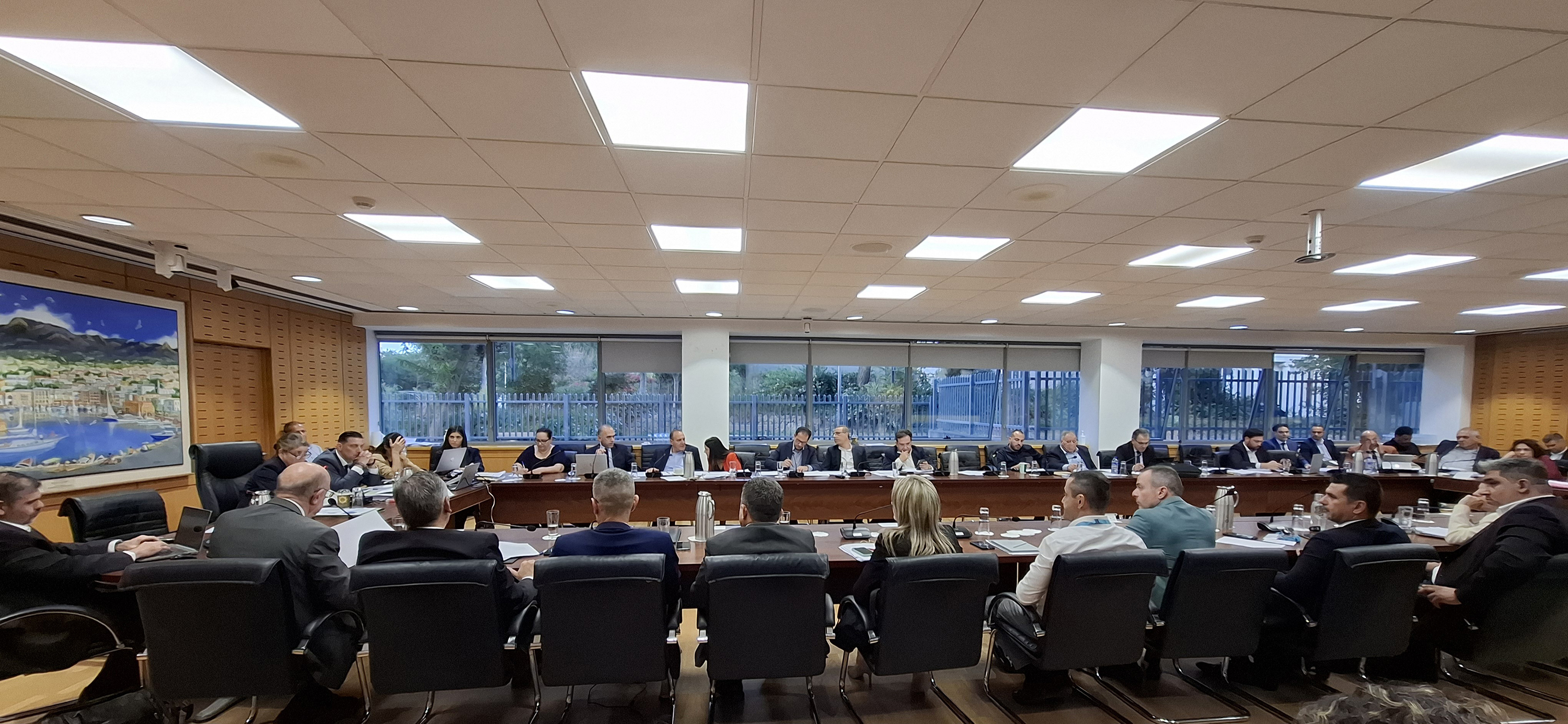
The House finance committee is “approaching the end” of its debate regarding the government’s sweeping tax reform proposals, committee chairwoman and Diko MP Christiana Erotokritou said on Friday, describing the process as “arduous and demanding”.
She said during the day’s meeting that parliament has been left with “particularly tight deadlines” to pass the reform, with the government having called for MPs to pass its closed reforms as soon as possible with a view to them being implemented at the start of next month.
“The people are expecting this reform, and they need it, as the financial pressures which Cypriot families are currently facing are real and intense,” Erotokritou said, before saying that she and her party believes that the government can raise the tax-free income threshold further than the government’s currently planned €20,500 per year.
That figure would already constitute an increase of €1,000 compared to the current level, at which it has sat since Cyprus introduced the euro in 2008, though when asked after the session how much the threshold could be increased, she did not specify the amount.
“The goal is to reach the maximum we can, safely, to benefit Cypriot families, workers and low- and middle-income groups,” she said, before drawing attention to plans for fresh tax exemptions for people with children and other dependents, and the possibility of also raising those further than the government’s planned rises.
At present, the government’s plan foresees that parents will receive a tax exemption of €1,000 for every dependent, while every parent who is either buying their first house or renting would under the plan receive an extra €1,500 worth of tax exemptions.
Erotokritou said these measures can be “substantially increased”.
“The family is at the centre of our policy. We are increasing the exemptions for children and dependents, because this is a real investment in society,” she added.
Akel MP Andreas Kafkalias, meanwhile, was more critical of the government’s reforms, saying they are “not socially fair” and that they do not address the widening of income inequality, while also “leaving out low-income groups and favouring high-income groups”.
He said his party has submitted proposals to introduce a new tax on real estate which is valued at over €3 million, as well as a new levy on “large companies” and a reduction of value added tax to five per cent on electricity and “energy upgrades” and zero on “basic necessities”.
Additionally, he referred to a proposal put forward by his party to introduce a windfall tax on energy companies and banks, while also saying that it would be Akel’s preference for the tax-free income threshold to €22,500 per year.
He said his party will also introduce amendments to “change tax rates to benefit low-income earners”, to provide for the indexation of tax scales every three years, and to ringfence provident funds and protect them from income tax entirely.
Dipa MP Alekos Tryfonides, meanwhile, said it would be his party’s preference for the tax-free income threshold to be increased to €21,500, and said Dipa has also suggested that the government provide credit to those earning less than €21,500 per year to “address the cost of living”.
He added that his party has also suggested increases in tax exemptions for people with dependents, compared to the government’s currently planned exemptions, and the provision of a new exemption for single-parent families, who, under the government’s proposal, would receive double the ringfenced €1,000 tax-free amount per child.
Dipa’s proposals, he said, fall within the government’s fiscal margin for 2026, thus “leaving room for the government to further strengthen vulnerable groups” without adding to the national debt.
His party, he said, will “move positively and constructively” to ensure that tax reforms “benefit families, workers, and businesses”.
The committee debate on the reforms will continue on Monday.
President Nikos Christodoulides had set out the plans in February, and in addition to the tax exemptions, the plans foresee that Cyprus’ 35 per cent top income tax rate would only apply to those earning more than €80,000 per year, rising from its current level of €60,001.
At the same time, he said corporation tax will increase from 12.5 per cent to 15 per cent, bringing Cyprus in line with European Union requirements.
Since then, those plans have been added to by new measures aimed at combating tax evasion, including plans to allow authorities to seal off businesses which repeatedly fail to issue receipts or invoices, criminalising the non-payment of income tax, and raising the fines levied at tax offenders.





Click here to change your cookie preferences