
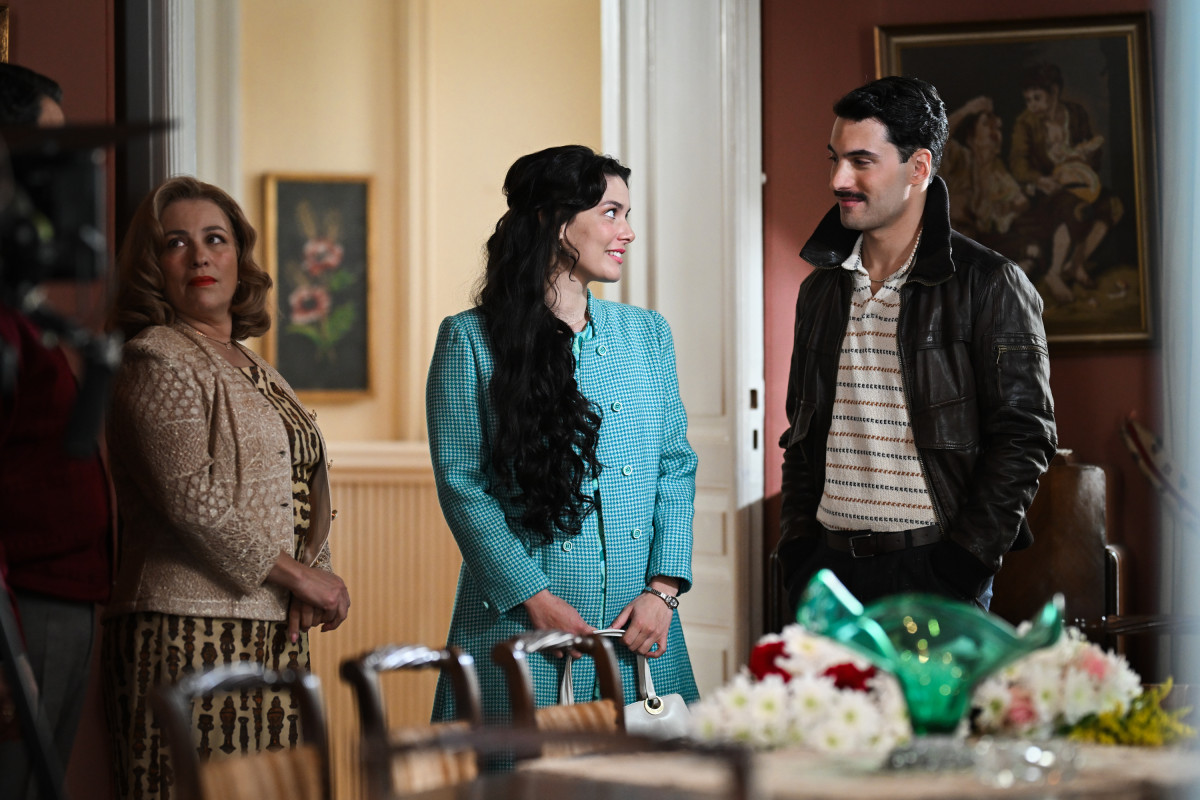
The House Beside the River (To Spiti Dipla sto Potami) is a TV adaptation of Lena Manda’s best-selling novel of the same name. The series traces the lives of five sisters who grow up in a small village by a river, their childhood shaped by dreams, family bonds and the passage of time.
The story begins in 1942, with the sisters leaving the comfort of their mother, Theodora, to explore life beyond the familiar. What follows is a tale of love, passion and secrets that challenge their expectations, drawing them back to the home beside the river as they confront the past.
The narrative initially centres on the family of Yerasimos and Theodora although the couple’s five daughters, Melissanthi, Ioulia, Aspasia, Magdalini, and Polyxeni, are cared for not only by their parents but also their grandmother.
The series carefully captures the rhythms of family life in wartime Greece, balancing the innocence of childhood with the looming challenges of adulthood. Yerasimos’ sudden death from gangrene sees the family propelled into hardship, and Theodora’s resilience provides the emotional backbone of the series.
As the story progresses to 1958, the sisters’ lives diverge. Melissanthi enjoys a life of luxury in Paris with her husband, while Ioulia struggles to settle in Thessaloniki. Aspasia embraces motherhood in Kalamata, Magdalini pursues education in Piraeus, and the rebellious Polyxeni follows a theatrical career. These developments show the series’ ambition to depict multiple storylines simultaneously, highlighting the sisters’ independence while exploring the choices and sacrifices each must make.
The production excels in its attention to period detail. Panayiotis Iosiphelis’ script, paired with Antonis Angelopoulos’ direction, creates a believable and immersive 20th-century setting. Costumes, dialogue and music evoke the era authentically, while the cinematography captures cinematic frames reminiscent of classic film posters. Each shot demonstrates care in composition and atmosphere, enhancing both the emotional and visual impact.
Performances are a highlight. Peggy Trikalioti impresses as Theodora, her expressions conveying grief, determination and maternal concern with nuance. The cast overall adds depth to their roles, making the sisters’ journeys compelling. The series’ slower pacing at the start allows character development and sets a strong foundation for subsequent episodes, balancing heavier dramatic moments with lighter, more relaxed scenes.
In conclusion, the show is a carefully crafted period drama. Its combination of authentic production design, strong performances, and multi-layered storytelling positions it as one of the standout Greek series of the season.



Click here to change your cookie preferences