
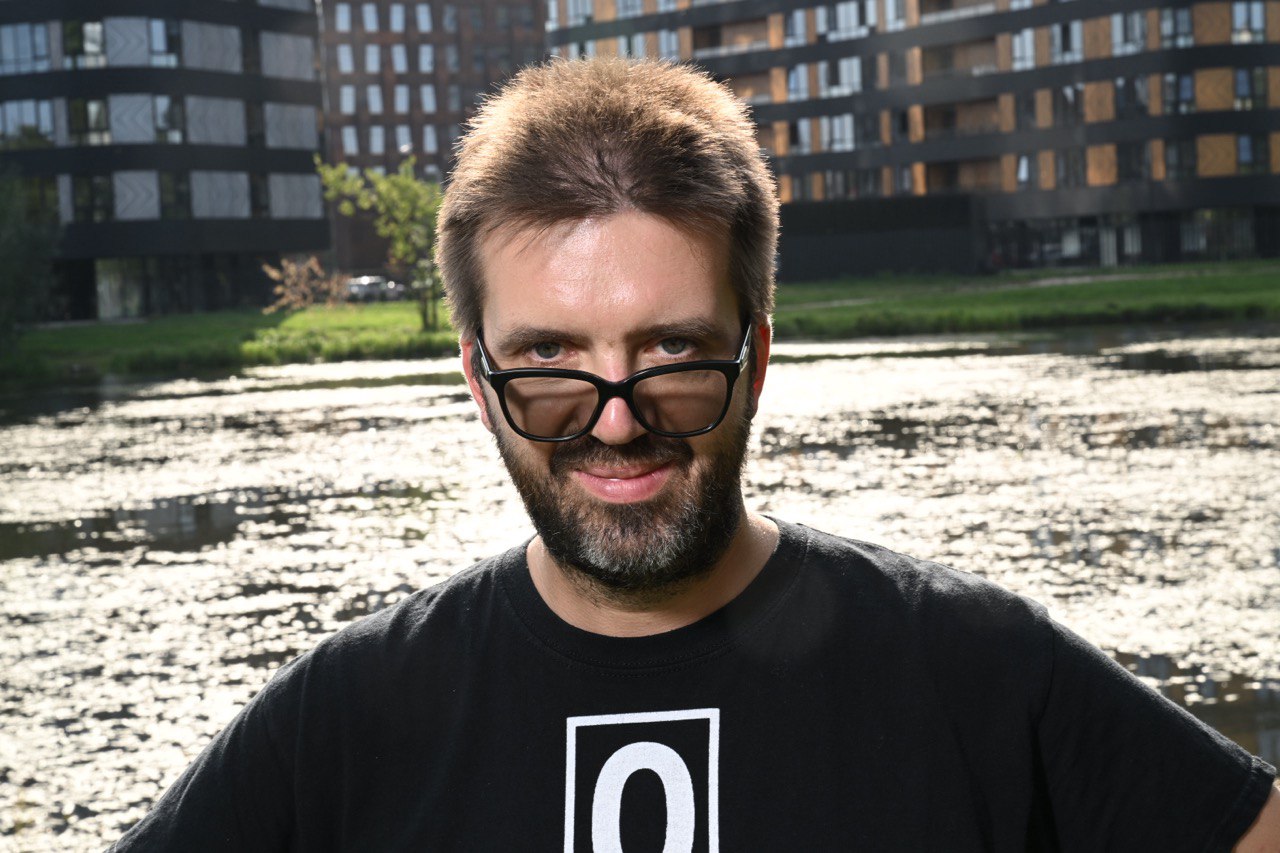
GamesUp42 grows to 20 million players from Cyprus headquarters
GamesUp42 has grown from a young studio into one of the most dynamic gaming ecosystems operating out of Cyprus, and its story reflects the island’s rapid rise as a destination for global tech builders.
Headquartered in Nicosia, the company now manages more than twenty game titles played by over twenty million people, supported by €45 million invested in products and services and annual revenue that surpasses €100 million.
Yet its scale is only part of the picture. What sets GamesUp42 apart is the combination of creative independence for its studios and a powerful central infrastructure that handles development support, analytics, design, payments, marketing, and publishing with the sophistication of a far larger group.
In this exclusive interview with the Cyprus Mail, co founder and CEO Igor Ivchenko spoke about how Cyprus has shaped the company’s trajectory and why the island has become a strategic base for ambitious founders aiming for international reach.
In addition, he reflected on the advantages of English common law principles, strong intellectual property protection, and a corporate environment that encourages reinvestment into teams and products.
Ivchenko also discussed challenges such as attracting senior talent, the growing appeal of Cyprus to global investors, emerging industry trends, and the mindset required to scale from a smaller market to worldwide operations.
CM: What unique advantages has Cyprus offered GamesUp42 in building a global gaming ecosystem, and how have you leveraged them?
There is simply no place like Cyprus – especially for anyone building a gaming ecosystem. English common law principles, strong IP protection, and a tax framework that lets you reinvest almost everything you earn back into products and teams instead of taxes. On top of that, the island has become one of the densest gaming and tech clusters in the world. Almost every month, you meet someone who has shipped a title with hundreds of millions of downloads. That kind of concentration is pure rocket fuel for hiring, partnerships, and idea exchange.
We used all these advantages to build an international group of companies headquartered here: fully compliant across multiple jurisdictions, extremely agile, and still feeling like a startup even though we already serve more than 20 million players worldwide. It’s the perfect combination of global scale with a Cypriot heart.
CM: How do you see Cyprus’ role evolving as a hub for gaming and tech startups in the next five years?
In the next five years, I see Cyprus making a real leap – from being everyone’s favourite “smart back office” to becoming a genuine innovation hub where new product companies are born and raised. If the government keeps the momentum with the right incentives, invests more in tech education, simplifies visas further, and maintains a startup-friendly regulatory environment, we’ll stop being just a place for holding companies or support teams. Instead, founders will move here to build their next big thing from scratch.
The geography alone is a huge asset: two hours to Europe, three to the Middle East, five to Asia. Combine that with the rapidly growing international crowd and an ever-improving quality of life, and you have a location that can truly act as a bridge between continents. I genuinely believe Cyprus has all the ingredients to become one of the key global hubs for gaming and tech – not just a sunny tax-optimisation spot. The foundation is already there; now it’s about accelerating the flywheel.
CM: What challenges have you faced operating from Cyprus, particularly in attracting international talent and investors, and how have you overcome them?
Like anywhere, there were some hurdles. The local talent pool is expanding quickly, but when you suddenly need senior programmers, marketing analysts, or a top-tier live-ops specialist, Cyprus alone still can’t cover everything. The biggest early challenge was perception: many candidates from non-EU countries would look at the map and think, “Cyprus? Where is that? Is it even in the EU?” or “Nice beaches, but is this a serious tech hub?”
We decided not to fight the stereotype head-on and instead turned it to our advantage. First, we went fully distributed: hiring the best people wherever they are in Europe (or beyond), with monthly off-sites on the island and a remote-first culture. Cyprus remains our strategic and legal headquarters, but our team is spread wherever the talent lives.
Second, we started telling the real story instead of defending ourselves. Every pitch, job interview, and investor call highlights EU market access, English common law, strong IP protection, one of the most favourable IP Box regimes in Europe, 12.5% corporate tax (will increase to 15% from January 2026) – and, most importantly, the quality of life that makes people want to experience it firsthand. Once a sceptical engineer or investor spends even three days here – sea-view offices, no traffic, kids in international schools, dinner on the beach in November – the conversation completely changes. “Why Cyprus?” quickly becomes “How soon can we move the holding here?”
Perception was the challenge; experience became the solution. Today, many of the people who once doubted the idea of building a global gaming group in Cyprus are either working with us or quietly relocating their own companies here.
CM: With over 20 million players worldwide, how do you balance global reach with localisation and regional gaming preferences?
For us, localisation is never just a tick-box exercise. We work closely with our studios to make sure every game resonates locally without losing global polish. That means adapting tone and humour, refining visuals to match cultural aesthetics, adjusting references that carry real meaning locally, and even modifying mechanics when the market demands it.
This market-smart flexibility lets us keep a strong global core while making players everywhere feel the game was built for them. That’s why our titles don’t just launch worldwide – they dominate locally, too.
CM: Which emerging trends in gaming technology do you believe will define the industry over the next decade?
Looking ahead, I see three seismic shifts that will redefine how games are built, played, and monetised.
First is AI taking centre stage – far beyond smarter NPCs or photorealistic visuals. AI will become the ultimate personalisation engine: gameplay that adapts in real time, dynamic difficulty that keeps players engaged, and intelligent content delivery that anticipates what you want next. Development teams will manage live ops with precision, scaling massive updates without ballooning budgets or headcount.
Second is the total blurring of platforms. Cloud gaming, edge infrastructure, and device-agnostic design mean players can enjoy console-quality experiences on any screen, anywhere – switching seamlessly from phone to PC to VR headset.
Finally, a fundamental rethink of value in games. Blockchain wasn’t the magic fix many expected, but it has accelerated the shift toward genuine digital ownership and player-driven economies, with transparent monetisation models. As regulators tighten controls on loot boxes and exploitative mechanics, a player-first economy will emerge.
These trends together are pushing the industry toward a more adaptive, inclusive, and player-centric future. The companies that master them will dominate the next decade.
CM: How has your approach to monetisation and online payment solutions evolved as the company has scaled internationally?
Today, our payments infrastructure is essentially a fintech inside a gaming group. We partner with top providers in every region and tailor monetisation models to local preferences: subscriptions and cosmetic bundles in Europe and North America; microtransactions in Southeast Asia and Latin America; hybrid models in MENA; even crypto rails where appropriate and compliant.
The result: players in Brazil, the Philippines, or Turkey can top up in seconds, using familiar methods. Studios get paid fast, margins stay healthy, and compliance remains airtight. That seamless user experience combined with a bulletproof back-end has allowed us to scale globally without hitting the usual payment barriers that trip up so many gaming companies.
CM: What key strategies have been critical in attracting investment and growing GamesUp42 in such a competitive sector?
Our strategy is simple: we operate as a federation of fast-moving independent studios with heavyweight central support. Each team enjoys full creative freedom, owns its P&L, and ships at startup speed – while instantly plugging into shared finance, legal, analytics, and user-acquisition infrastructure that would be prohibitively expensive to build alone.
Investors appreciate the model: lower risk, higher velocity, proven economics. We also diversified across genres and regions from the start, so no single trend or platform can sink us. Founders join for the freedom and safety-net combination; capital follows because we deliver both creativity and discipline. That’s how we’ve raised substantial funding, hit $100M in revenue, and kept 20 million players engaged while others struggled.
CM: Reflecting on your entrepreneurial journey, what are the most important lessons for founders looking to scale from a smaller market to the global stage?
The biggest lesson is simple: think global from day one and choose a home base that accelerates you, not slows you down.
Cyprus became our ultimate advantage – no regulatory surprises, seamless cross-border structures, full EU access, and operating costs far below major hubs. We can manage a group spanning ten countries and still stay lighter and faster than most Berlin or London companies.
Add the location – two hours to Europe, three to MENA, five to Asia – a tech scene growing exponentially, and a lifestyle that actually wins the talent war (sea-view offices in November beat a rainy London co-working space any day).
My advice to founders from smaller markets: don’t “go global later”; build it into your DNA from the first line of code. Hire the best people wherever they are, structure the company for scale from the start, and pick a jurisdiction that works for you, not against you.
Ten years ago, when we said we’d build a global gaming group from a Mediterranean island, half the industry smiled politely. Today, those same people are opening offices in Limassol and asking how we did it. That’s the Cyprus effect – real, tangible, and growing.





Click here to change your cookie preferences