
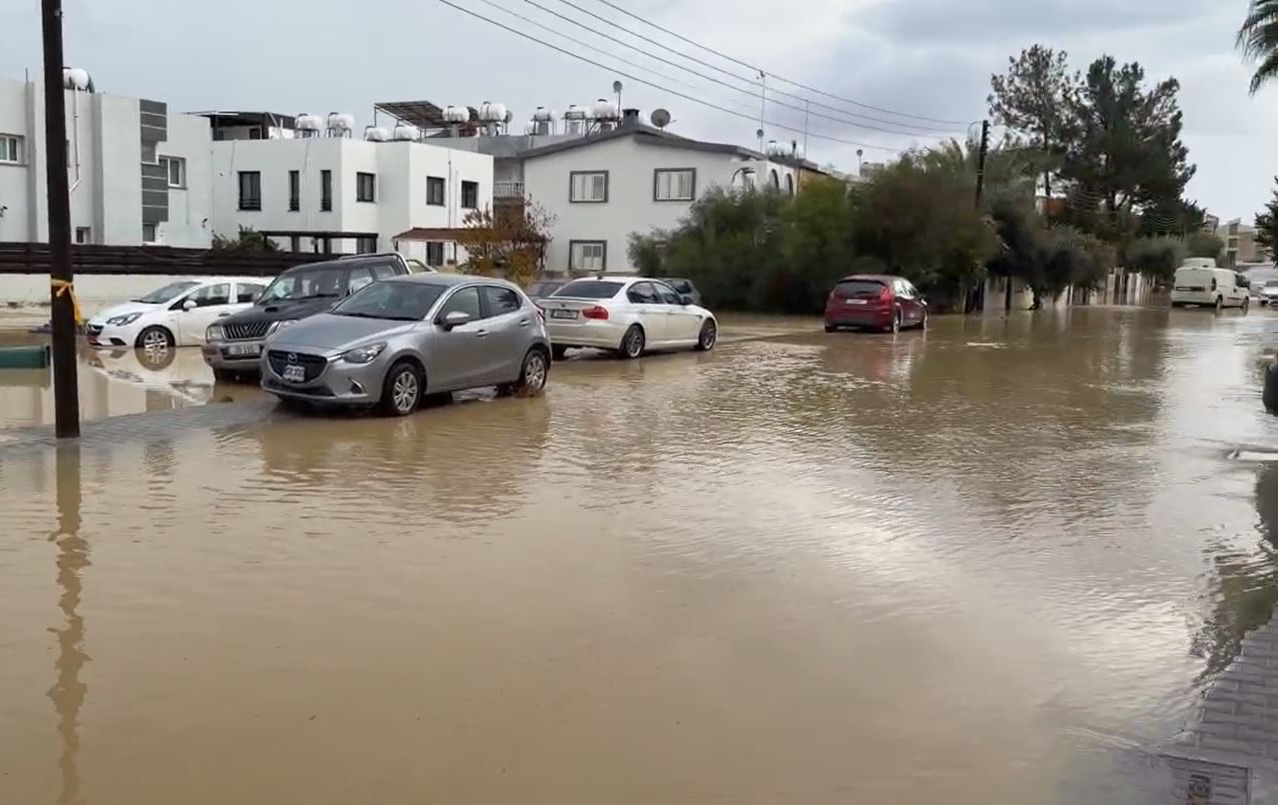
The level of floodwater in the north began to recede in the north during the early hours of Wednesday morning, with Turkish Cypriot Nicosia mayor Mehmet Harmanci saying that water levels in streams in the capital’s northern third have “dropped” and that as such, “the risk has decreased”.
He wrote in a post on social media that Turkish Cypriot civil defence and police teams who had been dealing with the floods had “a difficult night”, but with water levels beginning to drop, “we greeted the morning with hope”.
Meanwhile, Turkish Cypriot Kioneli and Yerolakkos mayor Huseyin Amcaoglu, whose municipal boundaries include most of the areas worst affected by the floods, told the north’s Tak news agency that the rate of rainfall in the area “has decreased”.
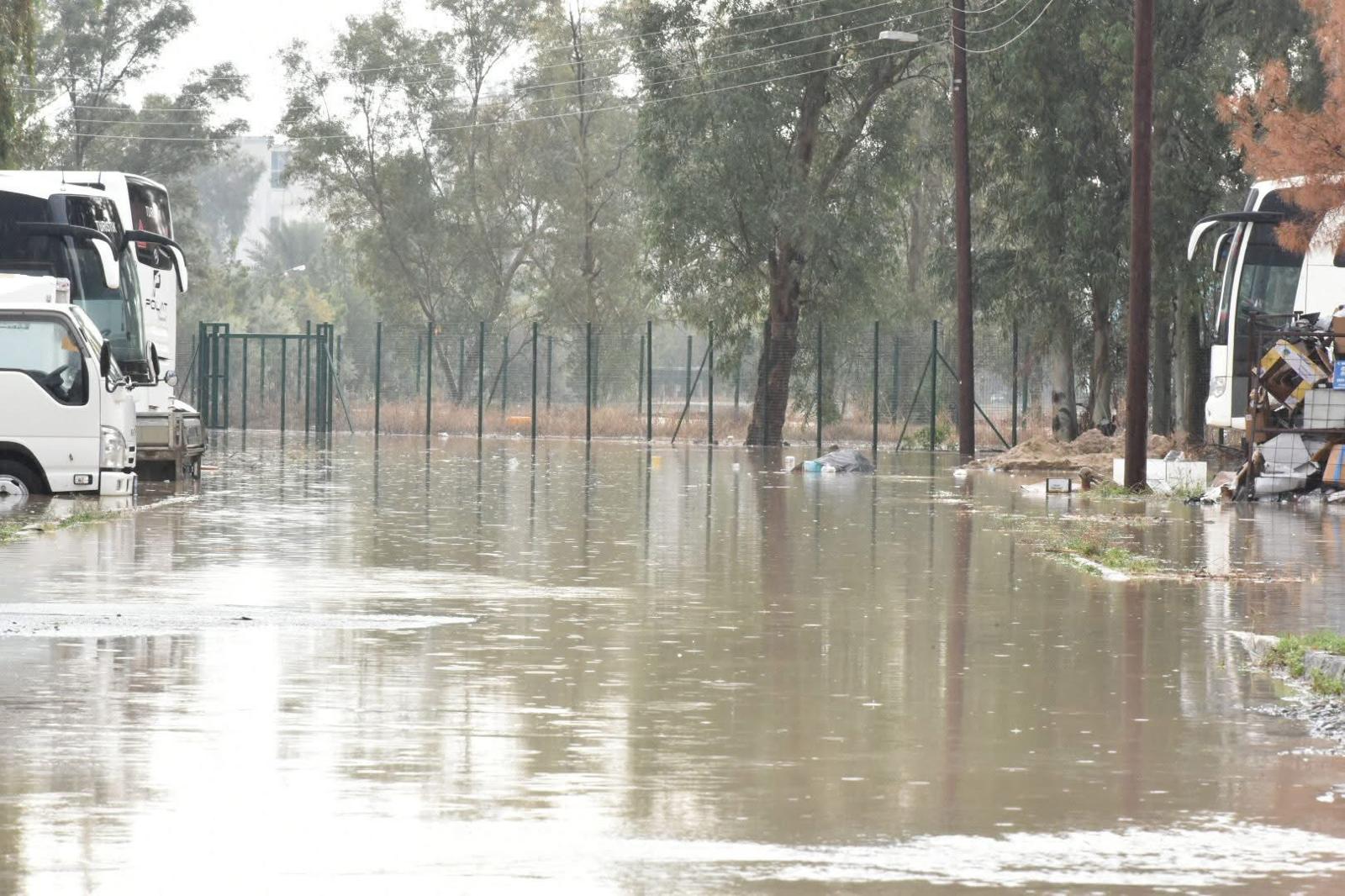
Flooding in Yerolakkos
He added that teams inside his municipal boundaries had, alongside the Turkish Cypriot civil defence had successfully “reached the troubled spots and took people who were evacuated to hotels and to their families”, and that work in the field is continuing.
In addition, he called for efforts to be made to ensure that such floods cannot happen again.
“It is impossible for a stream to carry more than its capacity,” he said, before calling for the north’s ruling coalition to allocate resources to dredge and widen streams in Kioneli and Yerolakkos, and to construct more dams.
Elsewhere, while much of the Karpas peninsula was spared the worst of Storm Byron, a landslide was reported between the villages of Ovgoros and Krideia, while the same streams which flooded Kioneli, Yerolakkos, and parts of Nicosia on Tuesday fed into the Pedieos river and began to cause problems downstream on the Mesaoria plain.
Turkish Cypriot Mesaoria mayor Ahmet Latif said the water was being collected at the Kukla dam, located between the Famagusta district villages of Kouklia and Gaidouras, with efforts underway to drain the reservoir and “prevent any negative consequences for the region”.
Halil Kasim, the Turkish Cypriot mayor of nearby Lefkoniko and Kiados, said teams from his municipality were “on the ground” to deal with the matter.
Overviewing the situation was Turkish Cypriot leader Tufan Erhurman, who said that Turkish Cypriots are “going through very difficult times” and offered his condolences to those who “paid a very heavy price” in the floods.
“The consequences of problems which have accumulated over the years and many mistakes have led us to experience many things more heavily, not less severely. After this disaster, we need to carefully identify and report the factors which exacerbated the problem and worsened our experiences, and then develop an action plan based on that information,” he said.
He added that “the reality of climate change is before us, and we have a responsibility to be prepared”, before promising that his office will “foulfill its duty in this regard”.
One man, named as 57-year-old Ercin Fevzi, died on Tuesday as a result of the floods, with his body being found in his car near Alagadi beach, which is located in the Kyrenia district.
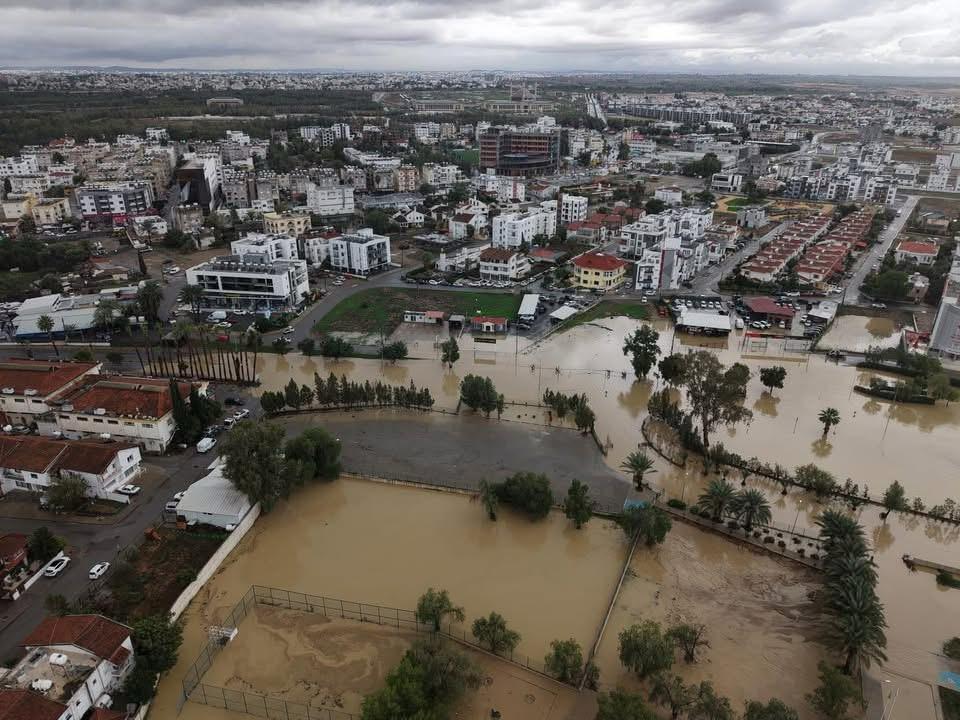
Meanwhile, homes and businesses across the north were left under feet of water, while roads were submerged and reservoirs overflowed.
Kioneli was among the worst-affected areas after the town’s reservoir and the reservoir which is located in the adjacent village of Kanli both overflowed.
Those reservoirs were built to collect water from streams which take runoff from the foothills of the Kyrenia mountains and run into the Pedieos river, with much of the streambeds now residential neighbourhoods in Kioneli and the northern sector of the Nicosia suburb of Ayios Dhometios.
The ensuing floods saw cars swept away and debris strewn across roads, while the Turkish Cypriot civil defence deployed teams to affected areas to help evacuate people whose homes were flooded.
Northern Nicosia’s Dr Burhan Nalbantoglu hospital was also considered to be at risk, having been built above a streambed, but in the end did not require evacuation, despite the road leading to it being flooded throughout the duration of Tuesday and most of Wednesday.
Turkish Cypriot schools, meanwhile, are closed on Wednesday, and while the north’s ‘parliament’ did convene on Tuesday evening, puddles of water were spotted inside the building after areas of it leaked.




Click here to change your cookie preferences