
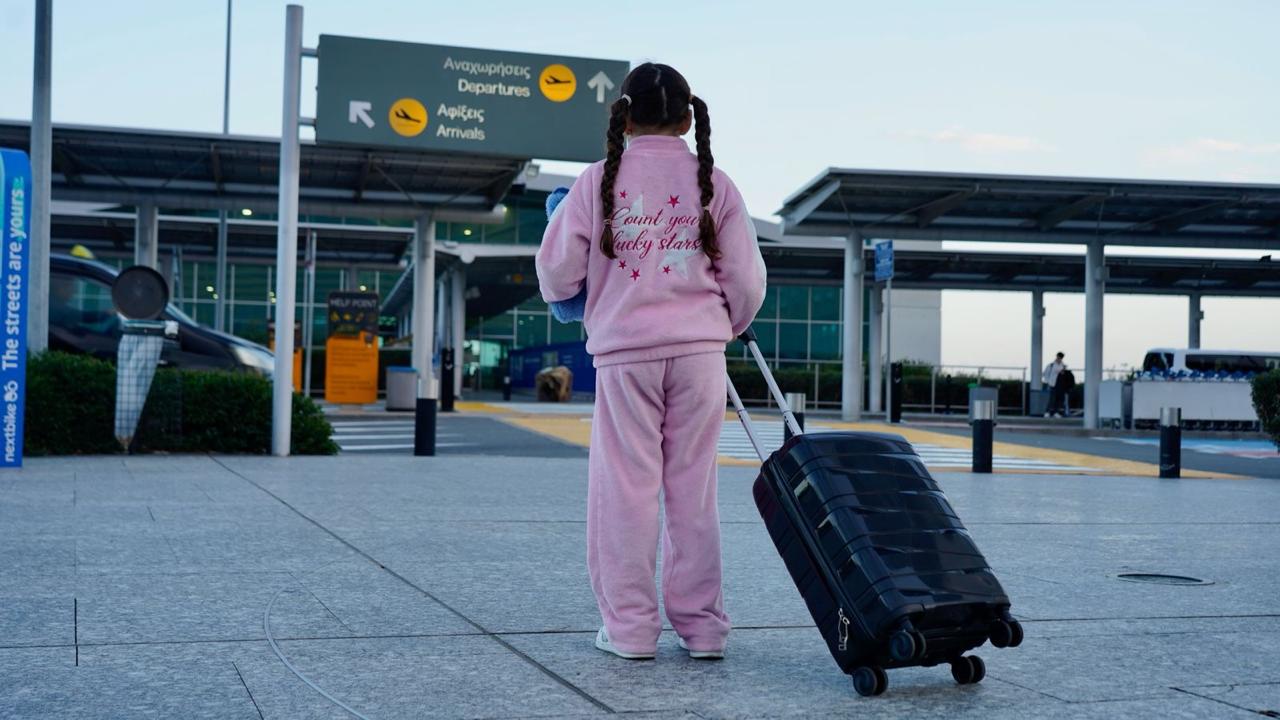
Four short films created by a youth led team give a voice to those who believe they don’t have one; a reminder that it’s ok to be scared
Four short films on online exploitation and human trafficking make their debut this week, fostering youth empowerment through immersive, lived experiences.
“I provided guidance as to the intricacies of trafficking and exploitation. I offered them access to expert guidance, and they did the rest… They were at the forefront of the exploration, decision making, writing, film making and editing. And they’re at the forefront of screening, disseminating and talking about their work,” says CEO of Step up Stop Slavery, a Cyprus-based NGO, Katerina Stephanou.
For the Erasmus + project Film Making for Social Change, young people, migrants and survivors came together to research, create and share stories about human trafficking and online exploitation. The result is the four short films that demonstrate how blending knowledge with practice, experience and creativity makes learning far more powerful. These films serve as educational tools to empower young people to think critically, protect one another, encourage victims to seek help, educate people to act responsibly while showing compassion towards each other, and inform parents about the dangers their children face online. What’s particularly poignant about this project, and thus the films themselves, is that young people played a leading role. They used their own experiences to communicate directly with their peers.
“One of the most vital areas in relation to prevention and child protection is education of youth coupled with active youth engagement and participation in counter trafficking efforts,” says Stephanou. “Storytelling is a powerful tool to sensitise on human trafficking, help people identify potential victims and save a life. A commonly shared belief among society is that human trafficking happens ‘somewhere else but not where I am’. This isn’t true at all. Anyone can be trafficked and it happens in plain sight. Victims are walking around among us and we don’t notice them because we don’t understand the phenomenon, we don’t know how it happens, what to look out for and how people are controlled,” she adds. “Film making is a vehicle for both raising awareness and educating the public on human trafficking. If people can see through the story of a real person what they went though, how they were manipulated and lied to and how they were controlled, they’re more likely to be able to identify victims and get help.”
One of the films, Not as I Thought, was a consortium effort in which three partner organisations – from Cyprus, Latvia and Malta – engaged with survivor support, shared four stories between them and voted on which one to make a film about. “We chose a story on trafficking for forced labour as it’s a drastically growing form of trafficking globally,” says Stephanou, “it’s important for us, be it in our personal capacities or through our work, to be able to identify potential victims because the rate of identification globally remains incredibly low. Less than one per cent of victims are being identified, and victims don’t generally come forward to ask for help. They’re either unaware they’re victims, or they’re being threatened by their traffickers and in fear,” she adds. Once the story was identified, a script writing team was select and worked on the writing.
Expert advice was received from survivor leaders to ensure all the essential factors required to be able to use the film as a teaching tool were depicted. “We implemented the red flag indicators created by the Survivors of Trafficking Advisory Council and had consultations with survivors and international experts to ensure the film and the script were accurate”.
Director of NGO Tapseu PouH, which is committed to supporting vulnerable people, Tchouanteu Stéphane Noël took on multiple roles for the making of this film. “I contributed to script writing, I acted, and also supported the technical team as a sound assistant,” he says. “What stood out most was seeing how people from very diverse backgrounds and journeys came together in an atmosphere of mutual support, and learning, giving the project its strong human dimension. This project is relevant because it puts human faces and stories in a reality that is often reduced to statistics. It helps people better understand the mechanisms of trafficking, break the silence, and launch a true call to collective conscience, encouraging solidarity and engagement in support of migrants and victims”.
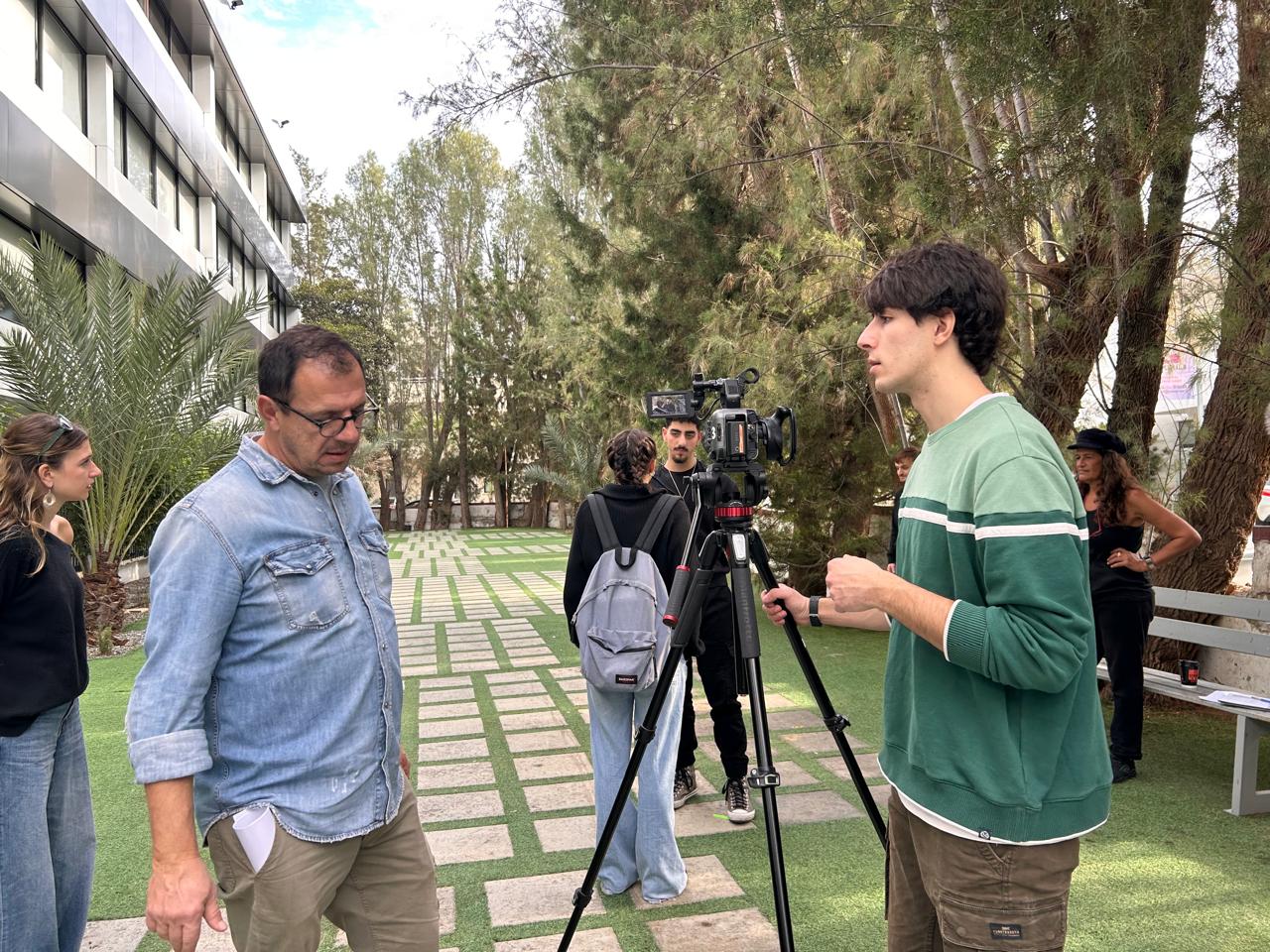
The three other films – Break the Silence, Destinations and In My Room – were created in Cyprus and are focused on the online exploitation of young people, drawing on both imagination and reality. “We held meetings with the police cyber crime unit to ascertain what the most urgent matters are. From these discussions we chose the topics of the films,” explains Stephanou. “We worked in parallel with the unit at every stage of script development and filming to ensure we effectively incorporated police guidance and depicted what they witness happening in real life scenarios. We also met the ministry of education to ensure we incorporated its guidance in terms of protocols and the way these cases are handled in schools”.
Director of the films and script writer was Konstantinos Farmakas, a 5th year film student at Aristotle University in Thessaloniki. “Online exploitation incidents actually happen, and quite often. We all know young people who had similar experiences as our protagonists. The stories are based on real events from actual cases,” says Farmakas.
Using film as a means to address social issues, Farmakas estimates that “what is shown often has more impact than what’s merely said… Roger Ebert, film critic, said “…movies are like a machine that generates empathy…. These films will contribute directly to the issue, especially considering that one of the main issues that became clear during our research with the police was that people lack empathy. We need to have more empathy, and for that to happen, we need to be aware. This was the main lesson from participating in these films.
“Not so long ago, I used to play video games by the hour and have online friendships. But this project gave me reference points to think about in real life scenarios I’ve lived through. Unfortunately, I know people and have friends that had their pictures leaked, so I understand it’s not as uncommon as people may think,” he adds.
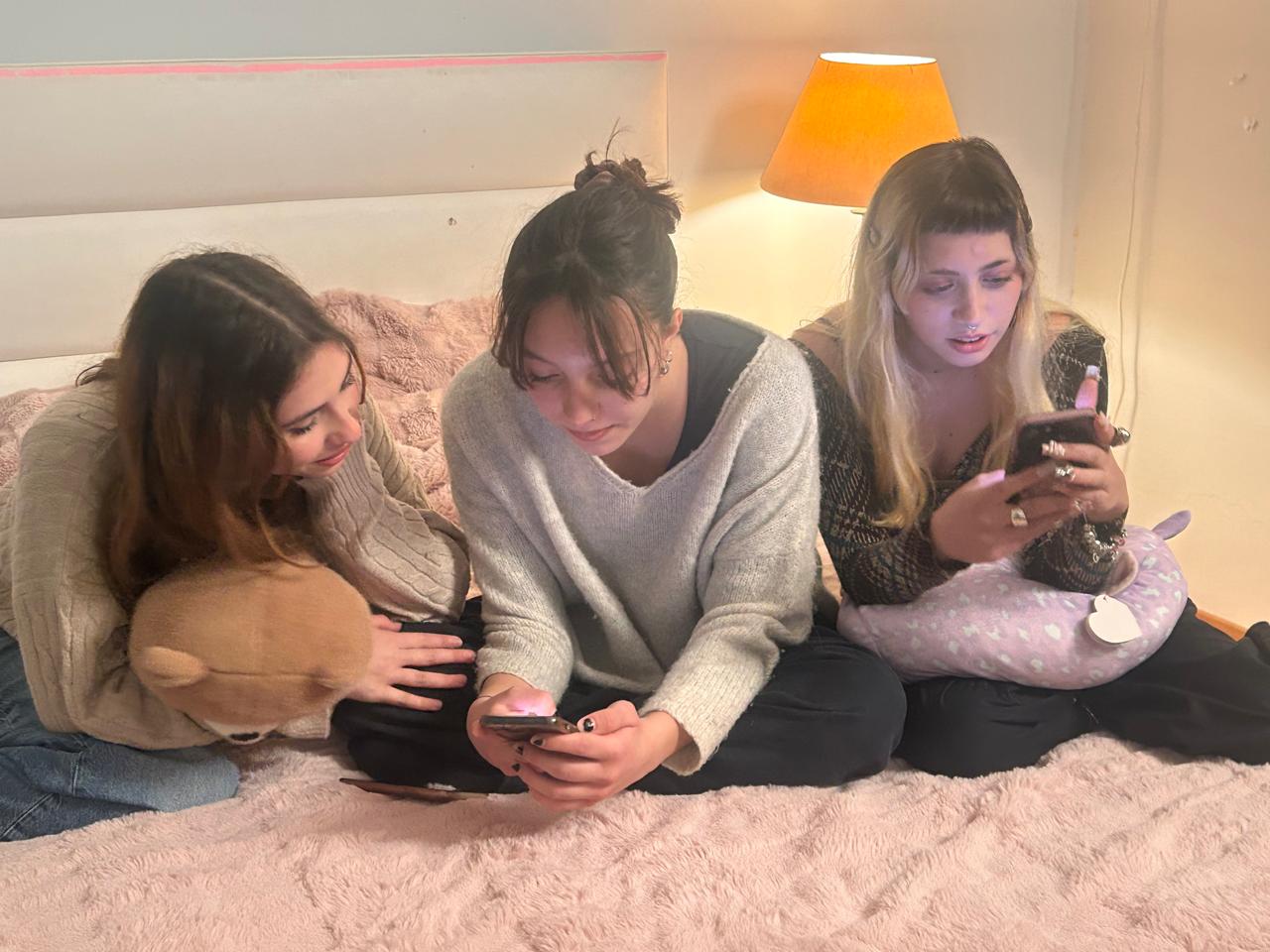
Stephanou warns that online exploitation’s international dimension makes it so much more difficult to investigate and to prosecute. “It’s a matter of grave concern in Cyprus as it is in every country,” she says. “One misconception in Cyprus is that trafficking only affects migrants, asylum seekers and third country nationals. This isn’t true. Cypriot nationals are also trafficked both online and in person, there are growing instances of persons being trafficked for criminal activities, forced marriages and forced begging. Children and youth are being exploited online at increasing rates and at younger ages and in Cypriot culture, people are reluctant to come forward and report cases to the police, there’s shame associated with falling prey to exploitation. We’re not talking about online safety openly – and shame and silence serves to strengthen perpetrators,” she adds. “This is one of the main reasons for creating these films and creating spaces for these issues to be discussed. When we remove the shame and silence, we disempower predators and traffickers.”
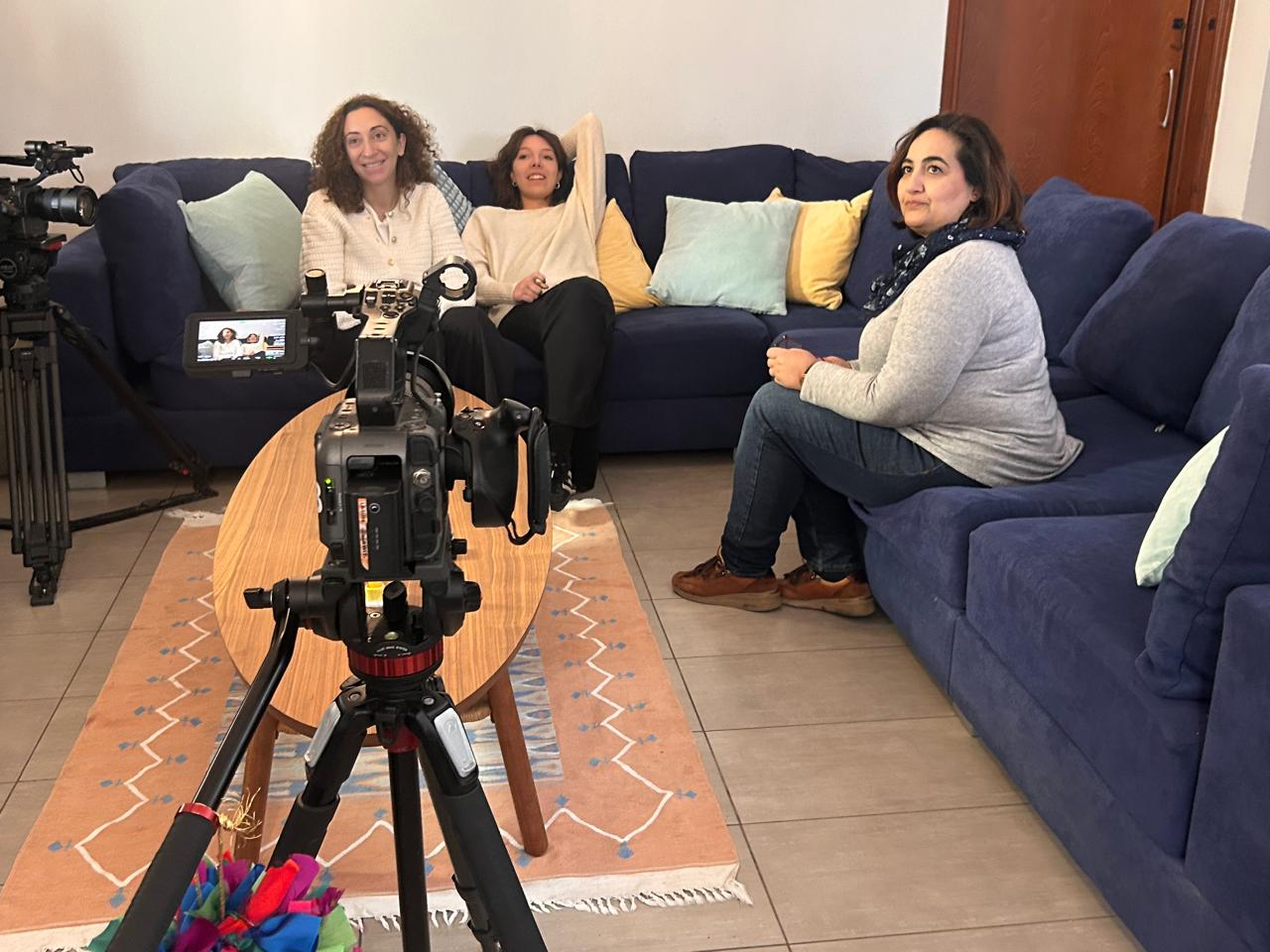
American Academy student Odysseas Fanis acted as a perpetrator in In My Room. “Since my character is a student, I easily researched him by comparing the behaviour of people who actually did something similar, such as sharing personal photos in group chats or bullying a person because of rumours being spread around school. My character took advantage of someone’s weakness and treated it as some sort of joke. It’s quite alarming to know that people in our society do things like this and think it’s okay to ruin someone’s life to have what they call ‘fun’,” says Fanis. “The scenario is something I can relate to as I myself had a somewhat similar experience some years ago… Our society has learned to accept it and consider it normal. I disagree. That’s why we made this film. I believe it will give a voice to those who believe they don’t have one; a reminder that it’s ok to be scared, and to remember they’re not alone,” he adds.
Lead Director of Photography, videographer Koulla Karasava agrees on the power of film. “Film can vividly portray the many forms of human trafficking and make complex realities accessible to people of all ages and backgrounds… My goal is not only to inform but also to help prevent vulnerable children and communities from falling into the cycle of exploitation, to shed light on this urgent global issue.”
Currently doing a Masters in Literary Studies at the University of Amsterdam, Ariadne Panayiotou-Ioannou was drawn to the project based on her passion for art and social justice. As script writer of Break the Silence, she says that the issue of revenge porn in the film really spoke to her as a young woman growing up in Cyprus. “I feel that online presence for teenagers is a norm and yet such a taboo subject to speak about. Nobody wants to talk about the ugly side of having an online presence. Whether we like it or not, teenagers will be online, they’ll have online friends, they’ll send pictures of themselves to people they date or trust, and it seems silly to just simply ask them to abstain. Because that won’t happen. Half of their lives are online. Instead of surrendering ourselves – as artists, educators, parents, older siblings – to the doom of the internet, we should think of how to safeguard our children and our teenagers; teach them to think critically, not trust blindly, and most of all, know that if something goes wrong, especially if they’ve been taken advantage of, there’s someone they can speak to; that there are laws and regulations in place to protect them. That’s why I wanted to be part of this – to end stigma, to end victim-blaming, and to make teenagers feel seen.”
“This film is meant to address teenagers first and foremost, which is why it’s written in the Cypriot dialect and by young people like themselves – so that they may feel seen… working closely with police cybersecurity and child psychologists and educators, we wanted to ensure that the protocol of what to do in these situations – when a student’s nudes get leaked – is also highlighted. Overall, we hope that this movie can be used educationally and to encourage discussion and dialogue. The only way to ‘break the silence’ is by speaking. So, let’s start speaking about it,” says Panayiotou-Ioannou. “The truth is that online exploitation is much more common than we think. It’s simply not spoken about for fear of shame or embarrassment. As a young women growing up in Cyprus, I know this firsthand. Victim-blaming, ‘slut-shaming’, sexual harassment and bullying are the dark realities of teenagers which have only been exacerbated by technology. Teenagers all over the world experience these, yet in Cyprus there’s a particular kind of small-island-induced stigma that surrounds these topics that doesn’t allow for conversation. This film will hopefully be a step in a different direction – towards conversation.”
Stephanou’s hopes for the four films is that they are shared and viewed and used for education. “We need to create safe spaces where victims of online sexual abuse can come forward and speak with no shame. And for boys or perpetrators to realise the impact of their actions. The impact of sharing intimate photos shared in trust. What they consider a joke has a devastating impact on someone else’s life”.
The films will be premiered at The University of Cyprus Library, Amphitheater B108, Anastasios G. Leventis Council-Senate Building at 6pm on March 3. The event is coorganised with the Unesco Chair of gender equality. Films can be viewed on Step up Stop Slavery’s you tube channel: https://www.youtube.com/@STEPUPSTOPSLAVERY




Click here to change your cookie preferences