
A notice to airmen (Notam) has been issued regarding possible operations carried out by the United States’ military off the coast of Cyprus’ Karpas peninsula.
The alert states that there will be “possible military operations” in the skies off the coast of the peninsula, with pilots flying through that area urged to “exercise caution, monitor the emergency frequency, and maintain continuous radio contact” with Cypriot air traffic controllers in the area.
The latest iteration of the Notam makes no reference to the US, though earlier iterations had stated that it was the US military which may be conducting activities in the area.
A Notam is a notice containing information which is essential for personnel concerned with flight operations.
Defence sources told the Cyprus Mail that the Notam – issued by Cyprus’ civil aviation – had been requested by “the Americans.”
Covering altitudes up to 18,000 feet, the Notam will be in effect until April 12.
On Tuesday morning, the north’s ‘transport ministry’ expressed disappointment that it had been issued without the Turkish Cypriot authorities’ consent, saying that “the TRNC … is the sole authorised authority responsible for providing air traffic and aeronautical information systems within its airspace”.
The Turkish Cypriot authorities then issued their own Notam, advising “all aircraft in the region” to “take maximum precautions to ensure flight safety, carefully follow the published aeronautical information, and act in coordination with the relevant air traffic units”.
The conflict has seen the eastern Mediterranean in the field of fire, too, with Turkey’s defence ministry most recently having announced last Friday that Nato air and missile assets located in the region downed a third ballistic missile launched from Iran.
Earlier, intelligence and diplomatic sources in both Turkey and Cyprus had confirmed to the Cyprus Mail that the first missile intercepted in Turkish airspace, which was fired on March 4, had been aimed at the Incirlik airbase.
That airbase is jointly operated by the Turkish air force and that of the United States, and is located in Turkey’s southeastern Adana province.
In addition to US machinery, an array of Nato military assets have amassed in the eastern Mediterranean since the outbreak of the conflict in the Middle East at the beginning of the month.
France and Greece both swiftly deployed frigates to the eastern Mediterranean after Cyprus’ British Akrotiri air force base was hit by an Iranian-made drone on March 2, with Greek Prime Minister Kyriakos Mitsotakis having described one of the two frigates he sent, the Kimon, as the “pride of the Greek fleet”.
In addition to its own frigate, France also sent the aircraft carrier the Charles de Gaulle to the region, with French President Emmanuel Macron saying during his visit to Cyprus on Monday that the ship is “now close to Cyprus to contribute to the overall defence picture, and to ensure it in the long term”.
Earlier, Italy had announced its intention to send the Federico Martinego frigate to Cyprus, while Spain is to send the Cristobal Colon frigate, and the Netherlands also sent a frigate of its own as part of the Charles de Gaulle’s carrier strike group.
The United Kingdom, meanwhile, which operates and holds sovereignty over the Akrotiri air force base, which was hit by last week’s drone, has sent multiple AW159 Wildcat helicopters, armed with anti-drone missiles, to Cyprus, while the HMS Dragon Type 45 destroyer warship departed from Portsmouth last week.
Additionally, the dock landing ship the RFA Lyme Bay set sail from Gibraltar for the eastern Mediterranean on Monday.
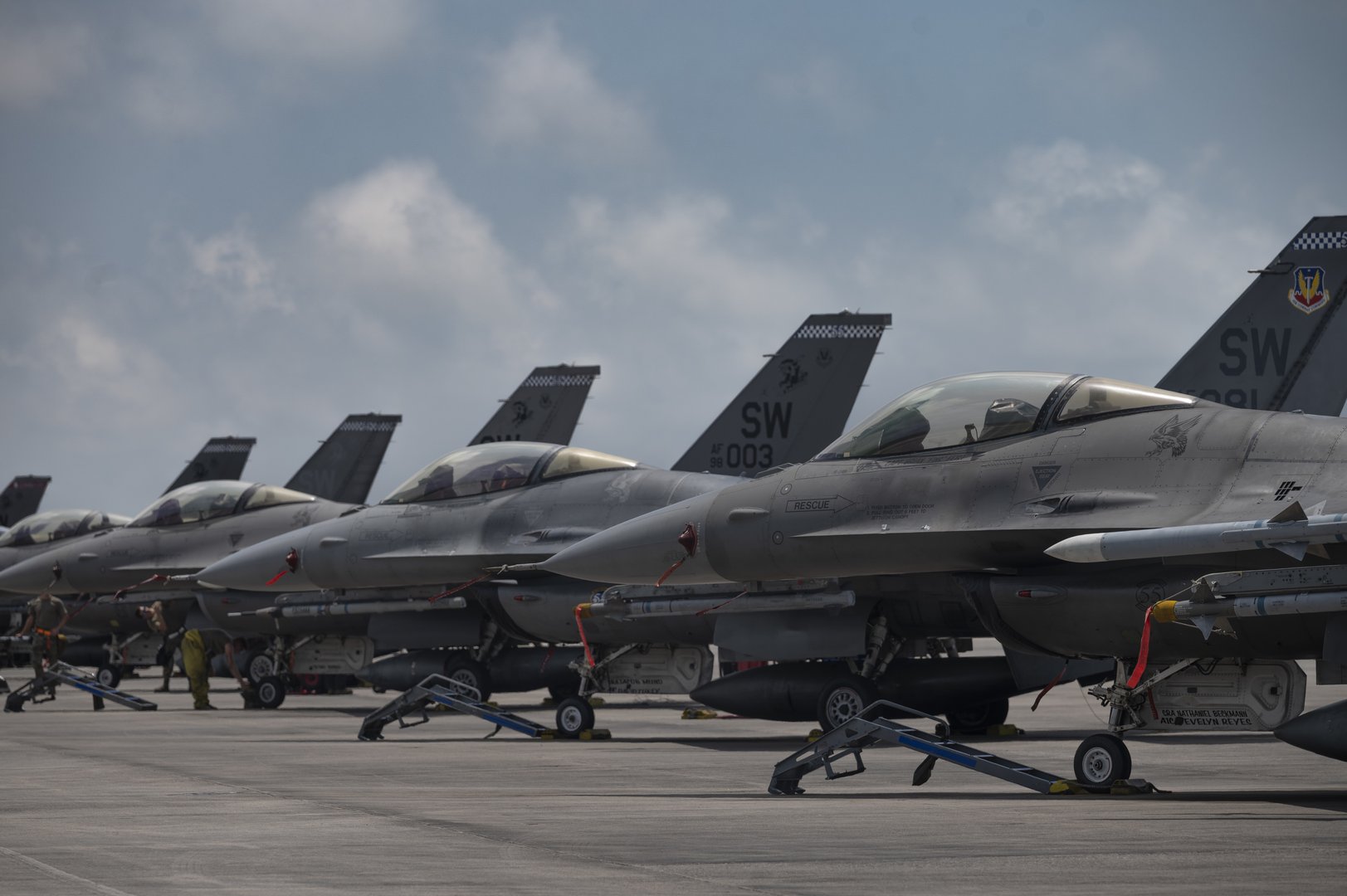
While Turkey itself has not yet announced the deployment of any warships to the eastern Mediterranean, it did station six F-16 fighter jets at northern Cyprus’ Ercan (Tymbou) airport, and complemented those fighter jets with Hisar-A surface-to-air missiles.
Prior to Turkey’s stationing of F-16s in Cyprus, Greece had sent four F-16s of its own to Paphos.





Click here to change your cookie preferences