
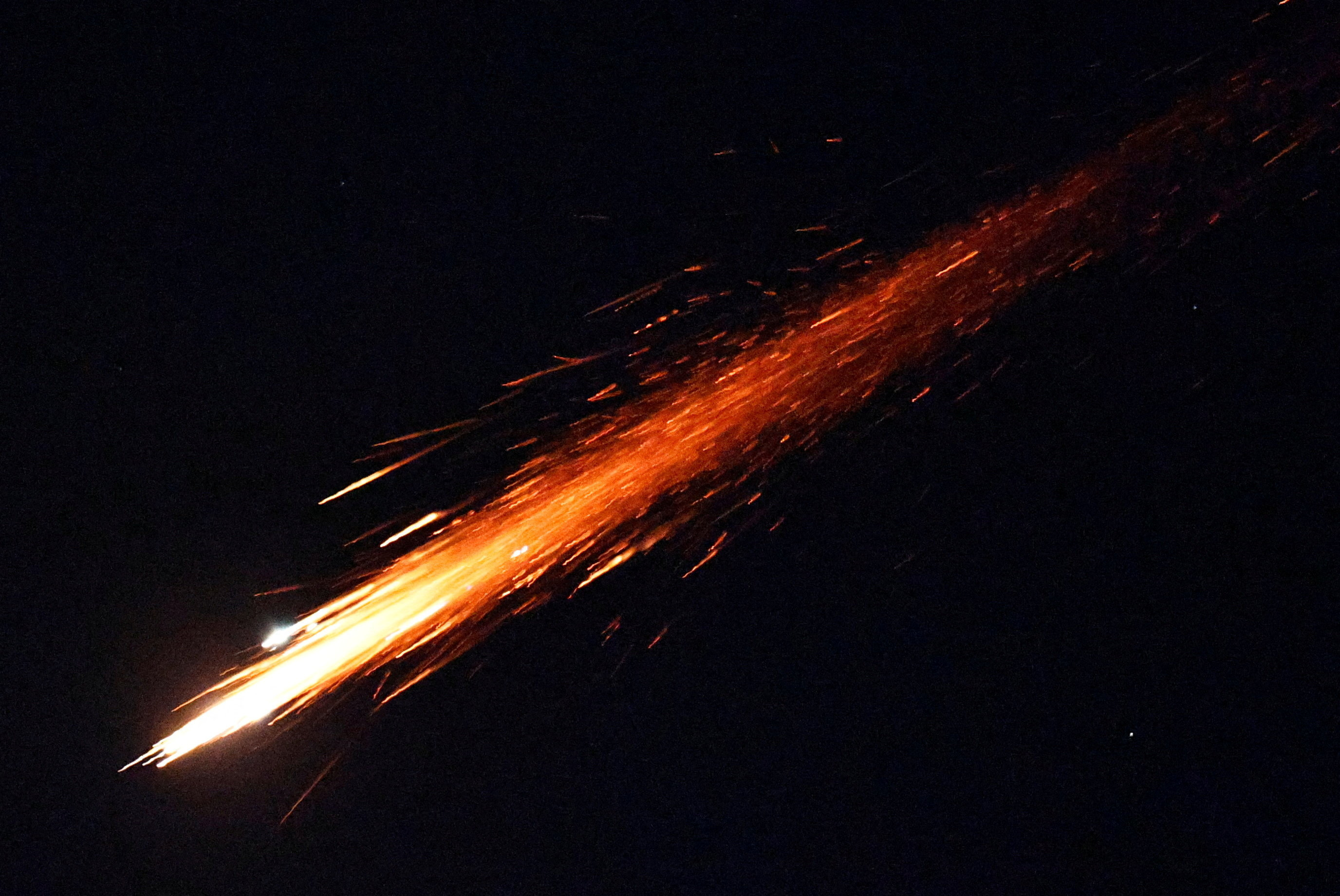
A ballistic missile fired from Iran was intercepted by Turkish anti-missile infrastructure in the eastern Mediterranean, the Turkish defence ministry said on Wednesday.
The ministry said that it had been “determined that the ordnance fell in the Dortyol district of the Hatay province” of Turkey, which is located northeast of Cyprus’ Karpas peninsula.
Intelligence and diplomatic sources in both Turkey and Cyprus have confirmed to the Cyprus Mail that the missile was aimed at the Incirlik airbase, which is jointly operated by the Turkish air force and that of the United States, and is located in Turkey’s southeastern Adana province.
As such, it appears to the be the first time Turkey has been fired at since strikes began in the Middle East at the weekend, and could see Nato’s second-largest standing army become a party to an already widening conflict.
“Our resolve and capacity to ensure the security of our country and its citizens are at the highest level. While Turkey supports regional stability and peace, it is capable of ensuring the security of its territory, regardless of from whom or from where a threat may come,” the ministry said.
It added that “every step taken to defend our territory and airspace will be taken resolutely and without hesitation”, and that “we reserve the right to respond to any hostile attitude shown towards our country”.
“We urge all parties to refrain from actions which would further spread the context in the region. In this context, we will consult with Nato and our other allies,” it said.
The downing of the missile in the region comes hours after Turkey’s defence ministry had indicated that it may be bolstering its own military presence in Cyprus, posting a photograph of Turkish soldiers arriving at the north’s Ercan (Tymbou) airport to social media.
The photograph was accompanied with the caption “as calm as the sea, as resolute as a storm”, and its publication followed the confirmed arrival of a Turkish military transport aircraft at Ercan (Tymbou) on Wednesday morning.
Turkey’s announcement comes after two Greek F-16 fighter jets had been called into action earlier in the day when “suspicious objects”, widely believed to be Iranian-made Shahed one-way attack drones, were sighted heading towards Cyprus in the skies above Lebanon. The objects were intercepted by the Greek jets.
Greece has had four F-16 fighter jets stationed in Paphos since Monday, when Cyprus’ British Akrotiri air force base was hit by an Iranian-made drone, while two Greek frigates docked in Limassol on Wednesday.
Those frigates have been joined by a French frigate, with French President Emmanuel Macron having said on Tuesday night that the arrival of the Languedoc was expected imminently.
He also announced that the aircraft carrier Charles de Gaulle, alongside its “air assets” and frigate escort, would also be deployed to the eastern Mediterranean.
Meanwhile, British Prime Minister Sir Keir Starmer announced the deployment of HMS Dragon, a Type 45 destroyer warship, as well as two AW159 Wildcat helicopters, to Cyprus.
Later on Tuesday night, Cypriot government spokesman Konstantinos Letymbiotis said that Germany, too, would assist in “preventative measures”, though he did not detail the exact extent to which Germany will offer assistance.




Click here to change your cookie preferences