

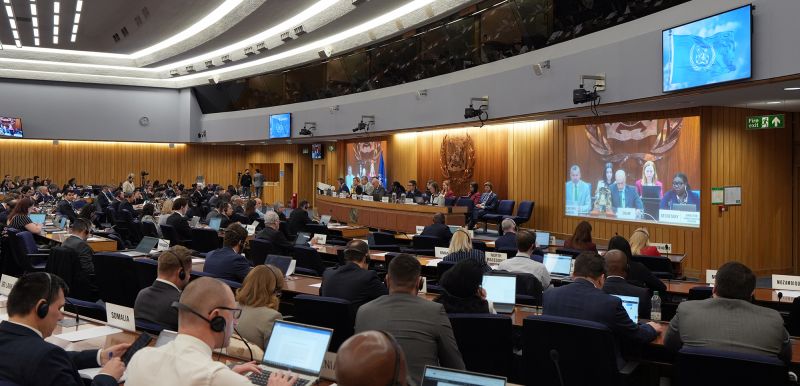
Member states of the UN’s International Maritime Organisation (IMO) agreed this week to work towards establishing a safe maritime corridor to help merchant ships leave the Gulf region and protect seafarers amid the Israeli-American war with Iran.
At an emergency two-day meeting on the situation in the Middle East, the IMO agreed to encourage the creation of a framework to facilitate the safe removal of merchant ships from war zones and high-risk areas.
No timetable was announced, however, and it remains unclear whether Iran would cooperate with the organisation.
According to IMO Secretary-General Arsenio Dominguez, the war has left some 20,000 seafarers stranded on nearly 2,000 ships west of the Strait of Hormuz.
Shipping in the Gulf and along the Strait, through which a fifth of the world’s oil passes, has been virtually halted since strikes on Iran began on February 28, with the Revolutionary Guards threatening to target any ship passing through Hormuz.
Many ships have since come under attack, while the IMO has recorded 17 incidents resulting in the deaths of at least seven seafarers.
Dominguez called on countries to ask ships flying their flags and anchored east of the Strait not to take the “dangerous risk” of sailing west.
“We must not expose our seafarers to a higher risk than they already face,” he said.
The meeting was convened at the initiative of the United Arab Emirates to consider proposals aimed at facilitating navigation and safeguarding seafarers.
The IMO decision was taken unanimously, although it is not binding.
Following the conclusion of the 36th Extraordinary Session of the IMO Council, the International Chamber of Shipping (ICS) welcomed the adoption of the outcomes document, saying it reaffirmed “a strong global commitment to maritime safety and security”.
The ICS said it echoed the call for all attacks on ships in the Persian Gulf and Strait of Hormuz affecting innocent civilian seafarers to stop immediately, while stressing “the paramount importance of preserving the safety and welfare of seafarers worldwide”.
It also backed calls for member states to ensure the continuous provision of essential supplies to ships unable to leave the region, so as to preserve the welfare of those onboard and ensure their safe operation.
In addition, the ICS called on member states and relevant authorities to work together in a coordinated manner, and in consultation with industry, to restore freedom of navigation and to prevent and respond decisively to attacks on seafarers, in accordance with national law.





Click here to change your cookie preferences