
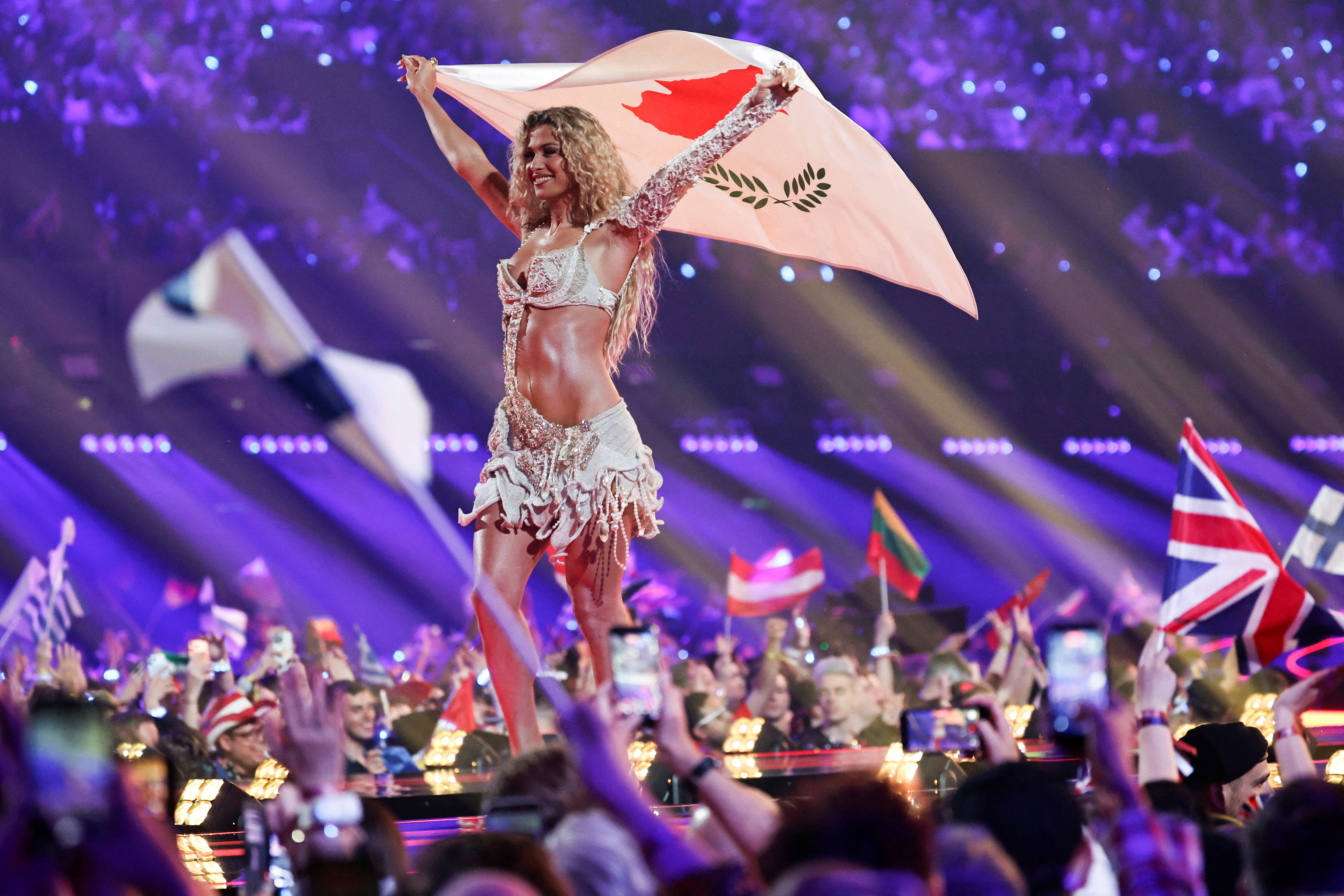
One week after taking to the Eurovision stage, Antigoni Buxton reflects on the reality behind the contest - from pressure and criticism to lessons learned, the unexpected love, and what comes next
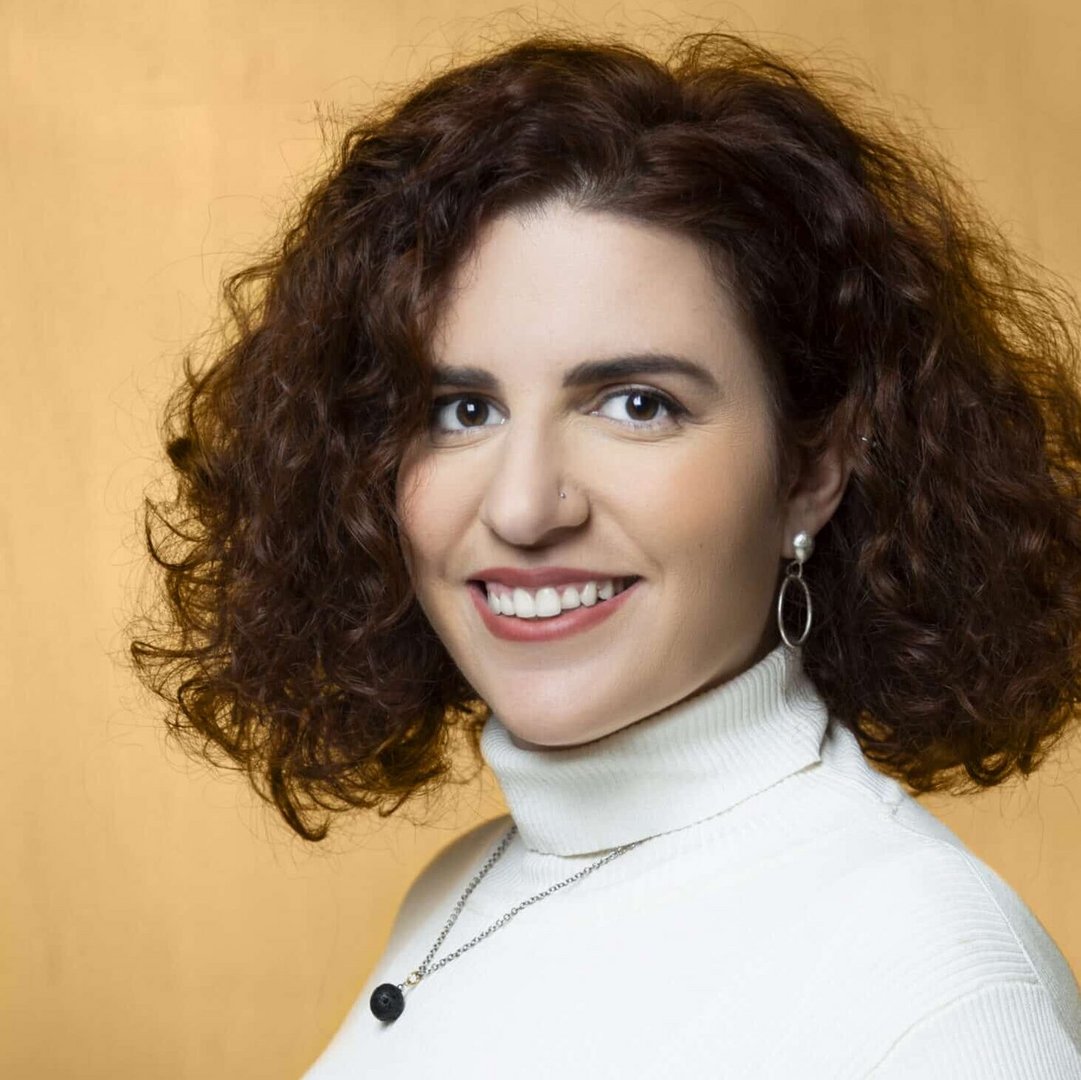
I arrive at Limassol’s Four Seasons days after the Eurovision grand final to meet Antigoni between school visits, interviews and appearances. She greets me the Cypriot way, kisses on cheeks, and is refreshingly honest as she talks as if she has known me for years.
“Since my return, I’ve felt overwhelmed with love from everybody,” she says. “I couldn’t have dreamed of being so welcomed by Cypriot people from the moment ‘Jalla’ came out. The support has made me feel better about the result and that the win came from different things.” After taking part in the second semi-final on May 14, Antigoni moved through to the final, where she placed 19th.
For the past few months people of all ages, in bakeries, classrooms and meetings in Cyprus have burst into song mid-sentence, mixing ‘jalla, jalla’ (‘more, more’) into their conversations. Antigoni seems to have turned an everyday Cypriot word into a catchphrase.
“I’ve always said, if I ever do Eurovision, I want to use the Cypriot dialect. There’s a bit of snobbery around it, but that’s the way that we speak!” she says. And she is the first to have included Cypriot words in a Eurovision song. ‘Jalla’, captures a very Cypriot instinct: there is always room for more.
“‘Jalla’ sums up Cypriot culture,” Antigoni says, “think about it, you go for a Cypriot mezze, and you’re so full, but no, there’s always ‘jalla’. When you think it’s done, there’s still ‘jalla’ – dessert and shots.
“Cypriots are loud, we eat a lot, we push our luck. We’re tenacious, and I think that’s why people here resonated with the song. The whole arena in Vienna was singing ‘Jalla, jalla, astus na laloune…’ and that’s a win in itself,” she adds.
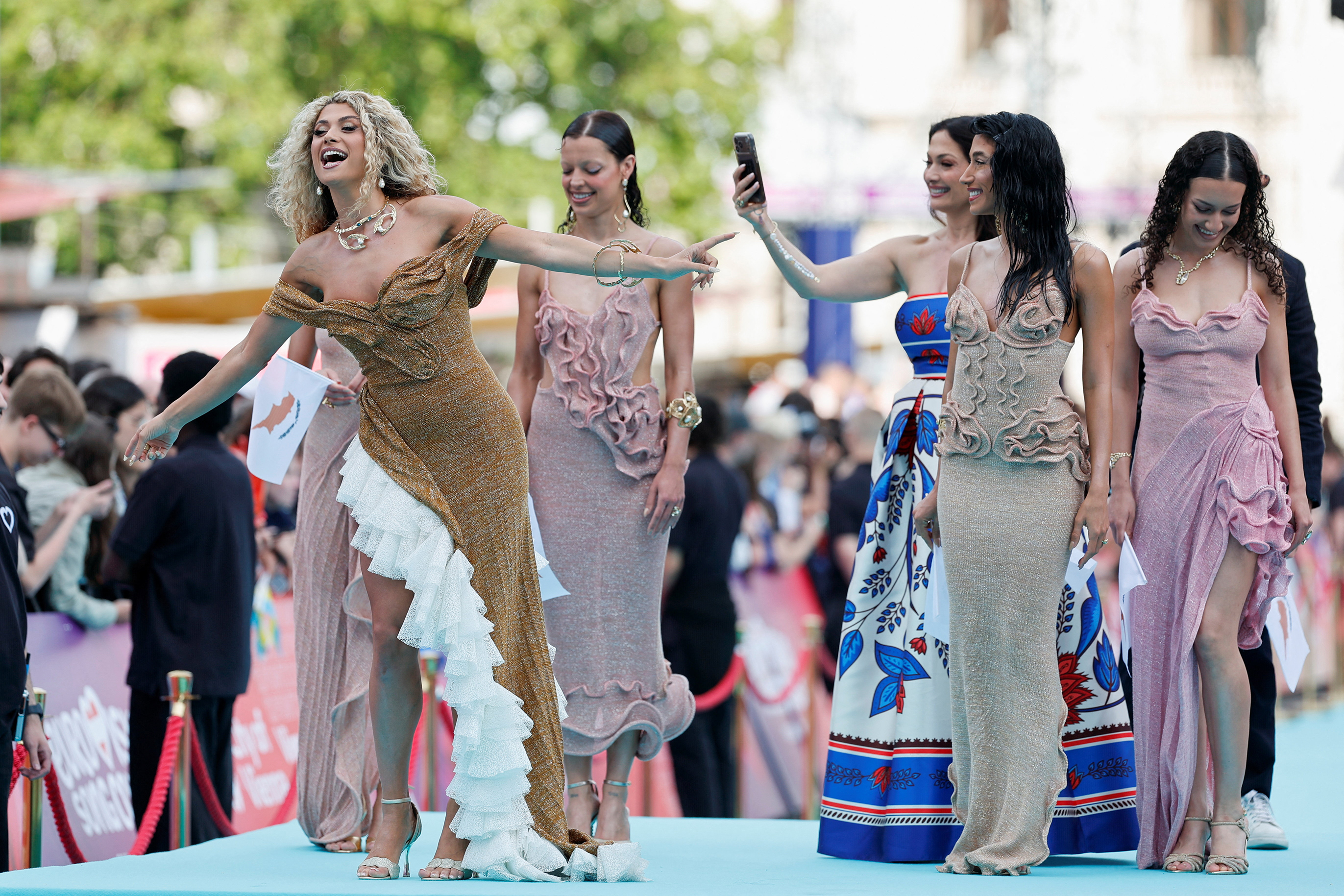
Sitting on a hotel couch in everyday ware it is bewildering to think that just days ago Antigoni, at 30, was performing on one of Europe’s largest stages.
“It surprised me, the kind of familiarity you end up getting with the arena because you go there nearly every day to rehearse. It’s a huge stage, so you get the chance to get used to it,” Antigoni adds.
Four important performances take place that week: the televised semi-final, the jury semi-final, the jury final and the live final on TV. During that week of rehearsals and shows, contestants go through this marathon together, and remarkably, the energy between everyone was incredibly supportive, she adds.
“It didn’t feel negative competitive energy at all. It is a lot of pressure that everyone’s under, and you can all resonate with each other. Dara, the winner from Bulgaria, is really cool. From the get-go, she was a real girl’s girl. We became fast friends. The same happened with Sarah from Germany, Norway’s Jonas and, of course, Akylas [from Greece].”
There are backstage moments of this camaraderie that Antigoni remembers vividly. Rooting for each other as they lined up to go on stage, dancing to each other’s songs (one of Antigoni’s favourites this year was Italy’s entry) and sharing tips from their vocal coaches.
She takes me back to those seconds before she stepped out for Saturday’s final – a prayer and a reminder to enjoy it.
“The arena was full of people,” Antigoni recalls, “which actually made it better because I fed off that energy. I hopped on the table, waited for my start, and took a minute to look around. I thought of artists that I’ve looked up to, like Taylor Swift – this is what they feel! I knew then, I belong on those kinds of stages.”
Antigoni is quick to credit her dancers and their often-unseen work. “They were like acrobats, getting on and off that table in heels, hiding from cameras, moving the chair. They had roles people don’t even see.”
As much as the arena energised Antigoni, the live TV broadcast was nerve-wracking. “It’s so close and personal, it’s live, sound-wise, you don’t know exactly how it is going out on TV. That scared me, and I think that’s why I wobbled a bit in the semi-final. It got into my head too much,” she says. After Antigoni’s Thursday performance, despite Cyprus qualifying, the internet was harsh.
“The day after the semi-final, comments were overwhelmingly negative,” she admits, “to the point it could destroy someone. I’ve never been criticised like that for my voice, and it got to me. I actually had a breakdown backstage. It wasn’t a reflection of what I can really do.”
She realised she had two choices: “Let it destroy me, or get myself together and just do what I do. I gave a good show in the final and left that stage knowing that I’d given a performance I was proud of.”
Another source of strength came from Eleni Foureira, who represented Cyprus in 2018. She offered advice before Eurovision and reached out after the semi-final. “She really gave me courage before stepping on stage again,” says Antigoni.
“That to me is being a superstar – seeing somebody else who’s in your position, who’s a new artist and wanting to help them. I’ll always remember that, and I hope that I can be that person to another artist down the line.”
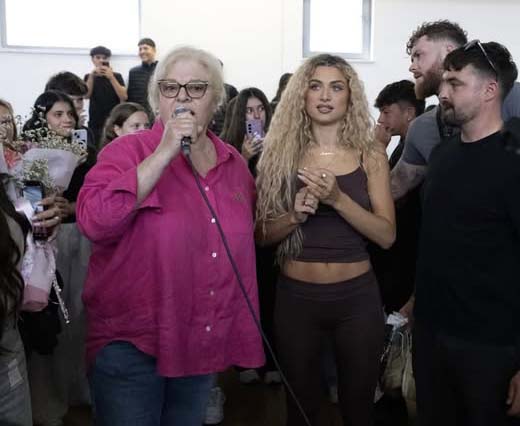
When Antigoni landed back in Cyprus, she gave a teary-eyed interview on TV, still upset about the result and the prospect of disappointing Cyprus. Her honesty resonated with fans who rushed to comfort her and share words of appreciation.
“I gained a whole bunch of allies!” Antigoni says. “I was a little embarrassed that I cried in an interview, but that was the reality of how I felt. A big part of being an artist is being relatable. In that moment, I was just a girl who had been through something that didn’t go the way I wanted it to and it had affected me.”
I can’t help but admire Antigoni’s ability to keep a positive outlook on life. While others would be crushed by pressure, she’s quick to find the blessings in how things turned out.
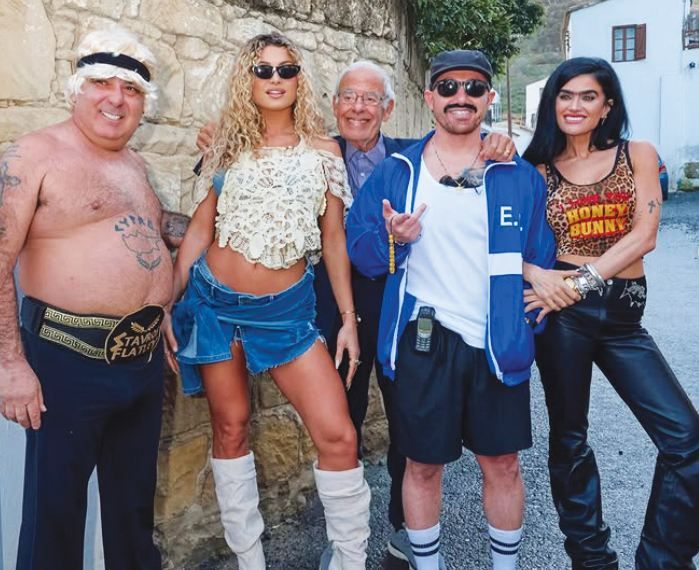
She credits much of her resilience to family support. Both parents have been pillars throughout the journey, with her momager Tonia Buxton, and father Paul, accompanying her almost everywhere.
Now, Antigoni’s life has changed entirely. A simple freddo or souvlaki run is a meet-and-greet with fans and an opportunity to dance the now-iconic ‘Jalla’ choreography. New music, shows and a major project are coming soon. But the real win Antigoni says, is people’s support.
“If you gave me the choice of winning Eurovision, but people not really caring about the song or witnessing the impact that it had – people feeling proud of their dialect, households coming together, and friends quoting the song when going out – that’s so much bigger. ‘Jalla’ actually made a difference.
“For a long time,” Antigoni concludes, “I saw Eurovision as this pinnacle of where I want to get to. Now, I see that it was just a huge step to the rest of my life.” She hugs me goodbye, and it almost feels like we’ve become friends. Antigoni has that charm: to warm people’s hearts.




Click here to change your cookie preferences