
An open letter to President Nikos Christodoulides from fothkia.com
We are also addressing the media because we believe that prevention, accountability and the protection of human life are not the responsibility of the government or the competent services alone. They are the responsibility of all of us. They are the responsibility of political parties, parliament, district officers, community authorities, local bodies and journalism itself, which has a duty to highlight the scale of the problem in time and to press for concrete solutions.
We say this with respect, but also with absolute clarity: we do not need more general promises, reassuring statements, or after-the-fact declarations. We need pressure for real measures, with a timetable, implementation and oversight.
Furthermore, it remains entirely unclear what has actually been done in practice regarding the basic first-response infrastructure in high-risk communities. Given that, as had reportedly been communicated at community level as early as September 2025, there had been information or discussion about funding that could concern fire-protection infrastructure, it is reasonable to ask why, by mid-March 2026, there is still no clear, visible, and measurable result regarding the immediate purchase, replacement and installation of functional fire hydrants where these are absent, damaged, or still out of service.
This concern is heightened by the fact that, according to what has been publicly conveyed by local communities and at community level, in the vast majority of communities there do not appear to be fire hydrants in genuinely operational condition.
The question, therefore, is not theoretical but immediately practical: if we are already in March 2026, when exactly will the relevant funds be approved, when will the necessary equipment be purchased, and when will it finally be installed on the ground?
At the same time, the discussion on wildfire preparedness cannot be reduced to general assurances when there are still reported shortages in basic firefighting equipment, available water sources, backup water-supply solutions, and even elementary local prevention and first-response planning.
Preparedness cannot be considered adequate without meaningful surveillance and prevention at the most critical and highest points, through organised fire watchtowers or other fixed observation points.
At the same time, it is entirely legitimate to ask whether serious consideration has been given to the use of additional means and practices employed internationally, such as early smoke-detection technologies, cameras, surveillance drones, or other applicable solutions, including alternative suppression methods such as fire-suppressing powder, wherever this is technically, operationally, and environmentally permissible.
We are not prejudging solutions, but we consider it self-evident that the Republic of Cyprus must systematically examine every serious and applicable practice used internationally, rather than limiting itself to a continually repeated emergency-management approach.
Finally, the experience of July 2025 demonstrated in the most painful way that when aerial operational capability is restricted after nightfall, the risk of flare-ups remains extremely serious.
We saw this in practice. That is precisely why it is not enough to acknowledge weaknesses after the fact. A clear answer is required as to whether there are currently comprehensive local plans, adequate coordination, functional infrastructure, available means for the critical hours, and a specific timetable for immediate interventions.
Moreover, it is of particular concern that many communities and local authorities still do not appear to have a sufficiently organised plan for prevention, surveillance, warning, first response and coordination in the event of fire. If this is the case, then this is not merely an administrative shortcoming, but a substantial gap in civil protection in areas that we know are exposed.
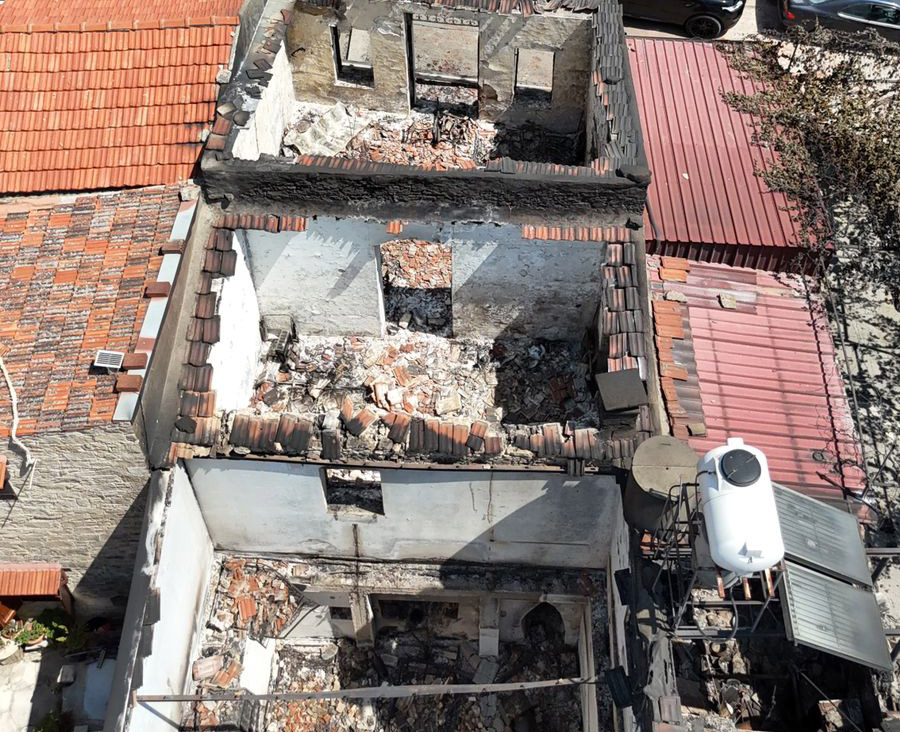
For the local communities that lived through this tragedy, this is experienced as the most severe disaster of recent decades and, for many of our fellow citizens, as the deepest wound they have known since 1974. That is precisely why we urge the media not to treat this issue as just another passing news story, but as a matter of national responsibility, public safety and democratic accountability.
We call on you to cover this issue in depth, to bring to light the questions that remain unanswered, and to help ensure that pressure is exerted not for new promises, but for specific decisions, specific measures, and a specific timetable for implementation.
We say this with respect, but also with full clarity: if, even now, political forces confine themselves to correct observations without immediate preparedness, meaningful prevention, and decisive institutional pressure, then public discourse will remain without real substance.
The protection of life, property, mountain communities and our natural environment cannot remain at the level of statements. What is needed is public visibility, persistent journalistic scrutiny, and pressure on everyone involved: the government, political parties, arliament, district officers, community authorities, and every competent body.
The editorial team of fothkia.com, an online support group established in the wake of the devastating fires in the Limassol district in 2025





Click here to change your cookie preferences