
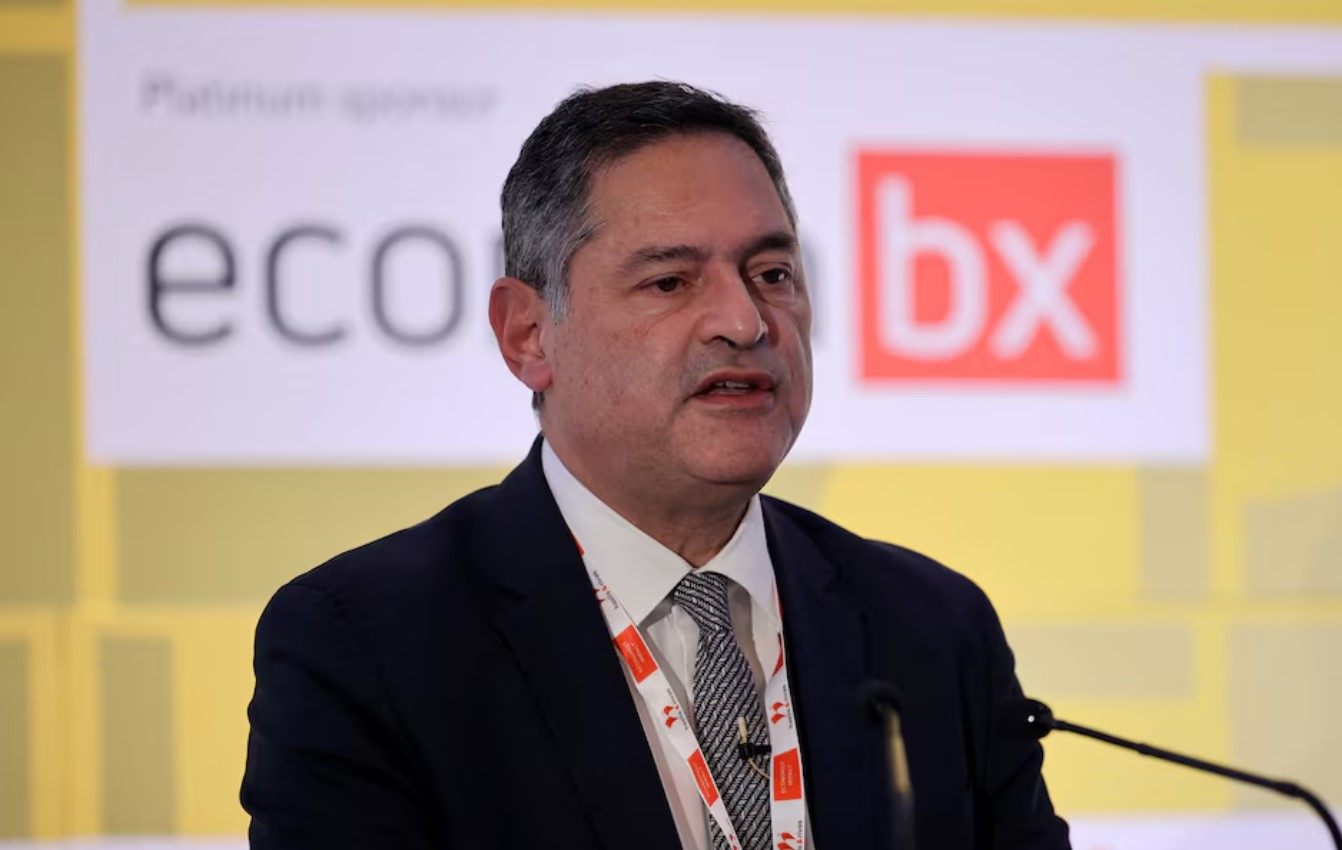
The European Central Bank should not rush to raise rates in response to surging energy costs, as its “baseline” outlook remains intact and there is no sign yet that inflation is becoming entrenched, Cypriot central bank chief Christodoulos Patsalides said.
With energy prices surging on the US-Israeli war with Iran, euro zone inflation is set to breach the ECB’s 2 per cent target as early as this month, prompting policymakers to debate whether to raise interest rates to head off second-round effects.
Patsalides, who sits on the ECB’s rate-setting Governing Council, said he would not hesitate to raise rates if he saw evidence that inflation was getting entrenched in the 21-nation bloc, but added there was no such evidence yet.
“We don’t have sufficient information to make a decision as to whether this should be looked through or whether we should be making a decision on interest rates,” Patsalides said in an interview. “I would not rush into any decision.”
Under the ECB’s baseline view, inflation tops 3 per cent in the second quarter before returning to target a year later, but adverse scenarios show deeper and longer-lasting overshoots.
“I think we are still along the baseline,” Patsalides argued. “Only two weeks have passed since the cutoff date of the projections, and we haven’t seen anything that points to a change in either the duration or the intensity of the war.”
RATE HIKE NEEDS MORE EVIDENCE
Markets now price in three ECB rate hikes this year, starting as early as April or June, but expectations are volatile and prone to sharp shifts as the war evolves.
Patsalides did not rule out an April move, arguing that the ECB can change rates at any meeting, but said this would require evidence that higher headline inflation is feeding into core prices rather than proving a one-off.
“I prefer to be more cautious,” he said. “Wisdom comes with more information. Wisdom is a function of necessary information. If you don’t have the information, then what you have is gut feeling. And you shouldn’t be making decisions on the basis of gut feeling.”
He added that longer-term inflation expectations, a key metric for the ECB in judging the duration of a shock, are anchored around the bank’s 2 per cent target.
Still, he acknowledged the risks are skewed towards higher inflation, warning that the lingering “memory effect” of the 2021-22 shock could lead households and firms to adjust price and wage expectations more quickly than in the past.
But he said that conditions are materially different now, with higher rates, a cooler labour market, tighter fiscal policy and limited pent-up demand.
The ECB’s next policy meeting is on April 30 where there bank is likely to receive updated scenario analysis on its projections.




Click here to change your cookie preferences