
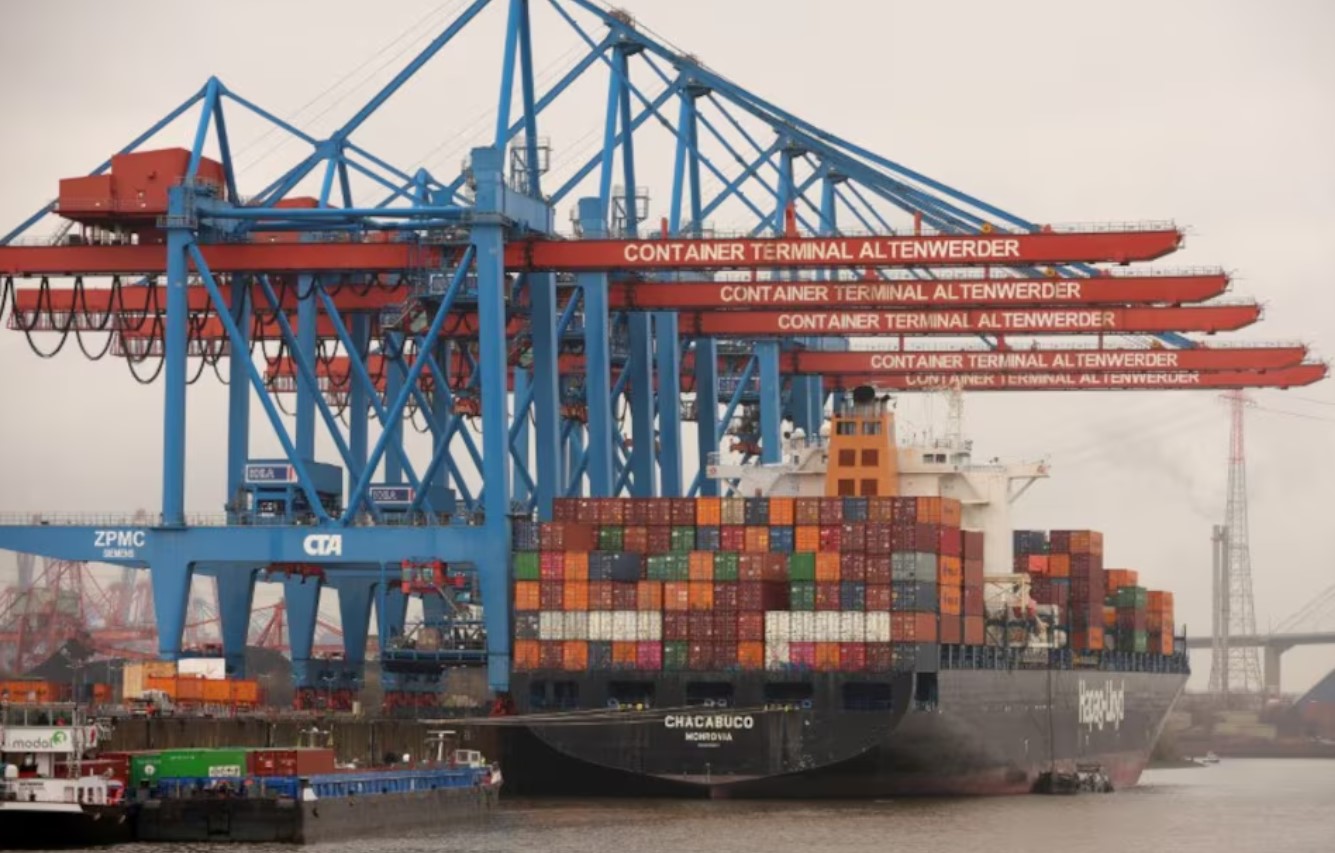
The European Union recorded a €128 billion trade surplus in goods in 2025, marking a decrease of €8 billion compared with 2024, according to Eurostat.
The surplus fell from €136 billion in 2024, reflecting shifting trade dynamics across key sectors and partners.
Between 2015 and 2025, the EU posted a trade surplus every year except in 2022, when a deficit emerged due to a sharp imbalance in the energy sector.
In all other years, trade surpluses in machinery, vehicles and chemicals outweighed persistent deficits driven by energy imports.
The chemicals and related products sector recorded the largest increase over the past decade, with the surplus doubling from €128.3 billion in 2015 to €256.7 billion in 2025.
The food and drink trade balance also rose, increasing from €32.0 billion to €39.7 billion over the same period.
Similarly, the other goods category saw growth, with the surplus rising from €9.5 billion to €20.7 billion.
By contrast, other manufactured goods shifted into deficit, moving from a €11.3 billion surplus in 2015 to a €37.6 billion deficit in 2025.
The energy trade deficit widened significantly, increasing from €226.4 billion in 2015 to €298.9 billion in 2025.
Fluctuating energy prices played a major role in this trend, with the deficit reaching a low of €157.2 billion in 2020 and peaking at €649.5 billion in 2022.
Regarding trading partners, the United States remained the EU’s top export destination in 2025, accounting for 21.0 per cent of total exports.
Exports to the United States reached €554.9 billion, representing a 3.6 per cent increase compared with 2024.
The United Kingdom ranked second, with €345.5 billion in exports and a 13.1 per cent share of the total.
Switzerland followed, accounting for €219.5 billion and 8.3 per cent of EU exports.
On the import side, China was the EU’s largest supplier, with imports valued at €559.4 billion, up 6.4 per cent compared with 2024.
China accounted for 22.3 per cent of total EU imports during the year.
The United States ranked second among import partners, with €355.5 billion and a 14.1 per cent share.
The United Kingdom followed with €158.6 billion, representing 6.3 per cent of total imports.
Meanwhile, in a separate report, Eurostat revealed the EU exported €36.9 billion worth of goods to Australia in 2025 while importing €10.2 billion, resulting in a €26.7 billion trade surplus.
In more detail, exports to Australia declined by 4.9 per cent compared with 2024 but increased by 39.6 per cent relative to 2015.
Imports from Australia fell by 4.8 per cent year-on-year but rose by 49.9 per cent compared with 2015.
The top five export product groups to Australia accounted for 47.3 per cent of total export value, reflecting a strong concentration in key industries.
Medicinal and pharmaceutical products made up 13.1 per cent of exports, followed by road vehicles at 11.1 per cent.
General industrial machinery and equipment accounted for 9.5 per cent, while electrical machinery, appliances and parts represented 6.9 per cent.
Machinery specialised for particular industries contributed a further 6.7 per cent.
On the import side, the top five product groups accounted for 62.1 per cent of total imports from Australia, indicating a higher concentration of goods.
Coal, coke and briquettes dominated imports with a 29.0 per cent share, while oilseeds and oleaginous fruits followed at 15.3 per cent.
Gold accounted for 7.2 per cent, while metalliferous ores and metal scrap made up 5.6 per cent.
Finally, Eurostat reported that miscellaneous manufactured articles contributed 5.0 per cent of total imports.





Click here to change your cookie preferences