
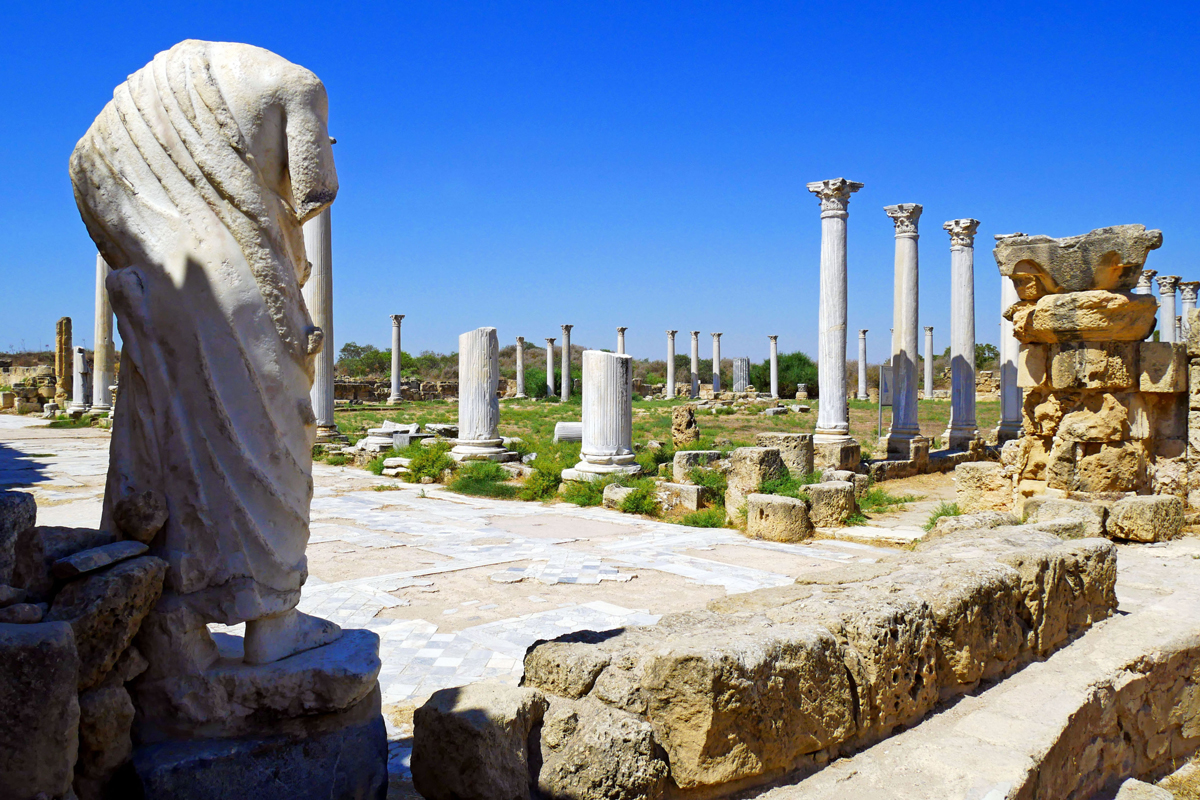
The archaeologists’ association called on Wednesday for stronger state protection of cultural heritage, warning that increasing construction activity across both the government-controlled areas and the north is placing archaeological sites and monuments under pressure.
In a statement, the association said the island’s cultural landscape, which it described as “a carrier of historical memory, collective identity and social continuity”, is facing “serious and often irreversible impacts” from development projects carried out without sufficient planning or safeguards for heritage protection.
The association said concerns in the government-controlled areas include the ongoing construction of hotel and residential developments near ancient Amathus in Limassol, plans for a multi storey building close to the Famagusta Gate in Nicosia and continued pressure for large scale projects in the wider Akamas region, including Ayios Georgios Peyias and the sea caves.
The association said the situation in the north was “even more worrying” because of what it described as “the absence of effective supervision and protection mechanisms under Turkish occupation”.
According to the group, extensive construction activity has been observed along the Kyrenian mountain range from Kormakitis to Karpasia, including in Ayios Ambrosios, Kalograia and Akanthou.
It added that particular concern surrounds the area near the medieval monastery of Panayia Melandrina, where excavation works and dumping of rubble from a nearby quarry have reportedly taken place close to surviving remains.
“This poses a serious risk of alteration of the natural and archaeological landscape,” the statement said.
The association also pointed to large scale apartment, holiday home and tourism developments in the Trikomo area and the coastal region of Famagusta, including areas linked to environmentally sensitive coastal zones.
It further referred to reports of planned interventions in the Karpasia peninsula, describing the area as one of “exceptional ecological and cultural importance”.
“The destruction or degradation of historical landscapes, monuments and archaeological sites, deprives all residents of Cyprus of the right to access their common cultural heritage,” the association said.
The group stressed that cultural landscapes are “a non-renewable resource” and cited international agreements including the 1954 Hague Convention and the European Landscape Convention.
It called on the republic to strengthen heritage protection and supervision mechanisms, increase staffing at the antiquities department, enforce planning and environmental procedures more strictly and pursue international action regarding heritage protection in the north.
“The preservation of cultural heritage is not only a legal or scientific obligation,” the statement concluded.
“It is a moral duty towards the history of the place and future generations.”





Click here to change your cookie preferences