
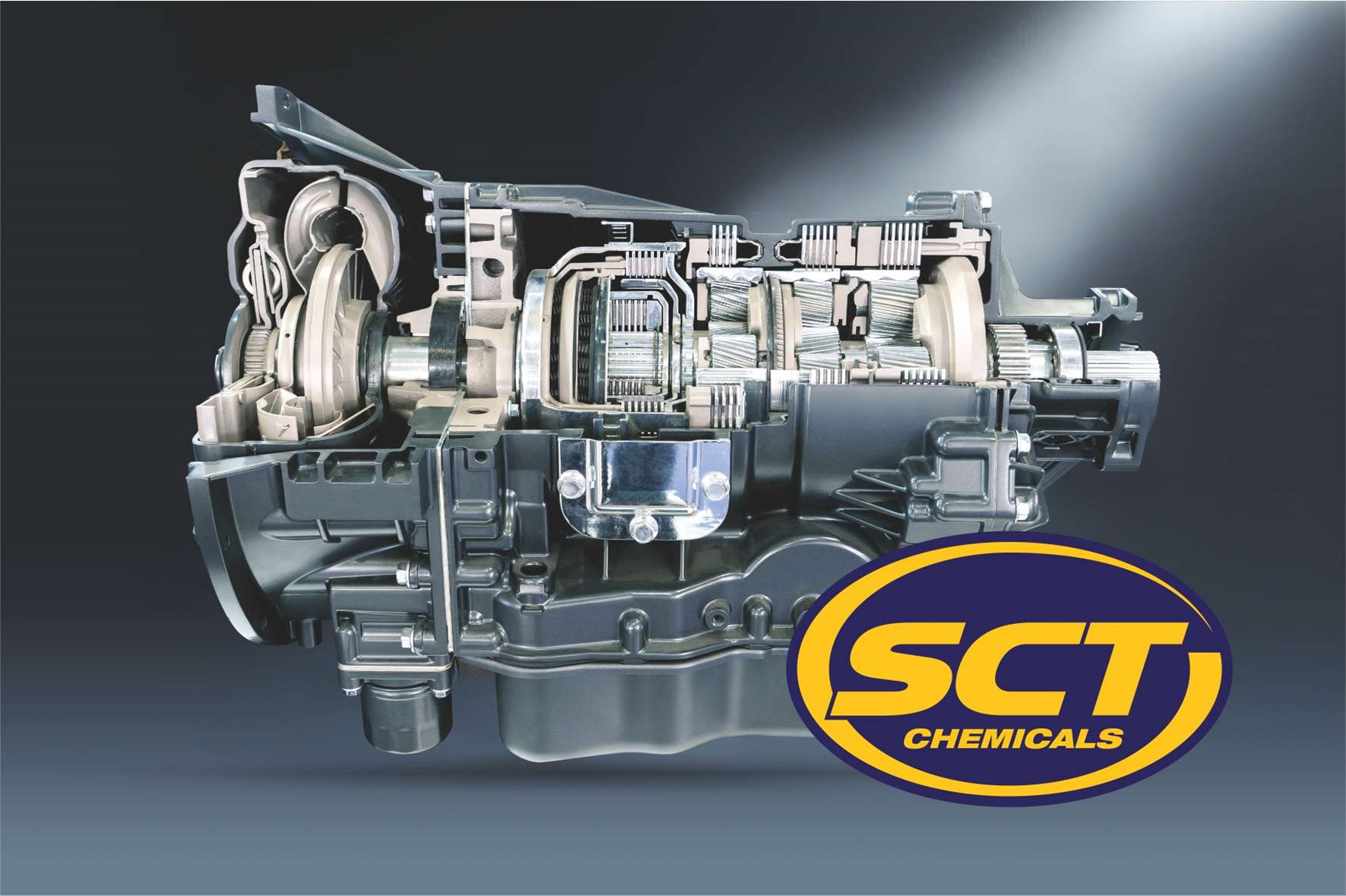
Automatic transmissions have evolved so dramatically over the past decades that today the same term covers fundamentally different mechanisms. A classical hydromechanical automatic transmission, a continuously variable transmission (CVT), and a dual-clutch robotic gearbox are all referred to as “automatics,” yet each type places its own distinct requirements on the working fluid.
One of the most frequent and costly mistakes made by car owners is filling a CVT with fluid intended for a conventional automatic transmission—or vice versa, says Juri Sudheimer, founder of SCT Group and owner of production facilities in Klaipėda (Lithuania) and Dubai (UAE).

“With more than 30 years in the industry, I have seen hundreds of cases of premature failure of expensive transmissions caused precisely by the wrong fluid selection. If ATF that does not meet CVT specifications is used, the chain begins to slip. If CVTF is poured into a conventional automatic, the clutch packs start to slip.”
The problem lies in the fact that fluid requirements for different transmission types are fundamentally opposite. A classical automatic transmission requires a balance between anti-friction and friction characteristics. A CVT requires maximum friction properties to prevent chain slippage. A dual-clutch transmission requires specialized DCT fluids with a unique combination of frictional and hydraulic properties.
The SCT Group product portfolio under the brands MANNOL, PEMCO, CHEMPIOIL, and FANFARO includes a wide range of specialized fluids for most common types of automatic transmissions—from classical hydromechanical units to modern CVTs and dual-clutch gearboxes.
Fluids for classical Automatic Transmissions (AT)
The design of a classical automatic transmission (AT) imposes numerous requirements on the fluid used.
First, the torque converter requires low fluid viscosity, as hydraulic losses increase proportionally with viscosity. The hydraulic control system also benefits from lower viscosity: the greater the number of gears, the more complex and extended the fluid pathways through channels and passages. Lower viscosity allows the fluid to move faster with fewer losses through the valve body.
Second, planetary gearsets—typically using helical gears—require excellent anti-wear and anti-friction properties from the ATF.
Third, planetary gearsets are engaged via clutch packs consisting of alternating friction plates and steel plates. These clutch elements serve to engage and disengage gears and transmit torque. Structurally, a friction plate is essentially a steel disc with a bonded friction lining. Friction materials used in automatic transmissions include cellulose-based, Kevlar-based, and graphite composites, as well as sintered materials based on copper or steel with various fillers. Material selection depends on transmission design and operating conditions.
Thus, within the transmission, friction occurs both as metal-to-metal contact (in gearsets) and metal-to-non-metal contact (in clutch packs). For proper operation without slippage—and therefore without overheating and destruction—clutch packs require pronounced friction properties from the ATF, as well as very effective cooling.
Peak local temperatures at the friction plate–steel plate interface in modern automatic transmissions can reach up to 300 °C during gear shifts. This is the maximum temperature generated by friction at the moment of engagement. Average operating temperatures in the clutch contact zone can reach 100 °C, or even 130 °C under high load, due to intense friction during torque transmission.
The optimal operating temperature of ATF in an automatic transmission is 75–90 °C. Temperatures above 100 °C are considered overheating, and around 130 °C is a critical threshold where irreversible degradation of friction materials may begin. Signs of overheating include a burnt-oil smell, harsh shifting, or a warning indicator on the instrument panel.
By contrast, the actual temperature of ATF in the gear tooth contact zone usually ranges from 56–83 °C, depending on operating conditions.
These factors determine the selection of specialized friction modifiers for ATF fluids. ATF formulations contain mutually compatible anti-friction and friction additives that activate depending on temperature or material interaction. For example, at temperatures up to around 80 °C, anti-friction properties dominate in the gearsets, while friction additives remain inactive. At higher temperatures in the clutch packs, friction properties become dominant, while anti-friction additives play a minimal role. Similarly, anti-friction behavior prevails in metal-to-metal contact, while friction modifiers activate in metal-to-non-metal contact.
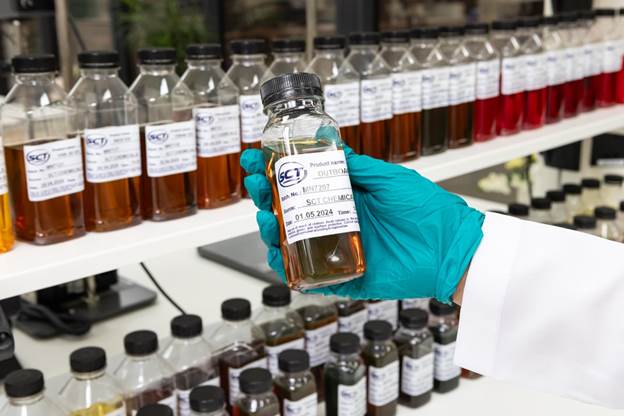
“Developing friction modifiers with predictable behavior within defined temperature and load ranges has been one of our key research objectives in recent years,” explains Juri Sudheimer. “Our laboratories in Klaipėda and Dubai are equipped with specialized tribometers to measure friction coefficients at various temperatures and loads. We test compatibility with dozens of friction material types—from cellulose composites to modern composite and ceramic-containing materials.”
Composition of ATF fluids
Automatic transmission fluids consist of a base oil (synthetic or semi-synthetic) and an additive package accounting for 20–30% of the total volume. Additives provide functions specific to automatic transmissions, including wear and corrosion protection, oxidation and foaming resistance, friction control, and viscosity stability.
Typical ATF additive packages include:
- Anti-wear and extreme-pressure additives
- Corrosion inhibitors
- Friction modifiers for correct clutch operation
- Antioxidants to prevent oil degradation at high temperatures
- Defoamers
- Detergent and dispersant additives
- Seal-conditioning additives
- Viscosity modifiers
“Developing ATF additive packages requires enormous investment in research and testing equipment,” emphasizes Juri Sudheimer. “Since 2004, we have invested more than €90 million in production development, a significant portion of which has been allocated to transmission fluid laboratories.”
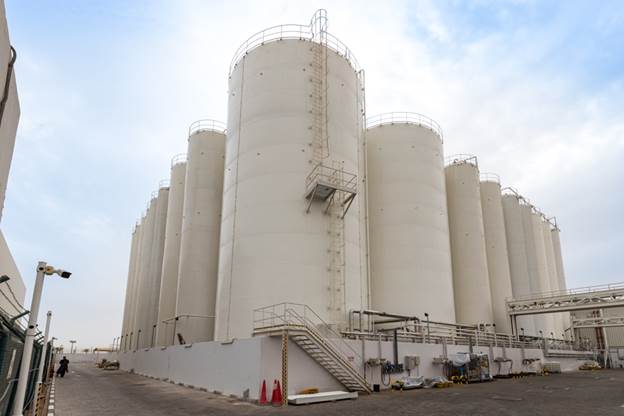
The SCT Chemicals FZE plant in Dubai employs 188 people and is equipped with modern test benches for ATF, CVTF, and DCTF fluids. Annual production capacity reaches 140,000 tons of lubricants and technical fluids. Certifications ISO 9001, ISO 14001, ISO 45001, and ISO/IEC 17025 confirm compliance with international quality standards at every stage of production.
Each formulation undergoes extensive laboratory and bench testing—from viscosity and friction characteristics to thermal stability and real-world testing on operating transmissions. Every formula completes hundreds of testing hours before entering production.
ATF products for classical automatic transmissions
For conventional automatic transmissions, SCT Group produces the following fluids:
- MN8211 ATF AG52
- MN8212 ATF AG55
- MN8205 Dexron II Automatic
- MN8206 Dexron III Automatic Plus
- MN8208 ATF Type T-IV
- MN8209 ATF SP-III
- MN8218 ATF Multivehicle JWS 3309 – Multi ATF
- MN8213 ATF AG60
- MN8207 Dexron VI
- MN8219 ATF SP-IV
- MN8217 ATF WS
- MN8221 ATF Special Fluid 236.17
- MN8222 ATF ULV 8222
Detailed product descriptions are available on the company’s online resources. To ensure correct fluid selection, SCT has developed the publicly accessible SCTApprovalControl system. In the “Search via specification” section, users can independently select the required fluid. The most reliable source of specification information remains the vehicle owner’s manual.
Fluids for Continuously Variable Transmissions (CVTF)
A continuously variable transmission (CVT) provides smooth, stepless ratio changes, unlike traditional gearboxes with fixed gears. The most common push-belt (or push-chain) CVT design uses two pulleys and a metal belt or chain to transmit torque smoothly and improve fuel efficiency by allowing the engine to operate at optimal speeds. The term “belt” is outdated; technically, it is a metal chain, as are the pulleys themselves.
The primary function of CVT fluid is to prevent chain slippage on the pulleys. Unlike conventional ATF, CVTF must provide excellent friction properties under metal-to-metal contact. Therefore, CVTF uses specialized friction modifiers and must never be used in classical automatic transmissions—and vice versa. The second critical function is cooling. The main cause of CVT failure is thermal overload and delayed fluid replacement.
“CVTs are the most demanding automatic transmissions in terms of fluid requirements,” says Juri Sudheimer. “The chain operates under enormous pressure in constant contact with the pulleys. Even minimal slippage caused by incorrect fluid leads to accelerated wear.”
For CVTs, SCT Group produces:
- MANNOL ATF CVT 8216
- MANNOL CVT NS-3 8220
The key difference between Nissan NS-2 and NS-3 specifications lies in viscosity. NS-3 is a newer, lower-viscosity fluid designed for improved low-temperature performance and newer vehicles, while NS-2 is more viscous and intended for older CVTs produced up to approximately 2006.
- NS-2: higher viscosity, reduced circulation at low temperatures; color: yellow-brown
- NS-3: lower viscosity, improved cold performance; recommended for vehicles produced after 2013; color: green
Switching to NS-3 may require a CVT control unit software update to prevent shift judder.
Fluids for dual-clutch and robotic transmissions (DCT/DSG)
A dual-clutch transmission uses two clutches controlling two separate gearsets—one for even gears and one for odd gears—allowing near-instant gear changes without power interruption and improved fuel efficiency compared to classical automatics.
These transmissions are available with dry or wet clutches. Dry-clutch systems require conventional manual transmission oils, while wet-clutch systems require specialized fluids similar—but not identical—to ATF. These fluids cannot be interchanged with ATF or with each other. They combine properties of ATF and manual gearbox oils, emphasizing precise clutch control, thermal stability, and wear protection.
For wet dual-clutch transmissions, SCT Group offers MANNOL DCT Fluid 8202.
For dry-clutch robotic transmissions in Toyota and Lexus vehicles (e.g., Camry, Corolla, Auris, RAV4, Verso, Lexus LS, including Freetronic systems), MANNOL MTF-3 8115 is used.
Fluids for Haldex Couplings
The Haldex coupling is an electronically controlled multi-plate clutch used in on-demand all-wheel-drive systems in vehicles such as Audi, Volkswagen, and Volvo. It transfers torque from the front axle to the rear axle when required.
SCT Group has developed MANNOL AWD Gear Oil 8100, a universal fluid suitable for Haldex couplings up to the fifth generation.
How to choose the correct transmission fluid
The key rule is to identify your transmission type and use only the appropriate fluid:
- Classical automatic transmission – use ATF meeting the specified standard (Dexron, Mercon, Type T, SP, etc.)
- CVT – use only CVTF meeting the required specification (NS-2, NS-3, etc.); never use standard ATF
- Dual-clutch transmission (DCT/DSG) – use DCTF for wet clutches and appropriate manual transmission oil for dry clutches
- Haldex coupling – use a dedicated AWD fluid
For correct MANNOL fluid selection, use the SCTApprovalControl system and search by specification according to your vehicle manufacturer’s requirements.
Fluid change intervals
Recommended intervals (depending on operating conditions and manufacturer requirements):
- Classical automatic transmission: every 60,000–80,000 km or 4–5 years
- CVT: every 40,000–60,000 km or 3–4 years
- DCT/DSG: every 60,000 km or 4 years
- Haldex coupling: every 60,000 km or 3 years
Claims of “lifetime fluid” apply only under ideal conditions. In reality, fluid ages, oxidizes, and becomes contaminated with wear particles. Timely replacement can extend transmission life by tens of thousands of kilometers.
SCT group philosophy: Specialization for every transmission type
Automatic transmissions are becoming increasingly complex, and universal solutions no longer exist, concludes Juri Sudheimer. “Each transmission type requires its own specialized fluid with a unique set of properties. We do not pursue mythical ‘one-size-fits-all’ fluids—this inevitably leads to compromises and problems.”
SCT Group’s total production capacity exceeds 1 million liters per day, with total tank storage exceeding 60 million liters and a portfolio of more than 500 products. In 2024 alone, €3 million was invested in research and development, much of it focused on improving transmission fluid formulations.
These fluids are used worldwide—from compact city cars to premium SUVs and sports sedans—and every canister undergoes multi-stage quality control at SCT plants in Klaipėda and Dubai.
Do not economize on transmission fluid. Repair or replacement of an automatic transmission can cost €3,000 to €15,000. Choose the correct fluid, change it on time, and use high-quality MANNOL products—your transmission will operate smoothly and reliably for many years.





Click here to change your cookie preferences