
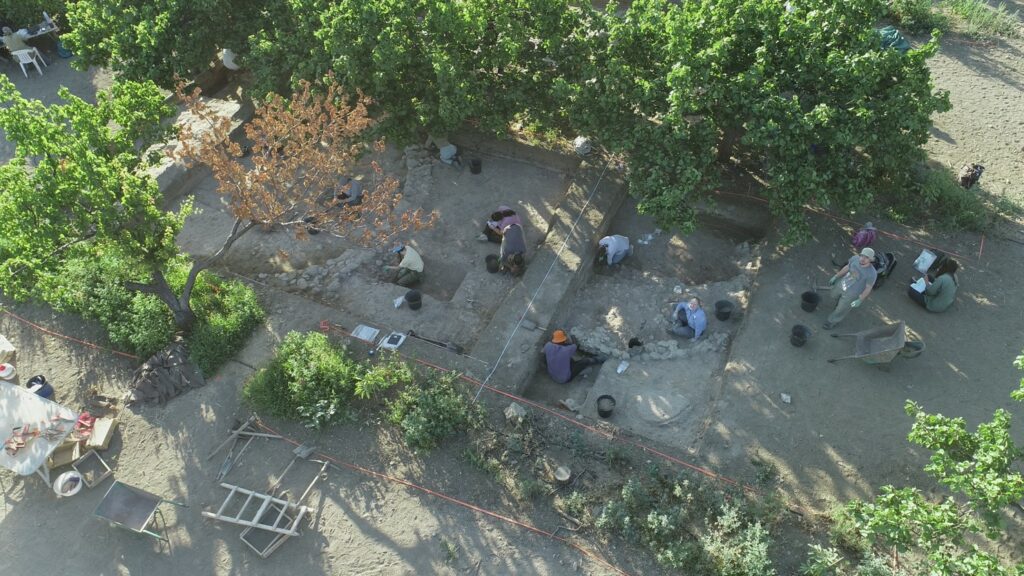
A section of a prehistoric cemetery was uncovered during the 2025 excavation season at the Makounta Voules/Mersinoudia site in the Paphos district, the department of antiquities said on Monday.
An archaeological team from North Carolina State University made the discovery between June 15 and July 17 last year.
The find provides significant evidence for studying Chalcolithic burial practices in Cyprus and allows comparisons with sites like Souskiou, the department said.
“The excavation adds valuable data to our understanding of burial practices during the Chalcolithic period in Cyprus,” it added, emphasising both similarities and differences with known cemeteries, which sheds light on social organisation in prehistoric Cyprus.
The cemetery was first identified during surface surveys.
Some graves were visible before excavation, situated on a hilltop near a previously partly excavated Chalcolithic settlement.
In 2025, archaeologists excavated 10 rock-cut graves, some disturbed by modern activity and others eroded along a cliff edge.
Three main grave types were identified: circular pits about 1 metre in diameter, larger circular pits up to 2 metres in diameter with side chambers, and rectangular rock-cut pits.
Most graves were disturbed, with only two containing intact offerings.
One grave held beads made of shell, picrolite and quartz, while the other contained human remains alongside copper spirals and fragments of copper wire.
Researchers indicated that the grave types and finds suggest most burials date to the Chalcolithic period (3900 to 2500 BC).
Surface finds in the cemetery were limited, unlike the nearby settlement, which was rich in artefacts.
However, a large tritira and several ceramic fragments were discovered near one grave.





Click here to change your cookie preferences