
The state statistical service (Cystat) on Thursday reported that inflation in Cyprus increased in March, with consumer prices continuing their upward movement compared with both the previous month and last year.
Specifically, the Consumer Price Index (CPI) rose by 1.21 points in March 2026, reaching 101.07 units compared with 99.86 units in February 2026.
Cystat stated that annual inflation stood at 1.2 per cent in March 2026, reflecting moderate price growth across the economy.
At the same time, data released earlier this week by Eurostat showed that annual inflation in Cyprus was estimated at 1.5 per cent, indicating a slightly higher rate under the harmonised European methodology.
The Eurostat estimate also showed that inflation accelerated from 0.9 per cent in February 2026, pointing to a renewed upward trend in prices.
On a monthly basis, inflation in Cyprus stood at 1 per cent in March 2026, according to Eurostat’s flash estimate.
Despite the increase, inflation remained lower than March 2025 levels, when it had reached 2.1 per cent, suggesting that price pressures are still relatively contained.
Eurostat noted that inflation dynamics in Cyprus remain moderate compared with the euro area, where broader price pressures are more pronounced.
Across the eurozone, annual inflation is expected to reach 2.5 per cent in March, rising from 1.9 per cent in February, according to the same release.
The increase at the euro area level was largely driven by higher energy prices, which are projected to record an annual rise of 4.9 per cent, compared with a decline of 3.1 per cent in February.
At the same time, services inflation is expected at 3.2 per cent, slightly down from 3.4 per cent in the previous month.
Prices for food, alcohol and tobacco are projected to rise by 2.4 per cent, marginally lower than 2.5 per cent in February.
Meanwhile, non-energy industrial goods are expected to increase by 0.5 per cent, down from 0.7 per cent a month earlier.
The Eurostat data, based on the harmonised index of consumer prices (HICP), enable consistent comparisons across European Union member states.
Turning back to national data, Cystat reported that the largest annual increase among economic categories was recorded in agricultural products, which rose by 13.3 per cent.
In contrast, the largest annual decrease was observed in electricity and water, which declined by 12.9 per cent.
Compared with February 2026, the biggest monthly change was recorded in petroleum products, which increased by 9.1 per cent.
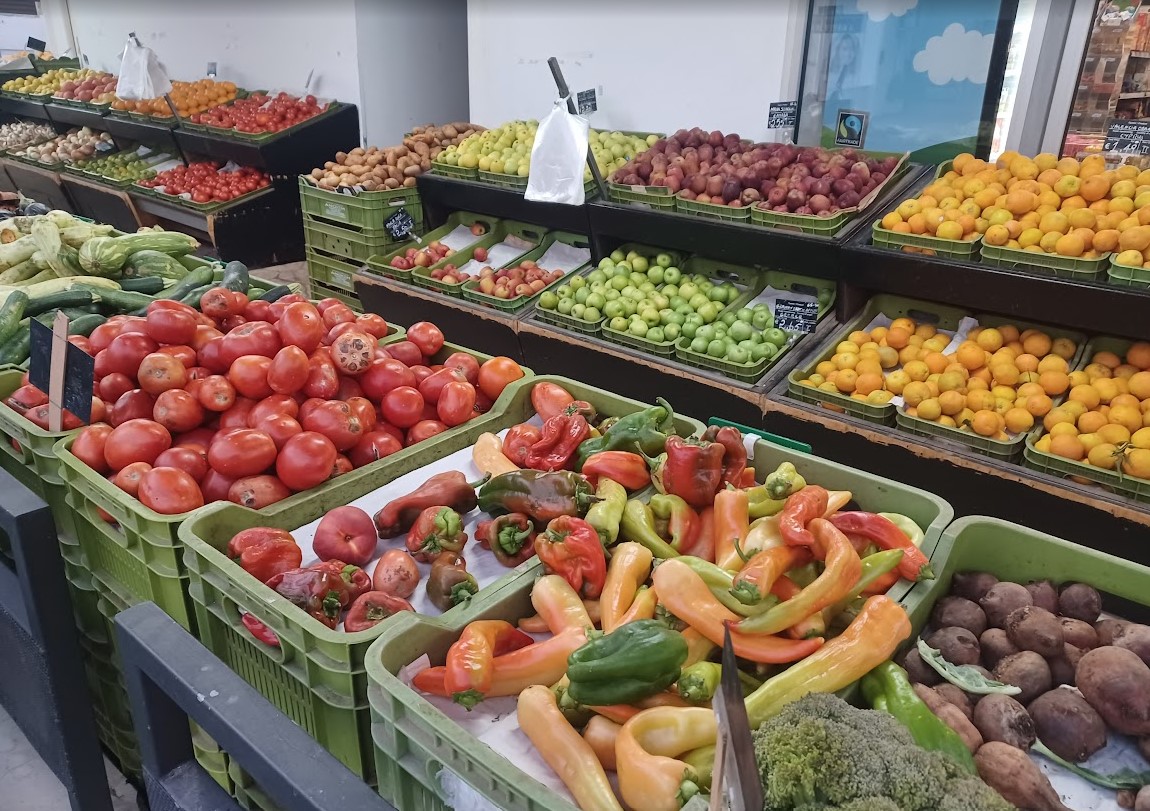
A closer breakdown showed that, on an annual basis, food and non-alcoholic beverages rose by 6.2 per cent, reflecting continued pressures on household essentials.
At the same time, clothing and footwear declined by 5.8 per cent year-on-year, marking the most significant drop among major categories.
Other notable annual increases were seen in educational services, up by 3.7 per cent, and restaurants and accommodation services, which rose by 3.3 per cent.
On a monthly basis, clothing and footwear increased by 3.9 per cent, while transport rose by 2.9 per cent and food and non-alcoholic beverages increased by 2.5 per cent.
In terms of contributions to the annual CPI change, restaurants and accommodation services had the largest positive impact at 3.10 units, followed by recreation, sports and culture at 2.74 units and alcoholic beverages and tobacco at 1.85 units.
The largest negative contributions to annual inflation came from health, which fell by 2.64 units, as well as information and communication at minus 1.61 units and clothing and footwear at minus 1.12 units.
Regarding monthly changes, the strongest upward impact on CPI came from food and non-alcoholic beverages at 0.45 units, followed by transport at 0.42 units and clothing and footwear at 0.23 units.
Smaller positive effects were recorded in recreation, sports and culture at 0.05 units and restaurants and accommodation services at 0.04 units.
At a more detailed level, recreation services provided the largest positive annual contribution at 2.82 units, highlighting sustained demand in the services sector.
By contrast, petrol recorded the largest negative annual contribution at minus 1.87 units, reflecting easing energy-related pressures compared with last year.
For month-on-month movements, vegetables had the largest positive impact at 0.80 units, while electricity exerted the largest negative effect at minus 0.15 units.





Click here to change your cookie preferences