

Subsidies for 80 per cent of hotel staff, state to cap monthly hotel employee subsidies at €1,324
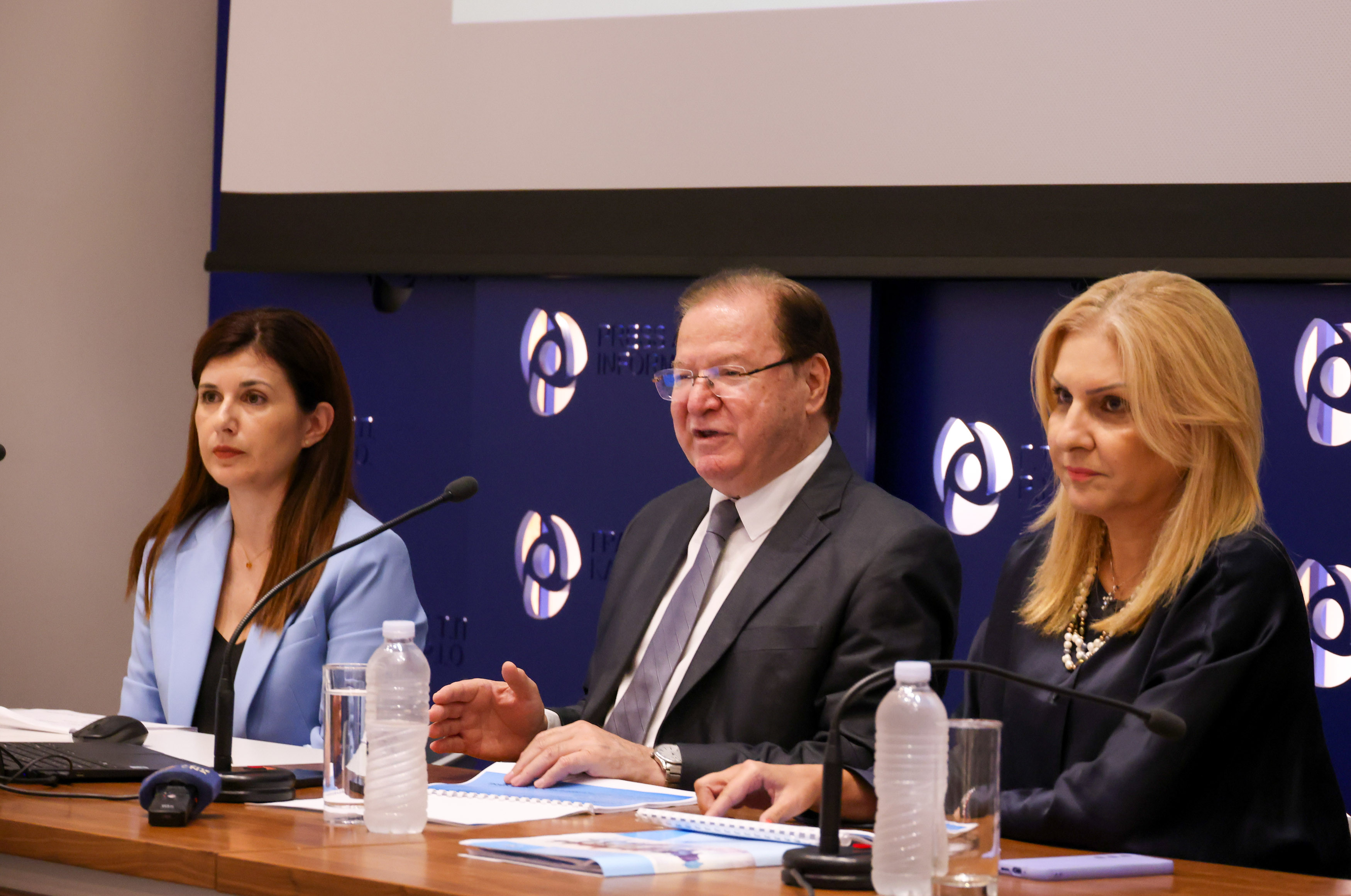
Labour Minister Marinos Moushiouttas on Friday presented the government’s support plan for the hotel industry, following a morning meeting with hotel associations and trade unions, as authorities moved to cushion the sector from the economic fallout of the Middle East crisis.
The updated framework was circulated shortly after the meeting, setting out detailed eligibility criteria for participation in the scheme.
The special support plan applies to all hotels and tourist accommodation operating between April 1 and April 30, 2026.
The scheme was approved by the Cabinet on March 26, 2026, with the stated aim of safeguarding employment in the hotel sector following a sudden drop in tourism activity linked to geopolitical developments.
Under the plan, eligible businesses must show or expect a drop in turnover exceeding 40 per cent in April 2026 compared with April 2025, or demonstrate that their occupancy rate is below 60 per cent.
The criteria clarify that the turnover decline applies to the entire period from April 1 to April 30, while occupancy is assessed based on the period during which the business is operating.
Only businesses that were active in 2025 and remain operational between April 1 and April 30, 2026, are eligible to apply, with the additional requirement that they must have started operations no later than April 20, 2026.
Hotels or tourist units operating only restaurants or ancillary services, or carrying out maintenance work, are not considered operational for the purposes of the scheme.
A central condition is that no employees may be made redundant until May 31, 2026, except in cases of dismissal without notice justified under employment rules.
The government confirmed that the state subsidy will amount to 30 per cent of each employee’s monthly salary, with a maximum monthly payment capped at €1,324 per employee.
The subsidy will be granted to businesses for up to 80 per cent of their workforce, with the remaining 20 per cent typically covering senior roles such as shareholder-directors, partners holding more than 20 per cent, general managers and other executives.
For the purposes of calculation, the number of eligible employees within the 80 per cent threshold will be rounded to the nearest whole number.
What is more, businesses must select the employees they wish to include in the scheme from their active employment records when submitting their application.
Employers are required to continue employing subsidised staff and pay the remaining portion of their salaries, covering the difference between the state subsidy and full wages.
They must also pay all required social insurance contributions for both employer and employee portions on the salaries paid.
The period during which the subsidy is paid will be treated as insured employment time for affected workers.
The subsidy will not be granted for any period during which an employee is receiving other benefits from the social insurance fund during April 2026.
To participate, businesses must submit an application through the Labour Ministry’s Ergani system, including their employer registration number regardless of whether they operate as a single entity, group, or individual business.
Applications must be accompanied by a report from an approved accountant confirming the financial data related to turnover decline or occupancy levels, with the option for this report to be prepared by an accountant employed by or cooperating with the business.
As part of the application, businesses must submit a declaration confirming that all information provided is accurate and that authorities may verify the data with relevant bodies in Cyprus or abroad.
They must also provide explicit consent for the processing of personal data for the purposes of implementing the scheme.
Companies are required to maintain all supporting records and documentation for at least two years and provide them to authorised officials upon request.
Any payments made to businesses or individuals who are later found not to be eligible will be treated as recoverable debts owed to the state, including cases where funds were obtained through false declarations.
Such amounts may be offset against future benefits or pursued as outstanding liabilities.
The authorities also confirmed that post-scheme checks will compare declared salaries with actual wages reported for social insurance contributions in April 2026, ensuring that subsidy calculations were accurate.
The updated framework builds on the broader support package announced last week by president Nikos Christodoulides.





Click here to change your cookie preferences