
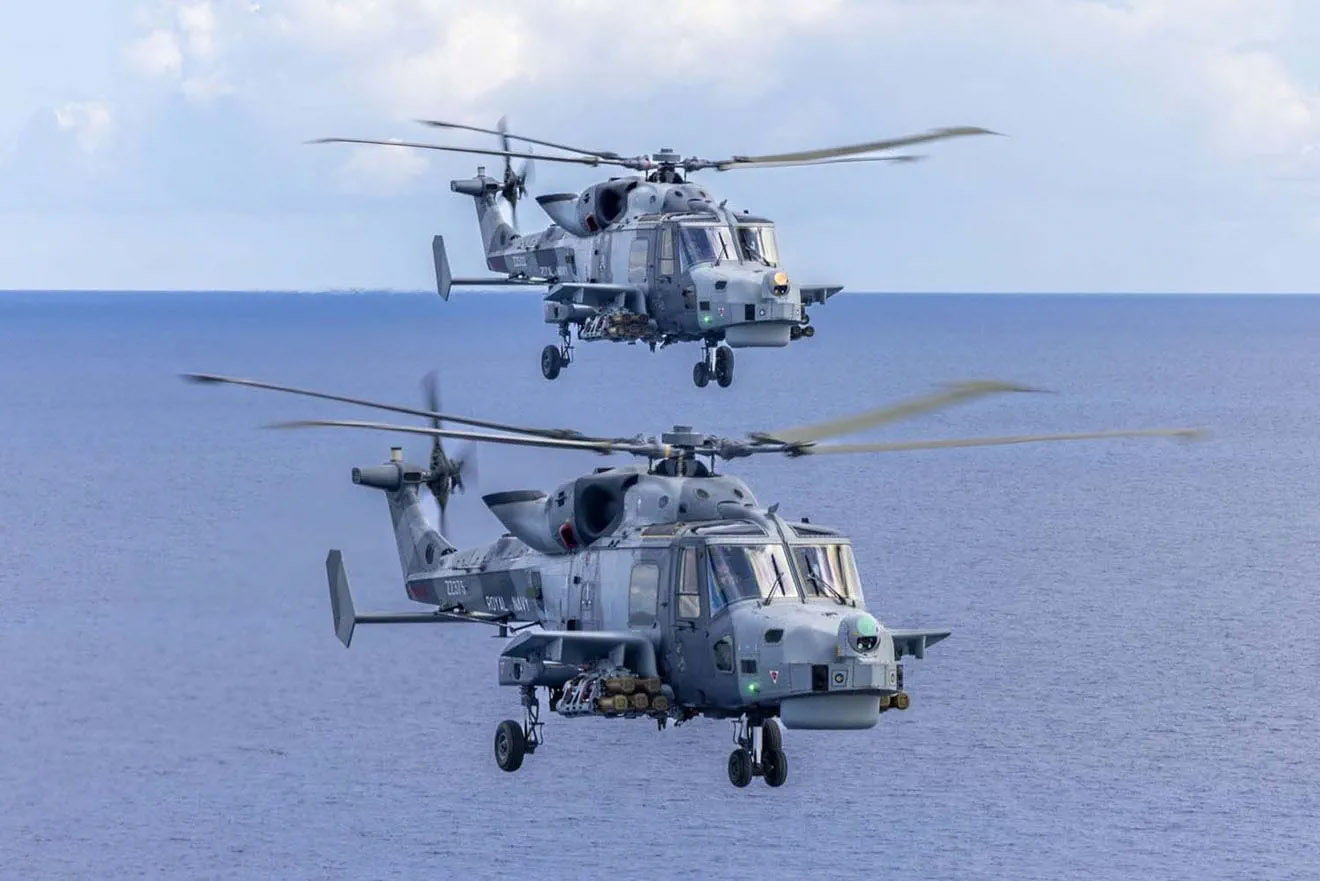
Royal Navy fliers deployed to Cyprus have passed the six-week mark of safeguarding the island from drone and missile threats, amid heightened regional tensions following recent attacks on British bases.
“Crews of Merlin and Wildcat helicopters have flown hundreds of hours of missions – sometimes regular patrols, sometimes scrambled to respond to possible threats – since deploying to RAF Akrotiri to safeguard British interests and the people of Cyprus in the wake of the conflict in the Middle East,” the UK defence ministry has said.
The deployment has seen an intensification of aerial surveillance and rapid-response operations, with helicopters working alongside wider UK and allied assets in the region.
The ‘Crowsnest’ Merlin helicopters – more typically assigned to the UK’s aircraft carriers – have been working “seamlessly with the radars of HMS Dragon” to build a comprehensive air picture spanning hundreds of square miles across the eastern Mediterranean. That shared operational picture is fed to RAF and Fleet Air Arm pilots flying F-35 Lightning jets stationed in Cyprus, as well as Wildcat crews and ground-based air defence units.
More specifically the Wildcats are equipped with Martlet missiles, a versatile system designed to take out small aircraft, helicopters and drones, as well as light ground vehicles and small boats. The system is used across all three branches of the UK armed forces and can also be deployed from Stormer armoured vehicles or ground launchers operated by the RAF Regiment and Royal Marines.
The deployment comes in the wake of an Iranian drone strike on the base in March, which caused limited damage but marked a sharp escalation in the island’s exposure to the ongoing Middle East conflict.
In response to the evolving threat, the UK has deployed additional air defence systems, including Stormer vehicles equipped with high-velocity missiles designed to counter low-flying drones. Naval assets have also been sent to the eastern Mediterranean, including the guided-missile destroyer HMS Dragon, tasked with strengthening regional air defences alongside allied forces.
The presence of British military bases at Akrotiri and Dhekelia has placed Cyprus at the centre of geopolitical tensions, despite repeated assurances by the Cypriot government that it is not directly involved in military operations.
The developments have sparked political debate in Cyprus, with some voices arguing that the presence of foreign bases has “exposed” the island to potential attacks, while others emphasise their role in regional security and humanitarian operations.





Click here to change your cookie preferences