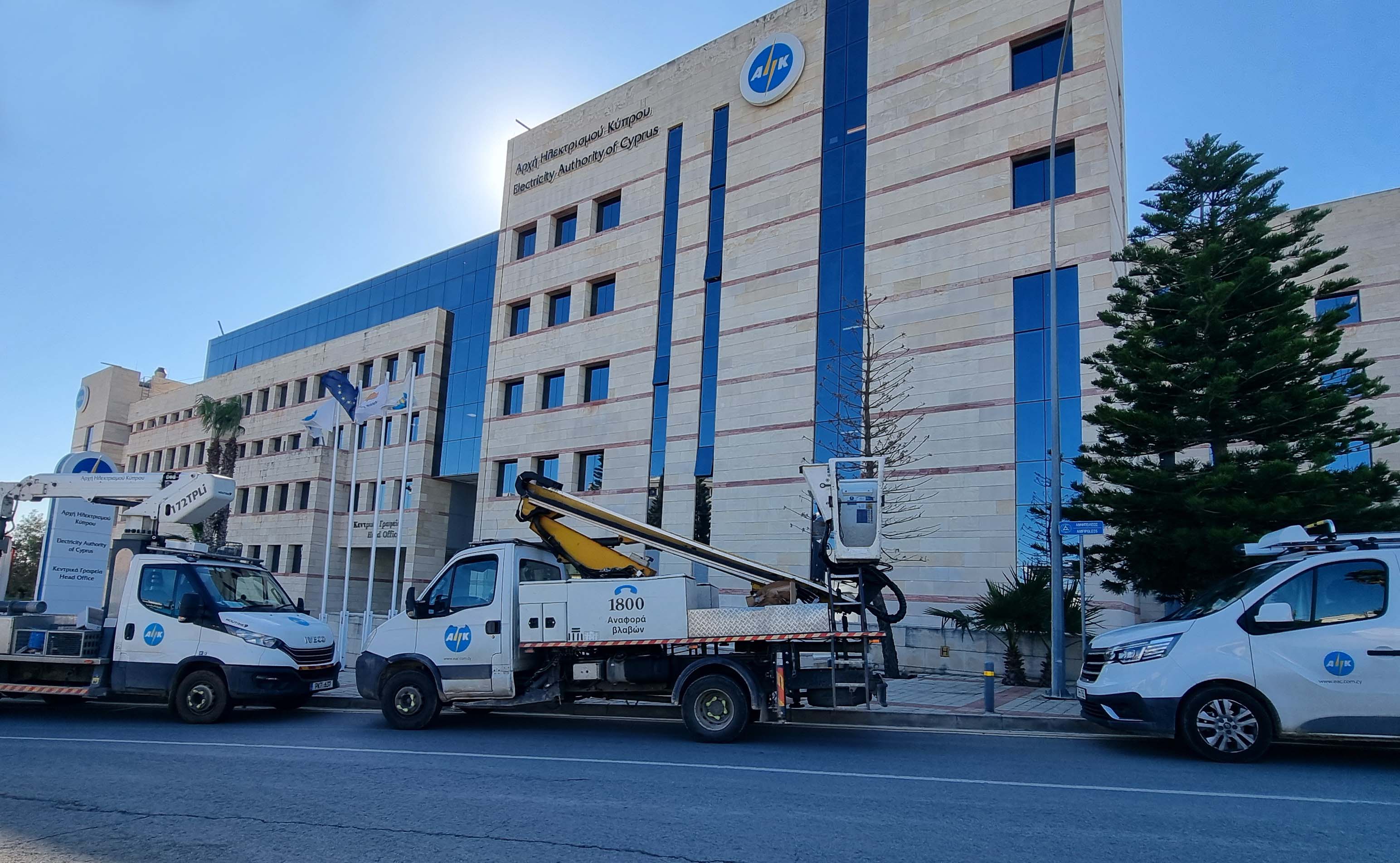
Electricity authority (EAC) employees went on a 24-hour strike on Thursday, with trade unions warning of further escalating measures.
Union boss Kyriacos Tafounas told media that, unless the government engages substantively with the EAC employees over the next 48 hours, they would decide further industrial action.
“From tomorrow [Friday] we will assess the situation, and accordingly decide on escalating.”
Tafounas recalled that the EAC unions’ demands have been known for some time.
“We began in February with a warning strike, continued in March with a three-hour strike, and after Easter we took more severe measures.”
Their complaints concern “the sufficiency of electricity and the cost of electricity,” he said.
They are not about wage increases.
According to the union boss, the situation “is not at five minutes before midnight, we’re already past that point”.
Asked whether any government official has contacted the unions, Tafounas said no. The last contact they had was with Energy Minister Michalis Damianos on Tuesday.
Tafounas also dismissed the notion that EAC employees decided to time their strike action to coincide with the informal summit of EU leaders taking place on the island on Friday.
On Tuesday, trade unions had said they were disappointed from their meeting with the energy minister, who pointed out that problems in the energy sector could not be solved overnight.
Tafounas on Wednesday said Damianos could not give solutions to the EAC’s problems for another three or four years, and “by that time we won’t have electricity”. He added that excluding the EAC from renewable energy sources was not to the benefit of consumers.
Speaking on Tuesday after the meeting with Damianos, PEO representative Demetris Constantinou said the unions’ positions were aligned with those of the EAC board of directors.
The EAC syndicates are highlighting a series of issues and government actions which they say affect the status of the organisation but also the electricity market in general.
“For all the above, inertia, filibustering, and perhaps even expediency, have resulted in consumers bearing a high cost of electricity, while the risk of a total blackout becomes more likely,” the unions said earlier.






Click here to change your cookie preferences