
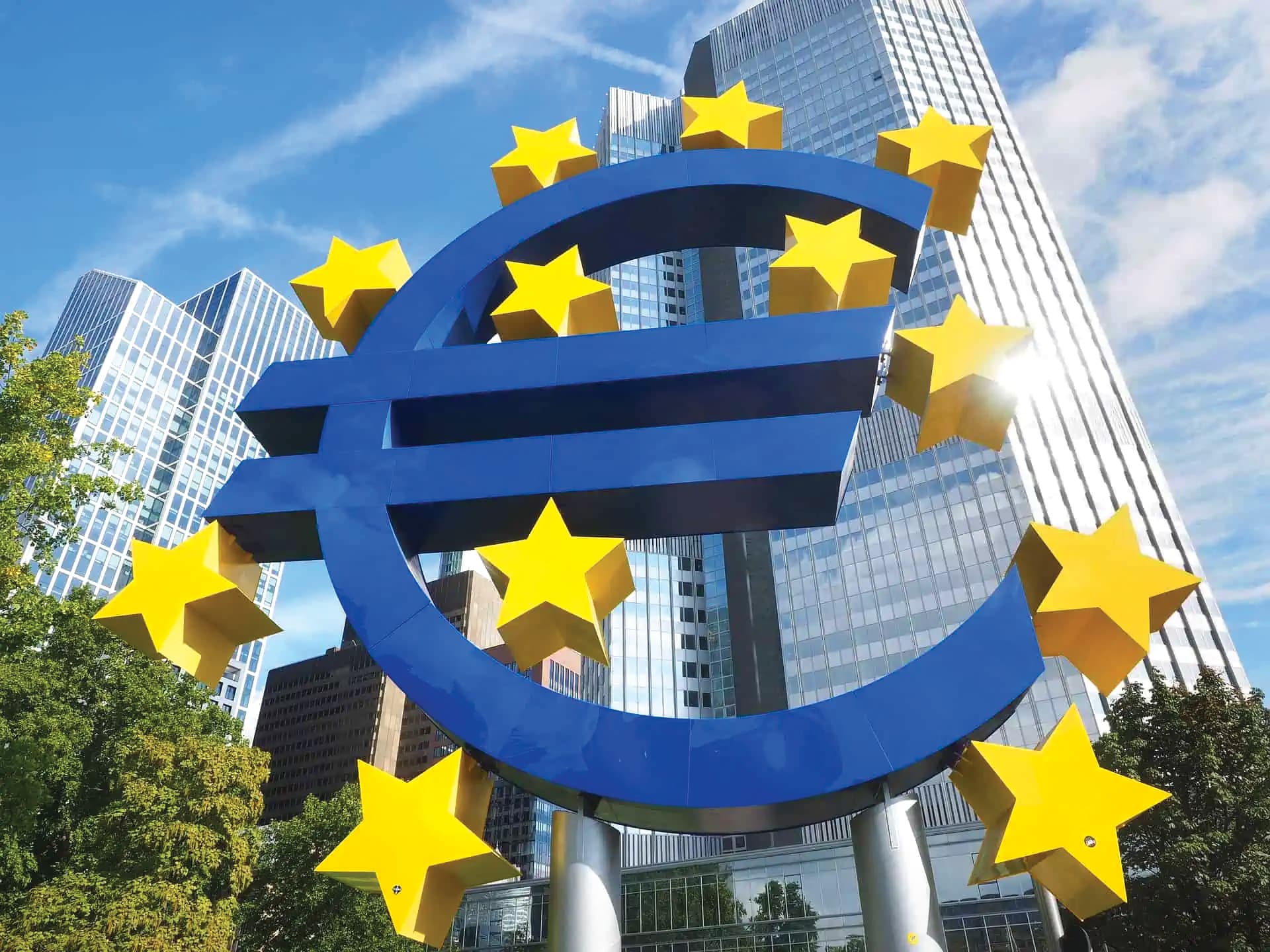
Financial integration in the euro area has improved markedly since late 2022 due to resilient market functioning, according to a report from the European Central Bank (ECB).
The latest findings on financial integration and structure show that price-based and quantity-based indicators have risen to levels exceeding their historical averages.
This positive trend has been underpinned by a sustained decline in redenomination risk premia and supported by policy initiatives such as the Next Generation EU programme.
Cross-border activity has increased across various market segments, which has facilitated greater risk sharing and helped make the financial system more resilient.
The strengthening of integration is most visible within debt markets and the sector for interbank lending.
Cross-border holdings of debt securities, including sovereign bonds, have increased because of better fundamentals across countries and the normalisation of the Eurosystem balance sheet.
Interbank lending has become more active as excess liquidity has been redistributed, which signals a money market environment that is more integrated and less fragmented.
Non-bank financial institutions are playing a growing role in diversifying financing channels and increasing the capacity for cross-border risk sharing.
Indicators of consumption risk sharing suggest the euro area is now better equipped to handle economic shocks and support smoother adjustments across different nations.
However, the report warns that the financial system continues to fall short of its potential to support long-term growth, innovation, and competitiveness.
External financing has remained subdued because of high interest rates and weak investment sentiment among market participants.
Structural fragmentation continues to constrain equity market integration and prevents the efficient allocation of savings across borders.
Integration within equity markets has actually declined since 2022, with cross-border equity investment within the zone stagnating.
Intra-euro area foreign direct investment has fallen to historically low levels during this period.
Euro area households continue to hold a large share of their wealth in low-yielding deposits, while a significant portion of equity investment is being channelled outside the European Union.
This persistent home bias contributes to a mismatch between the high level of savings in the region and its actual investment needs.
The availability of risk capital for innovative firms remains limited, which ultimately weighs on the long-term competitiveness of the bloc.
Advancing integration, scale, and efficiency across the single market is required to improve the competitiveness of the financial and banking sectors.
The findings support the objectives of the savings and investments union, which aims to channel savings more effectively into productive investment.
The analysis follows the recently published response to a consultation regarding the competitiveness of the EU banking sector.





Click here to change your cookie preferences