
Questions raised as to why legal service did not proceed with criminal charges
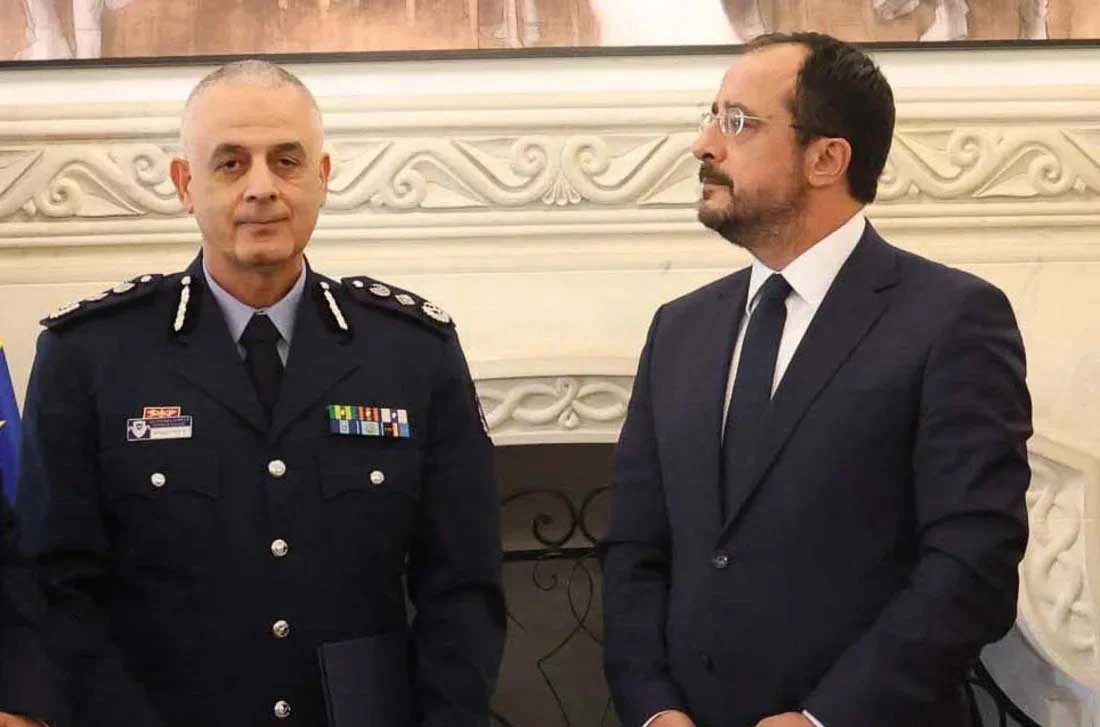
Questions over the handling of the Stylianou suicide case intensified on Wednesday after further details emerged regarding the investigation into police chief Themistos Arnaoutis and the decision of the legal service not to proceed with criminal prosecutions against senior police officers identified in independent findings.
Lawyer Simos Angelides said both attorney-general George Savvides and deputy attorney-general Savvas Angelides should publicly explain the basis on which prosecutions were not pursued against individuals named in the findings of independent criminal investigators Andreas Andreou and Modestos Pogiadjis.
Angelides said the issue concerned public accountability and institutional transparency following revelations made during ongoing court proceedings linked to the 2019 suicide of 14-year-old Stylianos Constantinou.
“We are monitoring and are not rushing to draw conclusions, but I must stress for the public interest we are entitled to immediate information and full justification of such action,” Angelides asserted.
The case relates to repeated complaints of alleged domestic violence made by Stylianos’ mother to police authorities between 2007 and 2013, when during part of that time police chief Arnaoutis was station commander in Pera Chorio, the village where the complaints were made.
Independent investigators were appointed on November 14, 2019, by then attorney-general Costas Clerides to examine whether police and state authorities failed to act appropriately before Stylianos was found dead at the family farm in September 2019.
According to testimony heard this week before the Nicosia district court, investigators concluded there were grounds to recommend criminal prosecution against 15 police officers and disciplinary responsibility for 35 members of the force.
Andreou confirmed during cross examination on Monday that recommendations had been submitted to the legal service on December 1, 2020.
He stated that only one police officer, a 58-year-old sergeant, was ultimately prosecuted after the attorney-general’s office decided not to proceed against the remaining officers.
Among those identified in the findings was police chief Arnaoutis, who served as commander at Pera Chorio police station between January 2012 and June 2013.
During that period, multiple complaints were filed by Stylianos’ mother against her husband, including allegations of violence, threats and assaults.
Court proceedings focused in particular on incidents recorded in February, March and May 2013.
One complaint dated February 12, 2013, stated that Stylianos’ mother contacted the station reporting that her husband was shouting at her and behaving aggressively following an argument.
Officers visited the scene and made recommendations to the husband regarding his conduct.
The station diary entry concluded with the phrase “case closed” and no criminal investigation followed.
A second complaint was recorded on March 11, 2013.
According to the police station log, Stylianos’ mother reported that her husband had pushed and slapped her during an argument over livestock at the family farm in Kotsiatis.
The entry recorded that she did not wish to provide a written statement and intended to stay temporarily with relatives in Kokkinotrimithia.
Investigators later concluded that police should nevertheless have proceeded with an investigation under domestic violence procedures which were in force at the time.
Andreou testified that there “may be evidence” of neglect of official duty under article 134 of the criminal code due to the fact the complaint was not investigated further despite standing police instructions.
A third incident examined by investigators related to May 13, 2013, when Stylianos, then aged eight, was reported missing after an argument with his father at the family’s animal pen.
Police, emergency units and volunteers searched the area before the child was located at home later the same evening.
The station record stated that “no further action required” and the matter was closed.
The findings presented in court stated that in all three incidents officers failed to carry out procedures required under police circulars concerning domestic violence.
These included obtaining statements, opening ‘ex officio’ investigations (of their own volition), completing domestic violence forms, informing welfare services as well as notifying the attorney-general’s office.
During his questioning by investigators on September 21, 2020, Arnaoutis was examined as a suspect in relation to six offences, including allegations of dereliction of duty and acting ‘ultra vires’ (beyond his authority).
According to investigative testimony disclosed during the hearings, Arnaoutis declined to answer 31 questions put to him by investigators and exercised his right to remain silent.
In response to a final question asking whether he wished to state anything further, he submitted a written statement rejecting responsibility.
In that statement, Arnaoutis said the investigative summons did not clearly specify the criminal case under examination or identify the deceased minor.
He referred specifically to two incidents known to him during his tenure at Pera Chorio police station.
One involved the temporary disappearance of Stylianos in May 2013 and the second concerned allegations that the child had been assaulted by his father.
Arnaoutis stated that after being informed of the assault allegation he gave “clear instructions” for the case to be investigated, despite what he described as a lack of cooperation from Stylianos’ mother regarding videotaped testimony from the child.
He further stated that criminal proceedings were filed against the father and resulted in a conviction by the Nicosia district court on December 3, 2014.
“Based on the above, my position is that at least for the period when I was station commander between January 2012 and June 2013, the only complaint made in relation to an attack against Stylianos was fully investigated,” the statement read.
He concluded by stating “I categorically reject anything else general and vague in relation to the death of Stylianos.”
Material presented in court also showed that investigators examined police circulars governing domestic violence cases, including one issued in February 2007 and another dated March 5, 2016, signed by Arnaoutis himself in his later role as a senior deputy police chief.
The circulars instructed officers that investigations into domestic violence allegations should proceed even where complainants declined to cooperate or wished to withdraw complaints.
They also required officers to complete official forms, inform social welfare services and provide information material to complainants.
The issue gained further attention after revelations that Arnaoutis later served as chairman of the police disciplinary committee between July 2020 and December 2022 while recommendations for disciplinary and criminal proceedings against him were already before the legal service.
Angelides said Savvides should explain how it concluded that prosecutions were not required despite the recommendations of independent criminal investigators.
He added that while prosecutorial discretion under the constitution belongs exclusively to the attorney-general, decisions of such significance should be accompanied by sufficient justification.
Angelides also referred to article 131 of the constitution, under which the president has powers regarding the appointment and dismissal of the police-chief.
“Anyone who has such powers must explain the means by which they actually exercised them,” he demanded.
The Stylianou case resulted in separate criminal proceedings against multiple individuals.
Charges were filed against Stylianos’ father in relation to allegations of physical and psychological violence, against Stylianos’ mother for failing to report abuse and against seven social welfare officers for neglect of official duty.
Two welfare officers admitted charges earlier this month and received suspended prison sentences.




Click here to change your cookie preferences