
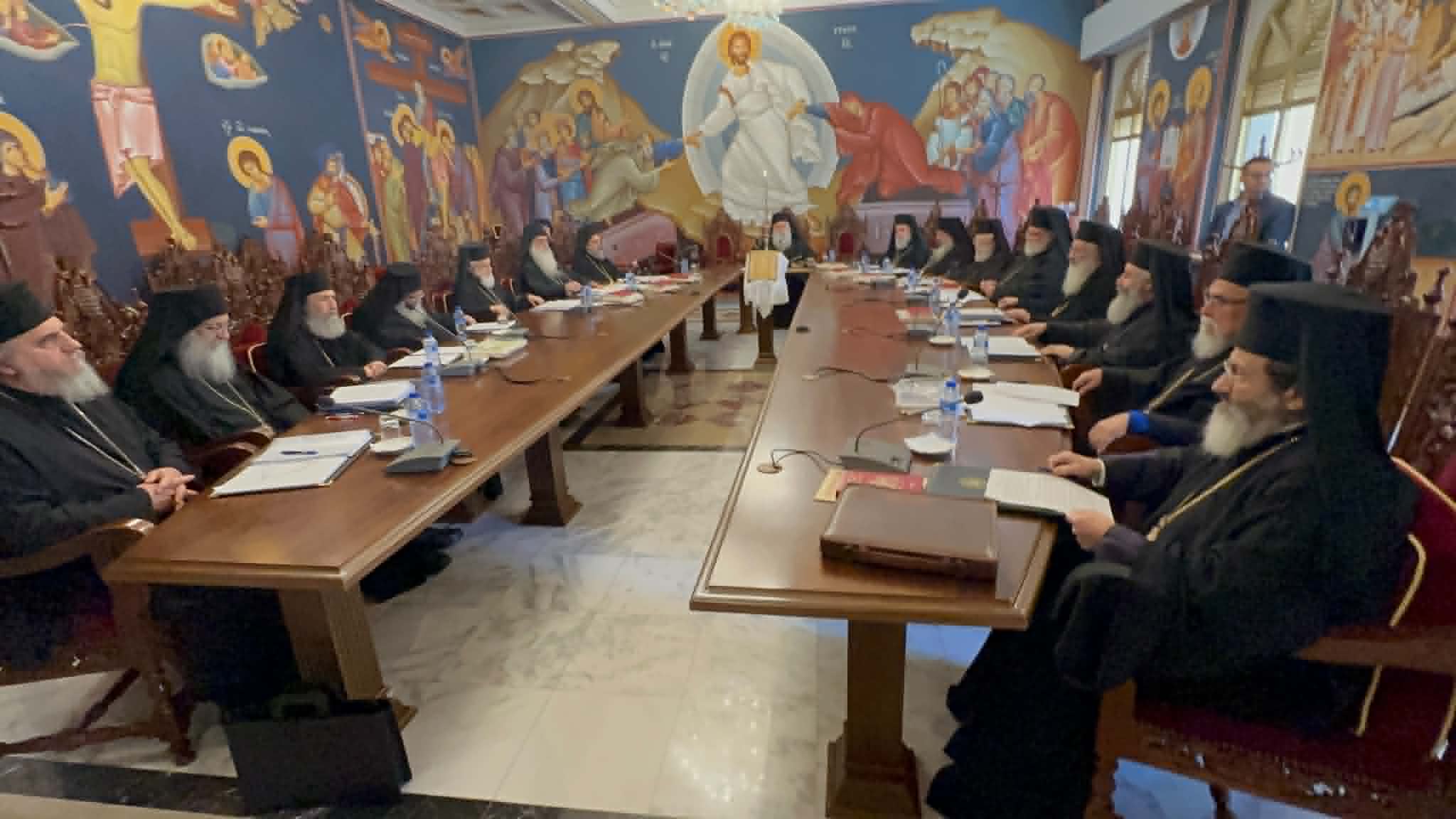
The Holy Synod unanimously approved the new church statutes on Wednesday, while also launching the formal process for the election of a new bishop of Paphos.
The decision marks the conclusion of days of deliberations over amendments to the church charter, including changes linked to the procedure for electing bishops following disputes surrounding the removal and suspension of former Paphos bishop Tychikos.
According to the church’s statement, declarations of interest for the position of Paphos bishop will be accepted in person and in writing until next Monday.
The synod said the process would be carried out via Archbishop George and in accordance with Article 28 of the newly approved statutes.
Under Article 30, candidates eligible for election include celibate clergy, either priests or deacons, as well as monks who possess “a degree from a recognised Orthodox theological school”, have completed “ten years of satisfactory service” and are at least 35 years old.
Church officials indicated in recent days that the revision of the statutes extended beyond electoral arrangements and sought to address inconsistencies within the ecclesiastical framework.
One of the central proposed reforms discussed during the sessions concerned the method for electing metropolitans.
Under the revised framework examined by the synod, vacant sees would be filled directly by the synod itself rather than through a wider electoral process involving lay participation.
Spokesman Christakis Efstathiou had stated before the sessions that the proposed amendments required only a simple majority for approval.
Attention surrounding the meetings also focused on the aftermath of the Tychikos case, which has generated schisms within the church and among supporters of the suspended bishop.
Tychikos was removed as the bishop of Paphos following disputes within the synod and has since challenged the decision through ecclesiastical and legal channels.
His supporters have staged demonstrations outside the archbishopric in recent weeks, while political reactions also emerged after controversy linked to statements surrounding the church dispute.
Several names have already circulated publicly in connection with the vacancy. Among those discussed in recent days are archdeacon Ioannis Ioannou, who had participated in the previous electoral process that resulted in the election of Tychikos, and bishop Christophoros of Karpasia.
Other figures whose names have previously been mentioned include Grigorios of Mesaoria and Nikolaos of Amathus.


Click here to change your cookie preferences