
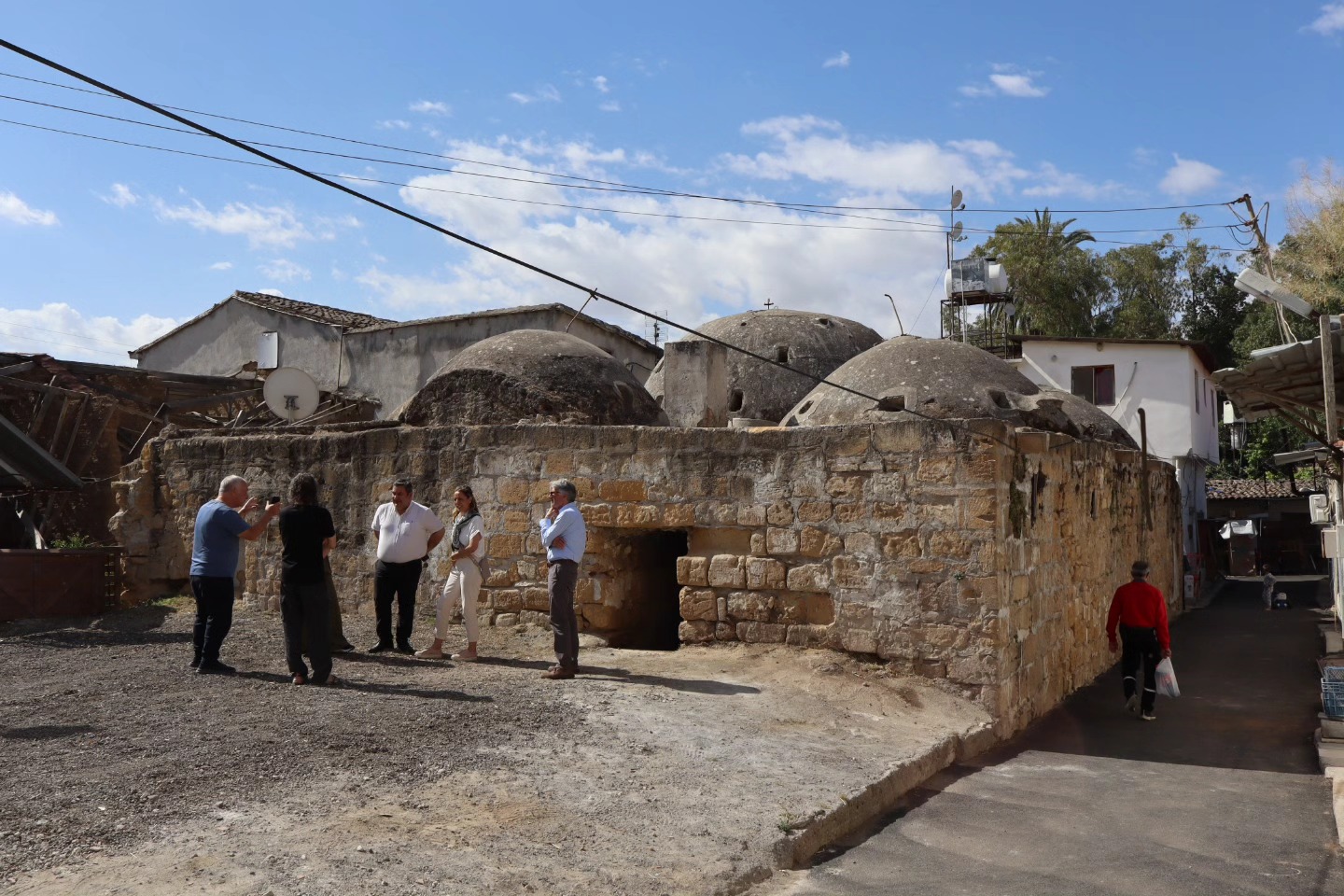
Work to advance the conservation of the historic ‘Tanti’ Hammam in Nicosia moved forward on Friday as the project’s design team gathered on site to discuss the next phase of restoration planning.
The meeting focused on technical preparations for the conservation designs of the Ottoman-era bathhouse, while discussions also centred on the building’s historical and cultural significance within the Ayios Kassianos neighbourhood.
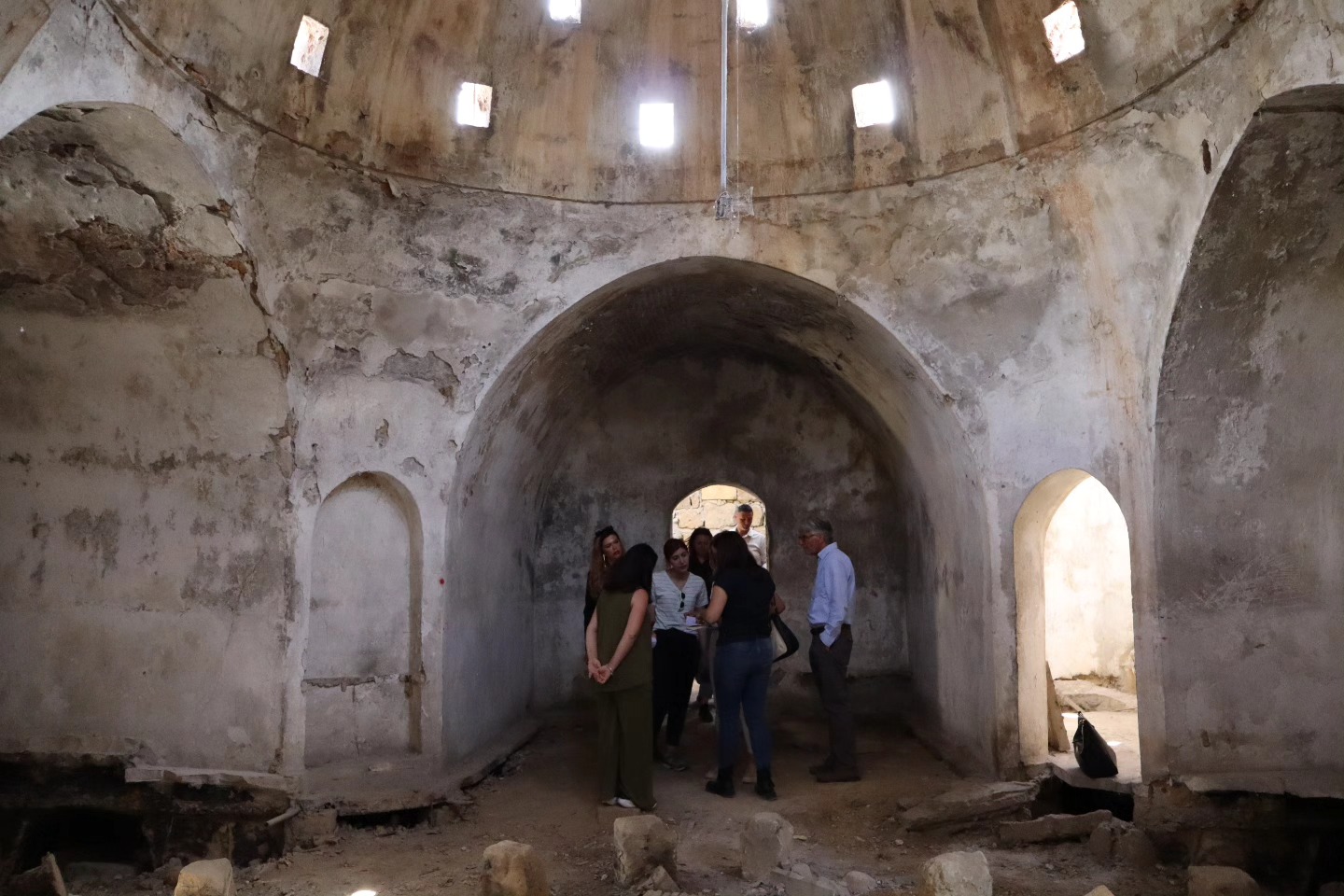
According to project representatives, participants examined restoration priorities and preservation challenges linked to the structure’s age and condition.
The project is being implemented by the United Nations Development Programme (UNDP) on behalf of the bicommunal Technical Committee on Cultural Heritage (TCCH) with funding from the European Union.
Located near the Loredano bastion in the capital’s northern quarter, the hammam was built in the early 1900s by Greek Cypriot Kostis Kyriakou Tanti using craftsmen and stonemasons.
Constructed from cut stone, the building reflects the layout and architectural characteristics of a traditional Ottoman bathhouse.
Historical accounts describe the hammam as one of the first bathhouses in Nicosia to introduce a private family bathing room through a separate entrance from the street.
The surrounding homes built by Tanti between 1920 and 1927 gradually formed a small residential quarter around the site.
Local historians claim Tanti financed the construction after discovering hidden gold revealed to him by a fellow Arab inmate while imprisoned by the Ottoman Turks in the early 20th century.
According to the account, the treasure was intended to be shared between the two men upon their release.
Instead, Tanti allegedly used the money to build the hammam and surrounding properties.
As reported in Turkish Cypriot newspaper Yeni Duzen, citing archaeologist Tuncer Bagiskan’s book, ‘Ottoman artifacts of Cyprus’, Tanti is reported to have been killed during the inter-communal violence of 1958.
“When Tanti came to the neighbourhood again to collect rent, he was captured by separatist TMT members.”
“He was first shot, then doused with gasoline and burned alive.”
The conservation project forms part of wider bicommunal efforts to preserve cultural heritage sites across Cyprus.





Click here to change your cookie preferences