
Stablecoins enter spotlight at EU finance talks in Nicosia
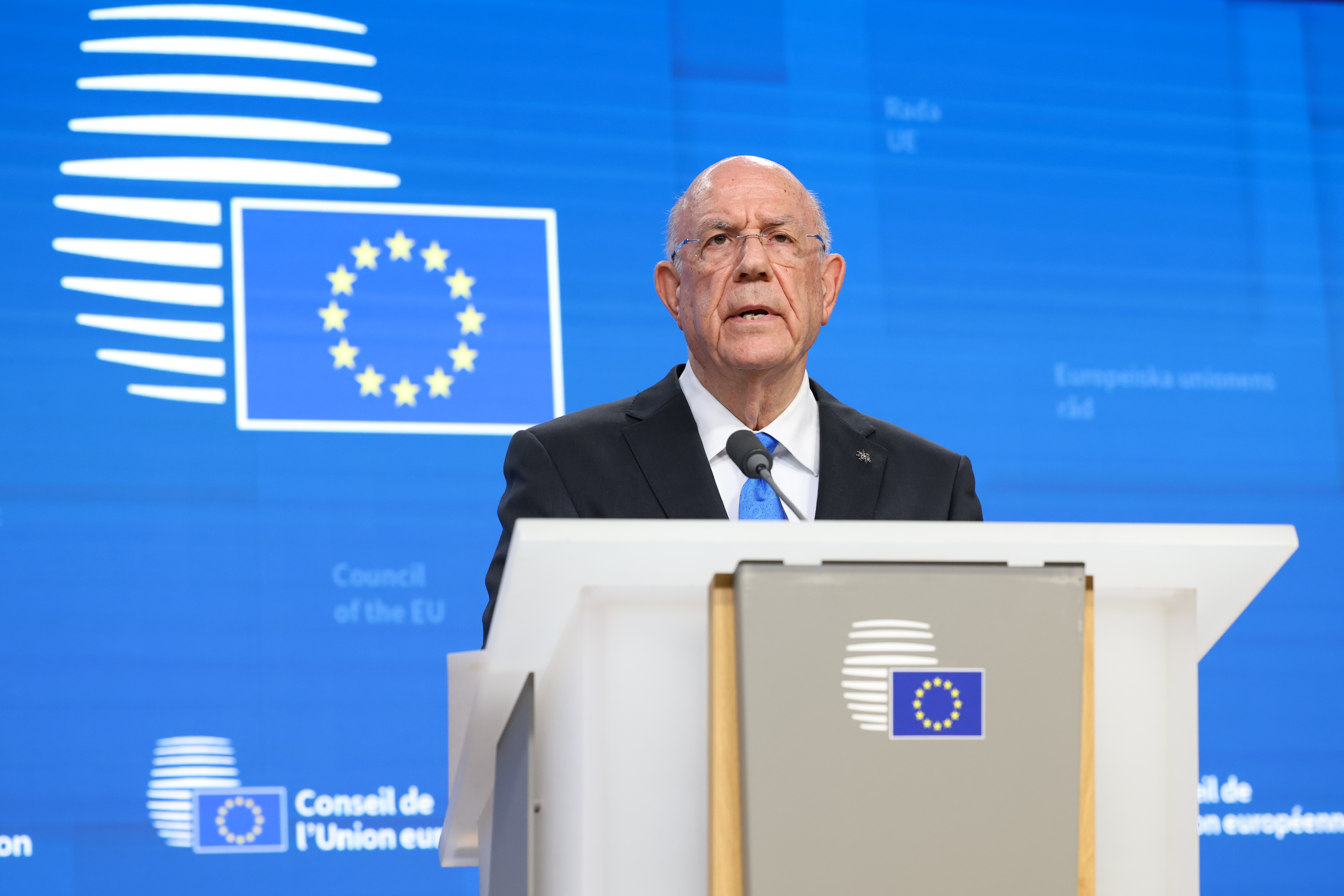
Cyprus Finance Minister Makis Keravnos on Friday called for increased investment across Europe while warning against weakening fiscal discipline, as discussions turned to stablecoins and financial stability ahead of an informal EU meeting in Nicosia.
Speaking before the gathering of EU finance ministers and central bank governors, Keravnos said the talks would centre on competitiveness, strategic autonomy and the role of investment in strengthening the European economy.
“The slogan of the Cypriot presidency is the EU’s strategic autonomy, and strategic autonomy goes hand in hand with strengthening competitiveness,” he said.
He stressed that boosting investment is essential to address economic and geopolitical challenges, but cautioned that such efforts must not come at the expense of the bloc’s fiscal governance framework.
“We must find ways to increase investment to address today’s challenges without undermining fiscal governance,” he said.
Keravnos also confirmed that stablecoins would feature prominently in the discussions, reflecting growing concern among policymakers over their impact on financial stability and monetary systems.
The debate comes amid a broader shift in global financial policy, as digital assets move from the margins into mainstream economic and regulatory considerations.
Stablecoins, which are typically pegged to traditional currencies, have seen rapid growth in recent years, prompting regulators to assess both their risks and potential benefits for payments and financial infrastructure.
European policymakers have increasingly focused on ensuring that innovation does not compromise financial stability, particularly as geopolitical tensions and energy shocks add uncertainty to the economic outlook.
Earlier this month, European Central Bank (ECB) president Christine Lagarde outlined a cautious stance on stablecoins, arguing that their role is often misunderstood and that Europe should prioritise strengthening its financial foundations rather than replicating foreign models.
She explained that stablecoins serve two distinct purposes, monetary and technological, which are frequently conflated in policy debates, making it harder to assess their true value.
Lagarde highlighted that most stablecoins are denominated in US dollars and could reinforce global dollar dominance, raising concerns about digital dollarisation and the potential erosion of Europe’s monetary sovereignty.
She warned that large-scale adoption could weaken bank lending and reduce the effectiveness of monetary policy, particularly in the euro area where banks play a central role in financing the economy.
At the same time, Lagarde acknowledged the transformative potential of the underlying technology, especially distributed ledger systems that enable faster and more efficient settlement of financial transactions.
However, she argued that stablecoins themselves are not the optimal solution, pointing instead to the need for public infrastructure anchored in central bank money to ensure stability and interoperability.
“We must not mistake the instrument for the outcome, as what matters is the architecture that allows safe innovation,” she said.
Her remarks also underscored risks linked to financial instability, noting that stablecoins can lose their peg during periods of stress, potentially triggering rapid redemptions and market disruption.
She further stated that Europe’s priority should be deeper capital markets and stronger financial integration, rather than relying on privately issued digital currencies to achieve strategic objectives.
Meanwhile, the Bank of England (BoE) has been reassessing its own regulatory approach to stablecoins, signalling a shift towards more flexible safeguards.
Deputy governor Sarah Breeden recently said the central bank is considering “temporary guardrails” on the total volume of stablecoins issued, rather than strict limits on individual holdings.
“That approach could achieve the same aim at lower cost to the sector and allow a wider range of high-value payment use cases, including for corporates,” she said.
The proposed adjustment follows strong industry criticism of earlier plans, which included caps of £20,000 for individuals and £10 million for businesses.
Financial institutions and fintech firms argued that such limits risked stifling innovation and pushing activity to more permissive jurisdictions, particularly the United States.
By focusing on overall issuance rather than individual restrictions, the Bank of England aims to reduce the risk of sudden deposit outflows from banks, while maintaining flexibility for businesses using digital payment solutions.
Taken together, the discussions in Nicosia reflect a critical moment for Europe’s financial policy, as leaders seek to balance innovation, competitiveness and stability in an increasingly complex global environment.





Click here to change your cookie preferences