
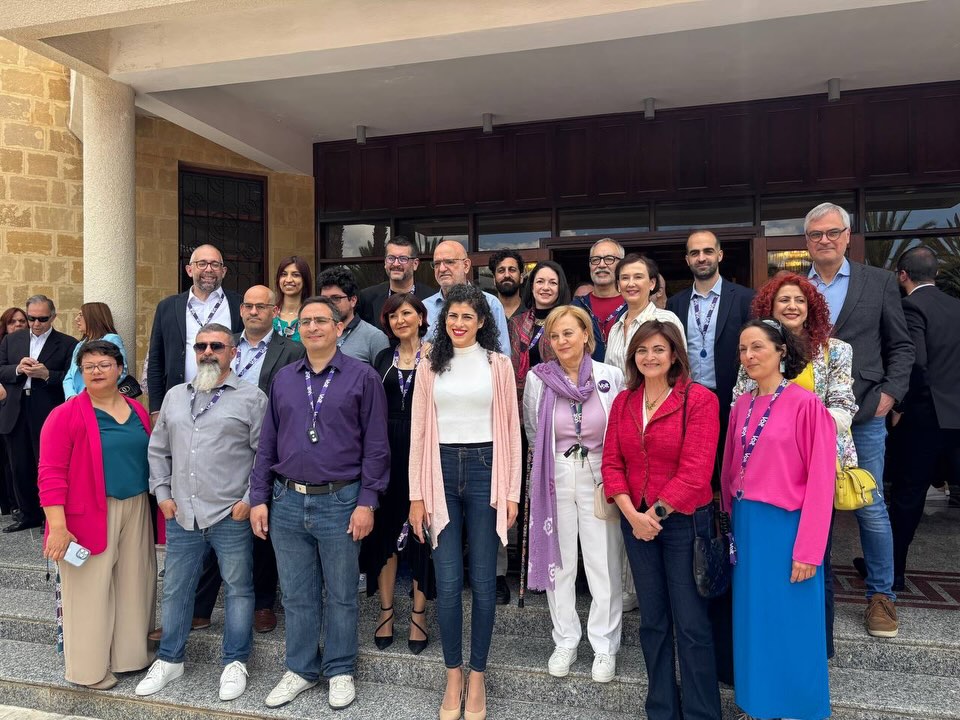
Volt Cyprus ended its parliamentary election campaign in Nicosia on Thursday night with party leaders presenting the movement as a vehicle for political reform and institutional accountability ahead of Sunday’s vote.
Speaking before candidates and supporters at the party’s headquarters, co-president Panos Parras said Volt had used the campaign period to present “documented proposals” aimed at offering voters an alternative to Cyprus’ traditional political parties.
“The vote for Volt is not symbolic, it is not a vote of protest, it is a vote of political modernisation and institutional control,” Parras said, arguing that the party sought to move public debate beyond “entrenched partisan divisions.”
Co-president Andromache Sophocleous said the party was formed by people who “chose not to remain uninvolved” in what she described as widespread public dissatisfaction with the country’s political direction.
“We came to become the political shelter of rationality,” Sophocleous said.
“We came to submit a new, modern, progressive and above all European political proposal.”
She added that Volt expected to secure parliamentary representation after Sunday’s election, telling supporters that “with your vote we will certainly be in parliament”.
The event marked the conclusion of Volt’s first full parliamentary campaign in Cyprus, with the party seeking to capitalise on growing voter dissatisfaction with established parties and increased fragmentation across the political landscape.
Recent polling has suggested Volt may emerge as one of the surprise performers of the election, where it is among parties competing for fourth place behind Disy, Akel and Elam.
Volt has campaigned heavily on transparency, institutional reform, housing, digital governance and environmental policy, while positioning itself as part of the wider pan-European Volt movement active across several European Union member states.
Party officials have sought to distinguish Volt from anti-establishment protest movements by framing their campaign around technocratic reform and European political integration rather than populist rhetoric.





Click here to change your cookie preferences