
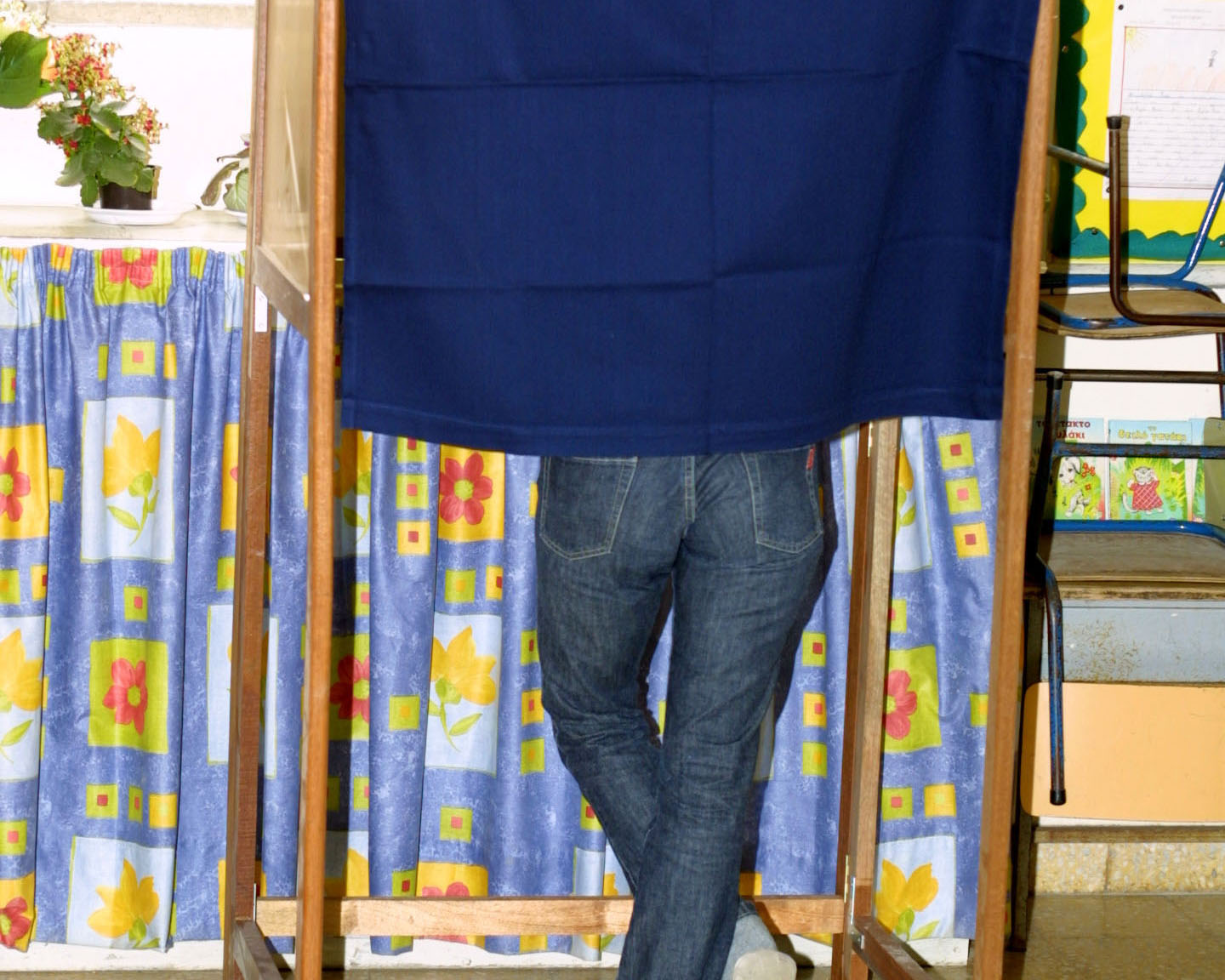
Over half a million voters go to the polls on Sunday to elect the 56 members of parliament to represent them for the next five years in what promises to be a most exciting election.
It is certainly the largest ever in terms of the number of candidates, with 744 candidates running representing 19 political parties and eight independents. Of the total, 520 candidates are men and 224 women. In the 2021 parliamentary elections there were 651 candidates, with 493 in 2016.
Exit polls will be carried immediately after the polls close at 6pm, with initial results from small polling stations expected as early as 6.30pm.
The percentages and the number of seats that each party receives should be clarified by 9.30pm, but all the actual names of the new MPs from each party will probably not become clear until after 1.30am on Monday morning.
All eyes will be on how party newcomers – Direct Democracy, Alma and Volt – will fare in the elections as they lock horns with big guns Disy and Akel. The new parties will also face Elam, Diko, Dipa, Edek and the Ecologists’ Movement, not all of which are expected to win seats.
A total of 569,182 people are eligible to vote, an increase of 11,081 on the last election. The 595 enclaved in the north who will be voting on Sunday are not included in this number.
Voters will be requested to proceed to polling stations to vote for the party of their choice and a number of names, which differs by district.
Nicosia gets 19 seats, Limassol 12, Famagusta 11, Larnaca six, Paphos four and Kyrenia three.
Voting was set to begin at 7am. Polling stations close at 6pm with a one-hour break at noon, and votes will be counted at the polling stations themselves rather than a central location.
Representatives of religious groups in parliament – who do not have voting rights on legislation – for the Armenian and Latin communities have already been declared without an opponent. These are Vartkes Mahdessian and Antonella Lydia Mantovani respectively. For the Maronites, there are two candidates, who will be elected today.
There are 1,217 polling stations – including 13 for the election of the Maronite parliamentary representative – with a maximum of 600 voters each. These polling stations will be staffed by around 5,300 employees and over 1,200 police officers.
Polling stations will also be operating in London, Athens, Thessaloniki and Brussels.
The current electoral system provides for the allocation of parliamentary seats at the first distribution on a simple pro rata basis, while in the two subsequent phases of the second allocation, a reinforced proportional representation system is applied, with thresholds of 3.6 per cent and 7.2 per cent, respectively.
For a party to be eligible to participate in the second allocation, it must obtain 3.6 per cent of the valid votes. Voting is, of course, secret.
Ballot papers are printed in different colours for each electoral constituency to avoid confusion among voters and to facilitate the work of the responsible officials during the voting process, particularly with regard to the sorting and counting of the votes.
Nicosia’s ballot paper is white, Limassol yellow, Famagusta blue, Larnaca pink, Paphos green and Kyrenia orange.
At the bottom of each ballot paper, beneath the names of the candidates, is a box where the voters must mark their party of preference.
Only one can be chosen and voters may not vote for candidates from different party lists. They may vote for either a single party or a single independent candidate.
If the voters decide to vote for a party list, they may choose their candidates of preference, however this is not compulsory.
Preference crosses can be up to five for Nicosia, three for Limassol, three for Famagusta, two for Larnaca, two for Paphos and one for Kyrenia.
Individuals with disabilities can request assistance from the presiding officer of the polling station.
Ballot papers are folded in the polling booth and then deposited in the ballot box.
A petition disputing the validity of the elections may be filed within a period of two months from the date of publication of the final election results in the Official Gazette of the Republic.




Click here to change your cookie preferences