
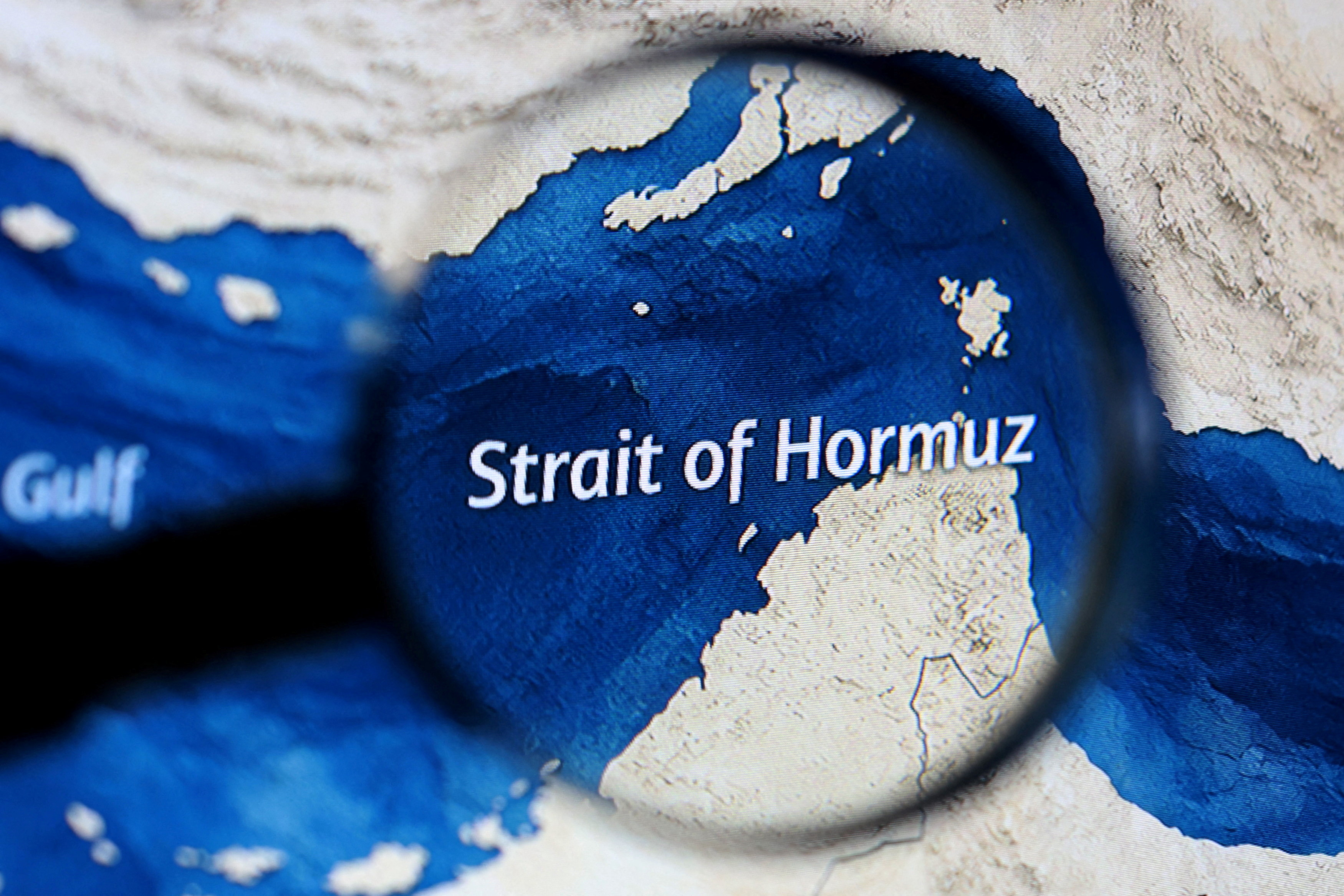
Iran’s tightening control over the Strait of Hormuz has raised fresh legal, political and energy security concerns, with Invezz reporting that a full reopening of the key waterway in 2026 is unlikely.
The report, citing The Financial Times, said maritime traffic through the strait has fallen by more than 90 per cent from pre-conflict levels, leaving global energy markets and shipping companies facing prolonged uncertainty.
The Strait of Hormuz is one of the world’s most important maritime chokepoints, normally carrying around 20 per cent of global oil and LNG flows. However, the route has become almost inaccessible to Western-flagged vessels, as insurers withdraw cover and war-risk premiums continue to rise.
As a result, countries heavily dependent on Gulf energy supplies, including India, China, Japan and South Korea, may be pushed towards bilateral arrangements with Tehran to secure limited passage.
According to The Indian Express, Moody’s Ratings has estimated that India and other oil-importing countries may have to negotiate bilaterally with Iran to secure energy imports through coordinated transit corridors.
The same report said a return to pre-war traffic volumes through Hormuz is unlikely this year, meaning any recovery would probably be slow, opaque and vulnerable to disruption rather than the result of a full reopening.
The disruption has also carried a growing human cost. Qatar News Agency, citing the International Maritime Organisation, reported that more than 1,500 ships and 20,000 crew members had been trapped due to the closure of the strait.
At the same time, Iran’s legal position has come under closer scrutiny. The Week examined Tehran’s justification for controlling Hormuz, pointing to contradictions in its selective use of international law.
Although Iran signed the United Nations Convention on the Law of the Sea, it never ratified it. This has allowed Tehran to deny certain obligations on transit passage, while still claiming benefits linked to maritime zones and natural resources.
Legal experts argue that Iran’s unilateral interception of ships is inconsistent with customary international law, which protects non-suspendable transit through international straits.
The issue is further complicated by the fact that Iran’s actions overlap with Oman’s territorial entitlements. This makes any unilateral attempt to control the entire waterway legally difficult to sustain.
In a further sign of the diplomatic pressure surrounding the strait, Reuters reported that Iran is seeking to establish a mechanism with Oman to ensure what it described as sustainable security in the Strait of Hormuz.
Attempts to impose transit fees or suspend passage through a natural strait would also conflict with the principles of the Law of the Sea framework, which does not allow tolls for passage through such routes.
Analysts have described Iran’s position as a selective use of international law, with Tehran relying on legal arguments when they serve its interests while rejecting obligations that limit its room for manoeuvre.
Beyond the legal questions, the crisis has also taken on a sharper military dimension. Maritime reports cited by Invezz refer to mine-laying, drone attacks and fast-boat harassment by the Islamic Revolutionary Guard Corps.
The Financial Times said Iran’s leadership appears to be calculating that pressure on the United States and concern among regional allies could push US president Donald Trump towards a negotiated settlement, even if the terms are unfavourable.
Meanwhile, US naval forces have been enforcing a blockade since April, disabling Iranian tankers and clashing with IRGC units, according to the report.
Gulf states and the United Nations have warned that continued instability in Hormuz threatens both global trade and energy security, particularly as alternative routes remain costly and limited.
For India, the crisis is especially difficult. As one of the world’s largest oil importers, the country faces rising energy costs, inflationary pressures and growing uncertainty over supply.
Analysts expect New Delhi to negotiate directly with Tehran for safe passage. However, such arrangements could expose India to broader geopolitical risks and complicate its relations with the US and Gulf partners.
The danger to non-combatant shipping has already become clear. The Week reported that an Indian sailor was killed in March when an IRGC drone boat attacked the MKD VYOM.
Two other Indian-linked vessels were reportedly targeted in April, further exposing the vulnerability of commercial shipping even when vessels are not directly tied to the conflict.
Looking ahead, the report said only limited and fragile improvements are expected. Even if transit corridors are agreed, analysts warned they are likely to remain opaque, politically sensitive and vulnerable to sudden disruption.
Legal experts also warned that Iran’s selective approach to international law could set a dangerous precedent, weakening established norms on freedom of navigation.
For Tehran, the Hormuz standoff may strengthen its negotiating hand in the short term. However, it also risks alienating regional neighbours and increasing the chances of a wider confrontation with Washington.
For India and other Asian economies, the challenge will be to balance immediate energy needs with longer-term strategic interests.





Click here to change your cookie preferences