
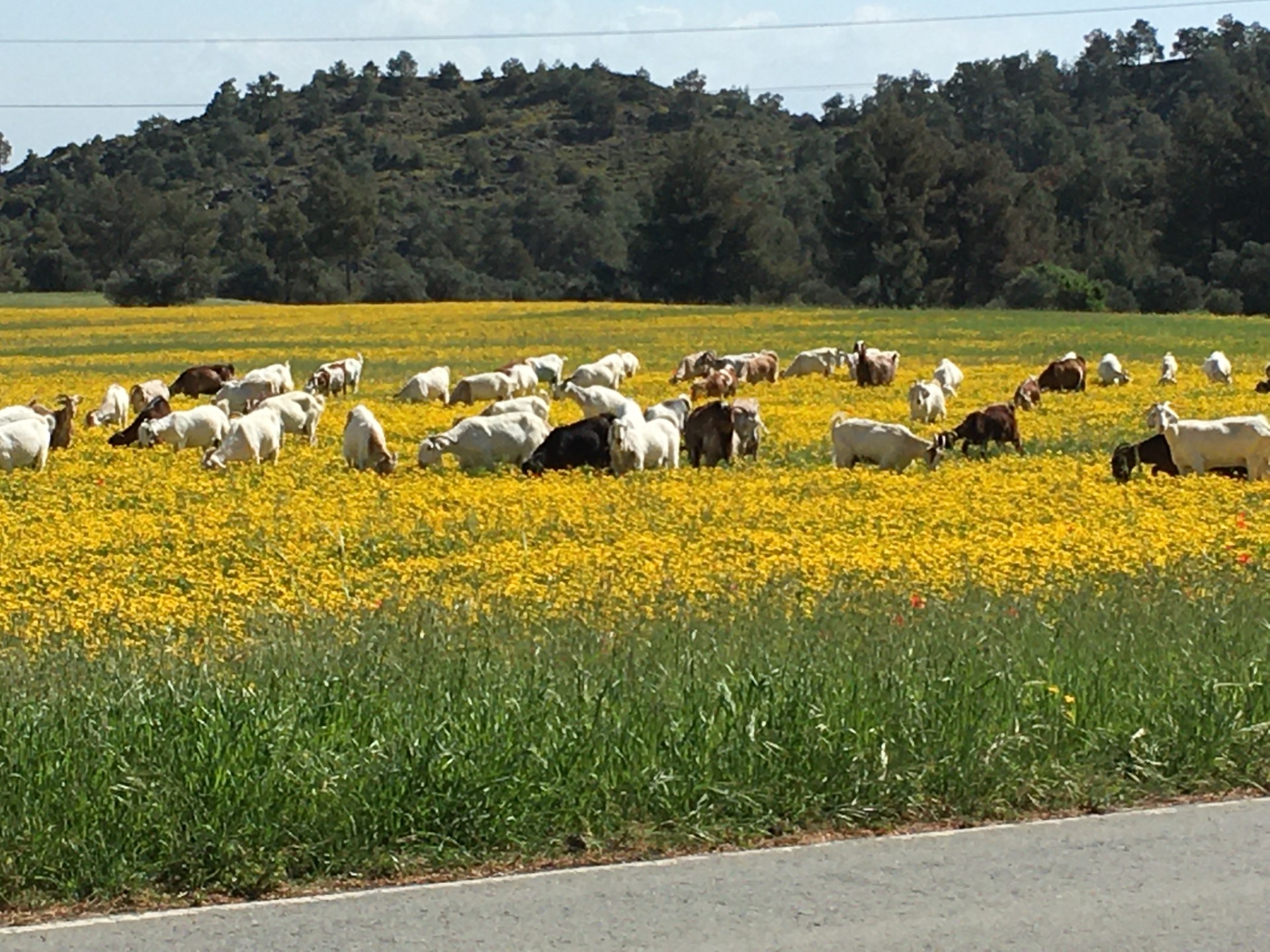
The association “Voice of Livestock Farmers” has branded the controversy over sampling procedures a “major fiasco” with a protest expected to take place outside the presidential palace on Friday morning.
Stella Petrou, spokeswoman for livestock association Voice of the Livestock Farmers, said that a large turnout is expected at the demonstration.
“They made fools of the people. On the one hand they say samples can be taken, and on the other they say they cannot. It is a major fiasco,” she said, referring to the events in Pachna.
She also accused authorities of failing to deliver compensation promised to livestock farmers.
“They did not provide the compensation they promised. They deceived them,” she said.
Petrou called for public support at Friday’s protest, saying the issue concerns everyone.
Asked whether there were plans for a joint mobilisation with the Isotita movement at a June 4 protest outside parliament, she said there had been contact but no decision had been made.
Meanwhile, Panagrotikos association chairman Kyriakos Kailas said the issue of mobilisations had not been discussed during a meeting held on Tuesday attended by producer groups.
Instead, he said agricultural organisations want a meeting with President Nikos Christodoulides to discuss how the crisis can be addressed.
Kailas described the culling of animals as a serious issue that had failed to produce the desired result, arguing that the current protocol should be revised.
“It is not only rare breeds – we must save whatever we can. Taking all the animals indiscriminately and slaughtering them is not right and gets us nowhere,” he said.
He questioned how the active virus had spread to Pachna, saying the matter required a scientific explanation.
Agricultural organisations have proposed setting up a three-member scientific committee to re-examine the European framework and the culling protocol, made up of a veterinarian, a legal expert and former EU commissioner Stella Kyriakides.
Kailas also said there were problems with vaccine supply, noting that an additional 300,000 doses were arriving under pressure, but would still not cover the animal population.
He said veterinary services would examine the possibility of allowing the movement of animals for fattening, adding that farms are facing overcrowding.
“Animals cannot remain packed together because this will create other problems with other diseases,” he said.
The organisations have also asked for grazing to be allowed in areas without recorded cases.
Kailas said uncertainty remains over whether grain stocks can be used, forcing farmers to buy imported grain at €40 more per tonne and roughage at €70 more per tonne.
He said the outbreak had not been contained under the existing protocol and that a different approach was needed.



Click here to change your cookie preferences