
By Penelope Vasquez Hadjilyra
In April, Cyprus hosted a two-day international climate summit under its EU Council presidency. Scientists, policymakers and government representatives from 18 countries gathered in Nicosia and signed the Nicosia Call for Action 2026, a framework for regional climate cooperation in one of the most climate-vulnerable parts of the world.
The island’s presidential adviser on climate, Costas Papanicolas, stressed that climate science must be linked directly to policy and implementation.
Four days after the May 24 election, Papanicolas was back at a podium presenting the summit’s conclusions. “Things do not look very optimistic,” he said, “and this is clearly due to us and by us, I mean, the inhabitants of this strange planet.”
Scientists at the event reported that every year since 2015 in Cyprus has been warmer than normal, that two-thirds of days in 2025 were hotter than average, and that a possible El Niño is forming, the kind of weather pattern that caused serious water shortages here back in 2007.
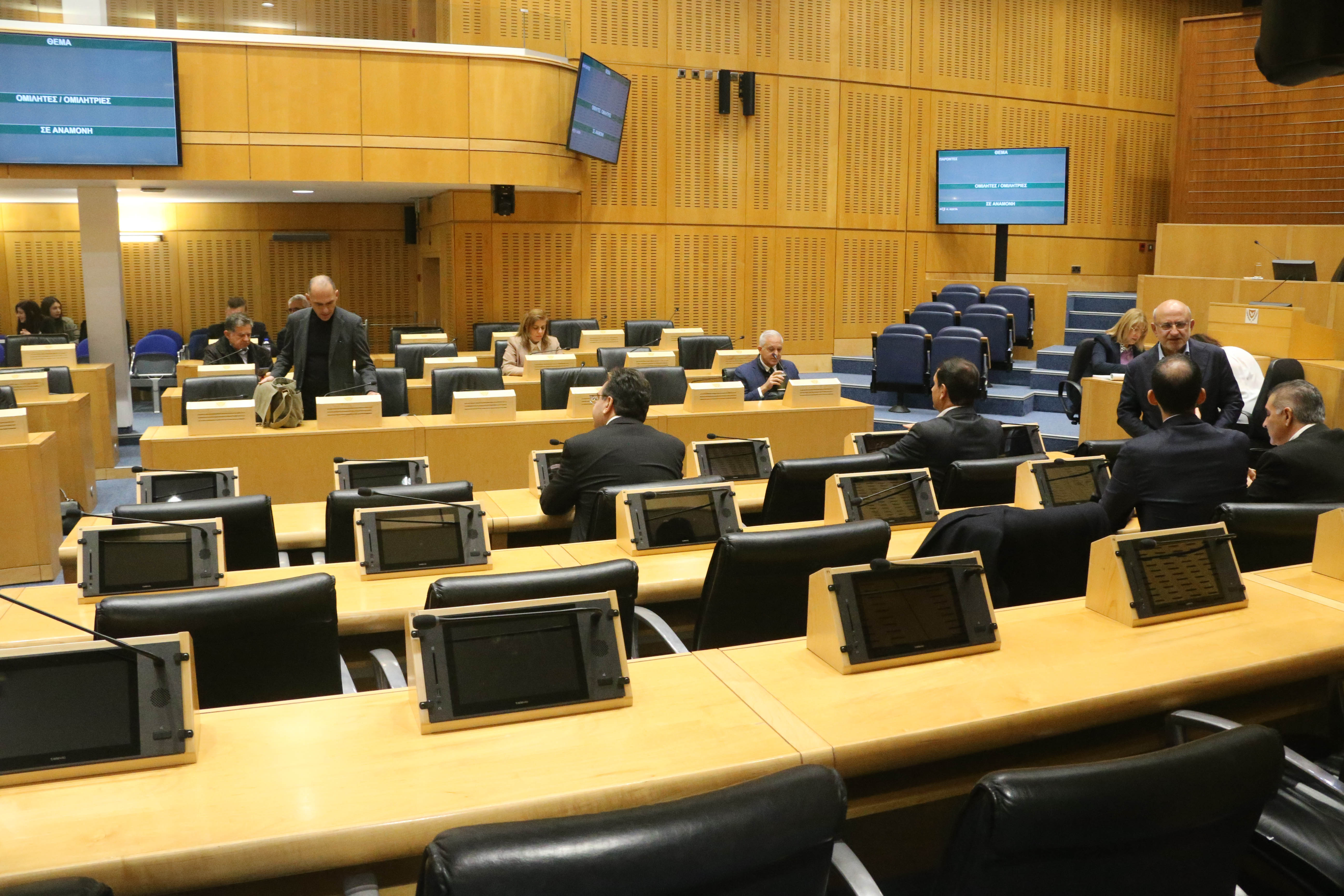
This is the scientific reality facing Cyprus. And this is the moment its voters chose to elect a parliament with no environmental voice at all.
For the first time since Cyprus joined the EU, the traditional Green movement fell below the legislative threshold, leaving a total vacuum where environmental advocacy once stood. Every party that won seats treats the environment as a secondary concern at best.
Two of the six parties in the new House have no environmental position in their platforms whatsoever. Meanwhile, Elam, the far-right party that doubled its seats to become the third largest force in parliament, has announced it wants to chair the environment committee.
A party that has campaigned relentlessly against EU green policy now seeks institutional control over implementing it.
It would be easy to be angry at voters. But that would be wrong, and it would completely miss the point.
People are genuinely struggling. Electricity bills have become painful. Rent is out of reach for many families. Food costs more every year.
These are real, grinding hardships, and it is entirely understandable that people voted with their wallets.
The question is not whether voters were right to be angry about the cost of living – they absolutely were.
The question is whether the answers they were offered will actually fix their lives.
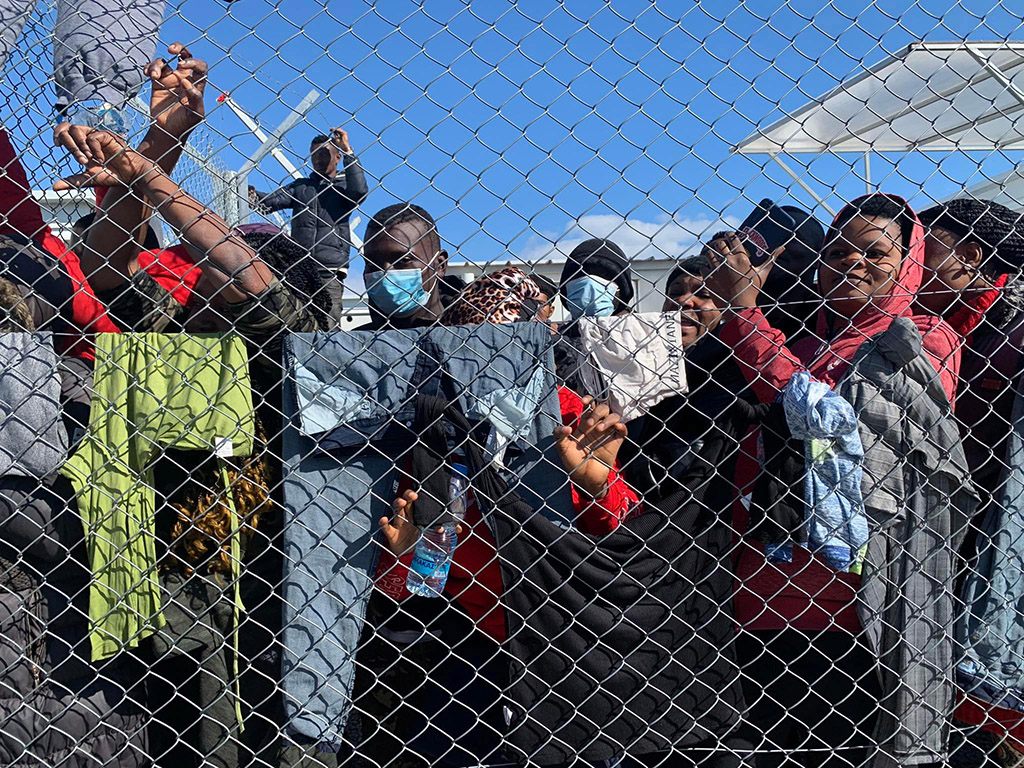
Elam’s answer is simple: blame the refugees. Blame the asylum seekers. Blame the migrants arriving by boat. According to this narrative, foreign arrivals are single-handedly responsible for high rents, expensive electricity and rising food prices. It is a story that travels fast precisely because the underlying anxiety is real.
But it is an economic smoke screen.
While rapid population shifts have naturally placed a short-term strain on localised housing supply, the true engine of the rental crisis is structural, driven by a total lack of state-backed affordable housing, unchecked real estate speculation, and decades of inadequate urban planning.
Scapegoating minorities leaves these actual, systemic causes of Cyprus’s economic crisis completely untouched.
Cyprus is the most energy-dependent country in the EU, buying almost all its fuel from abroad and paying a premium every time something goes wrong in the Middle East.
It has a weak public transport network, meaning every family is forced to own a car and absorb petrol price shocks personally. Its agricultural sector has been allowed to shrink to near-irrelevance, leaving the island reliant on imported food whose prices fluctuate with gas markets in the Persian Gulf.
The ultimate symbol of this dysfunction occurred in early 2025, when Cyprus was literally throwing away clean solar energy, cutting the output from rooftop panels because the national grid was never upgraded to handle it, all while continuing to burn imported oil and paying tens of millions in EU emission fines.
None of this was caused by migrants. It was caused by decades of political choices, or the stubborn refusal to make them.
Here is what the parties that won seats have fundamentally failed to grasp: solving these structural problems is the environmental agenda. They are not separate crises.
Cheaper electricity comes from a modernised grid, renewable energy, and decentralised energy communities. Lower commute bills come from investing in robust public transport. More affordable food comes from rebuilding a resilient local agricultural sector.
The cost-of-living crisis and the climate crisis share the exact same roots and the exact same solutions.
A serious environmental programme does not ask people to sacrifice their economic wellbeing for abstract green principles. It offers them a concrete way out of the structural trap that made their lives expensive in the first place.
The economist Mariana Mazzucato has spent years making exactly this argument on the global stage. In her view, the green transition should be treated as a “mission”, a concrete national goal that aligns public investment, innovation and social policy in the same direction.
Crucially, she argues that this approach is inseparable from strong social protections: the transition only works, and only wins political support, if its benefits reach ordinary people first rather than being captured by markets.
The false choice between economic security and environmental responsibility is one of the most damaging myths in modern politics.
When that myth goes unchallenged, the space is quickly filled by those who offer simpler, angrier answers.
Cyprus is a textbook case study in this dangerous dynamic. The island hosted 18 nations to discuss the climate crisis. Its scientists are doing serious, globally respected work on Mediterranean warming. And yet its parliament now contains no one with a clear mandate to act on any of it.
And Cyprus is not alone in this retreat. Across Europe, far-right parties have successfully weaponised opposition to green policy, turning climate action into an existential culture war rather than an economic opportunity.
At every level, local, national, European, and global, the environment is losing ground to short-term political gains.
Cyprus’s election is not an anomaly. It is a symptom. And if we refuse to link economic survival to ecological action, the environment will not be the only loser.
Penelope Vasquez Hadjilyra is a Limassol-based architect, PhD candidate at Frederick University, and founder of the architectural research lab “The way space begins.” An EU Climate Pact Ambassador and member of European environmental standardisation committees, she specialises in urban greenery, transport, and energy innovation. She recently served as the strategy coordinator for Limassol’s participation in the European Cities Mission 2030 program for climate neutrality. She was a parliamentary candidate for Volt Cyprus in the May 2026 legislative elections

Click here to change your cookie preferences