
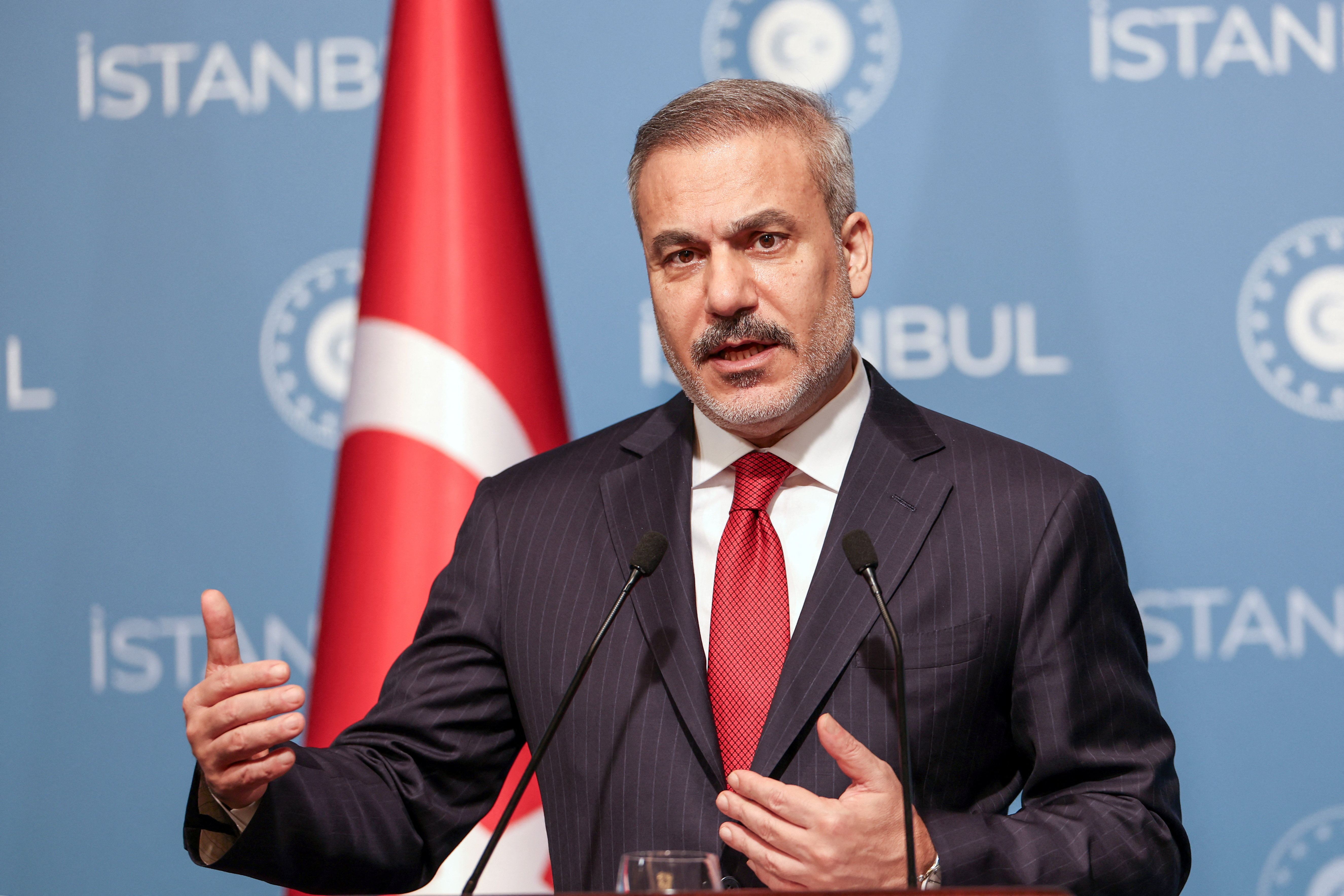
The Turkish government on Thursday denied reports that the country’s Foreign Minister Hakan Fidan had cancelled a planned trip to Kazakhstan after Cypriot President Nikos Christodoulides embarked on a three-day visit to the central Asian country this week.
Reports had surfaced on Wednesday, stating that Fidan was “planning a visit” to Kazakhstan’s capital, Astana, but that he cancelled his visit and was “visibly troubled” and “dissatisfied” over Christodoulides’ trip.
However, Turkish newspaper Turkiye Today quoted “officials familiar with the matter” as having said that “the rumours are entirely baseless”, and that Fidan’s current tour of Asia, which has seen him visit Indonesia and Singapore earlier in the week before landing in South Korea on Thursday, was “strictly designed for east and southeast Asian countries”.
The sources were also quoted as having said that reports that Fidan had planned and cancelled a trip to Kazakhstan constituted “false information” which is “being circulated by actors looking to manufacture a diplomatic crisis between Turkey and its close partners”.
Christodoulides arrived in Kazakhstan on Tuesday, describing his visit to the country as “historic”, before meeting the country’s President Kassym-Jomar Tokayev on Wednesday.
Kazakhstan is one of a small number of countries which diplomatically straddles Cyprus’ divide, with Tokayev having last month invited Turkish Cypriot leader Tufan Erhurman to the city of Turkistan, in southern Kazakhstan, for a leaders’ summit of the Organisation of Turkic States.
At that summit, Erhurman lamented that “the Turkish Cypriot people, who have internalised universal values such as human rights, democracy, and the rule of law, have consistently and clearly demonstrated their will for a just and lasting solution and reconciliation on the island”.
Last year, Kazakhstan was one of five central Asian states, alongside Kyrgyzstan, Tajikistan, Turkmenistan, and Uzbekistan, which signed a joint declaration with the European Union which effectively ruled out any of them ever recognising the north as an independent country.
That joint declaration provoked anger among Turkey’s opposition, with Ozgur Ozel, the then leader of the CHP who was last month removed from that role by a court ruling, saying that the joint declaration’s signing was evidence of a “collapse” of the country’s foreign policy.
He also claimed that the status of Cyprus was a key part of a deal brokered by Turkish President Recep Tayyip Erdogan and United States President Donald Trump to allow the arrest of Istanbul mayor Ekrem Imamoglu in March last year.
Meanwhile, Turkish Parliament speaker Numan Kurtulmus had said shortly after the signing of the joint declaration that the four Turkic states which signed the joint declaration were expected to “make up for it”.



Click here to change your cookie preferences