
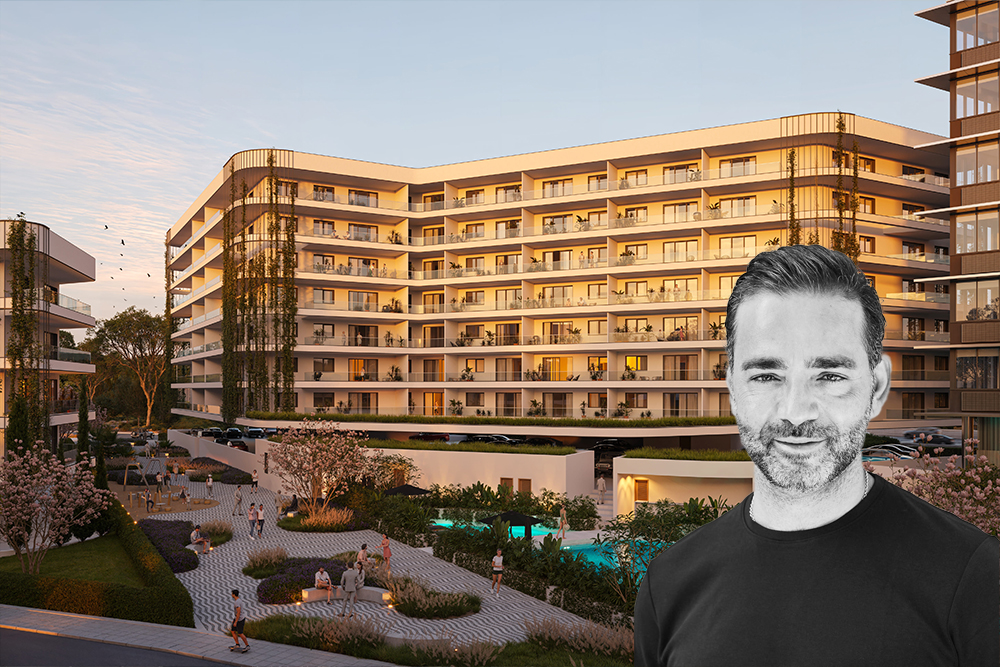
Many people long-expected technology and remote working to make physical offices redundant, but the market has taken a different direction, according to Cyprus Property Developers Association chairman Yiannis Misirlis.
Although the pandemic reinforced this belief, Misirlis mentioned that “offices have not disappeared”, instead, they are being transformed to meet the needs of new professionals and companies seeking to attract talent.
He said leading businesses worldwide are no longer looking simply for office space, but for modern workplace ecosystems that support collaboration, innovation, talent attraction and quality of life.
This shift, he explained, is reflected in the Urban Knowledge Campus model, where work, housing, education, services and daily life coexist within the same environment.
Behind this model lies a simple but important idea, Misirlis said. Employee productivity is no longer shaped only by what happens inside the office, but also by the wider environment in which people live and work.
He mentioned that commuting time, access to services, the quality of the urban environment and the ability to balance professional and personal life have become important factors for both companies and employees.
At the same time, he added that employees working in such integrated ecosystems tend to record higher levels of performance, well-being and satisfaction than those based in traditional business zones.
What was until recently mainly linked to advanced metropolitan centres such as Tokyo, Singapore and Boston is now gaining ground in Cyprus, Misirlis said, as the need for more sustainable, human and productive urban environments becomes clearer.
He explained that younger professionals, from Gen Z to Millennials, are also changing the way they define the value of a home. For them, he said, a property is no longer judged only by its size or price, but by the wider life experience offered by the area.
Proximity to work, the ability to walk or cycle, and access to services, sports, dining and social life are now key factors in where they choose to live, he mentioned.
Within this context, Misirlis said the “live, work and connect” model is becoming increasingly important for both buyers and tenants.
It is also influencing where businesses choose to operate, with many technology, research and professional services companies favouring areas where work, housing and daily life form part of the same urban ecosystem.
According to Misirlis, one of the clearest examples of this philosophy in Cyprus is Silicon Park in Limassol.
He said “the project began as a modern business destination and is gradually developing into a hub of knowledge, innovation and entrepreneurship.”
International technology, professional services, fintech and research companies are already choosing the area as a base for their growth, he mentioned, while Immunopharma’s recent investment further confirms the momentum being built.
At the same time, he explained that a new urban community is taking shape around this business core, with residential units, services, leisure areas and infrastructure designed for an international and highly skilled workforce.
Looking more broadly, Misirlis said Cyprus has competitive advantages, including safety, its European institutional framework, high quality of life, favourable climate and the continued development of its business ecosystem.
As more companies look for destinations that support growth and talent attraction, he said the creation of more knowledge campuses could become a strategic pillar for Cyprus’ economic development.
However, Misirlis explained that the real challenge lies in how cities are planned. The cities that stand out in the next decade, he said, will not be those with the most intense construction activity, but those that connect work, knowledge, innovation and everyday life within a single ecosystem.





Click here to change your cookie preferences