
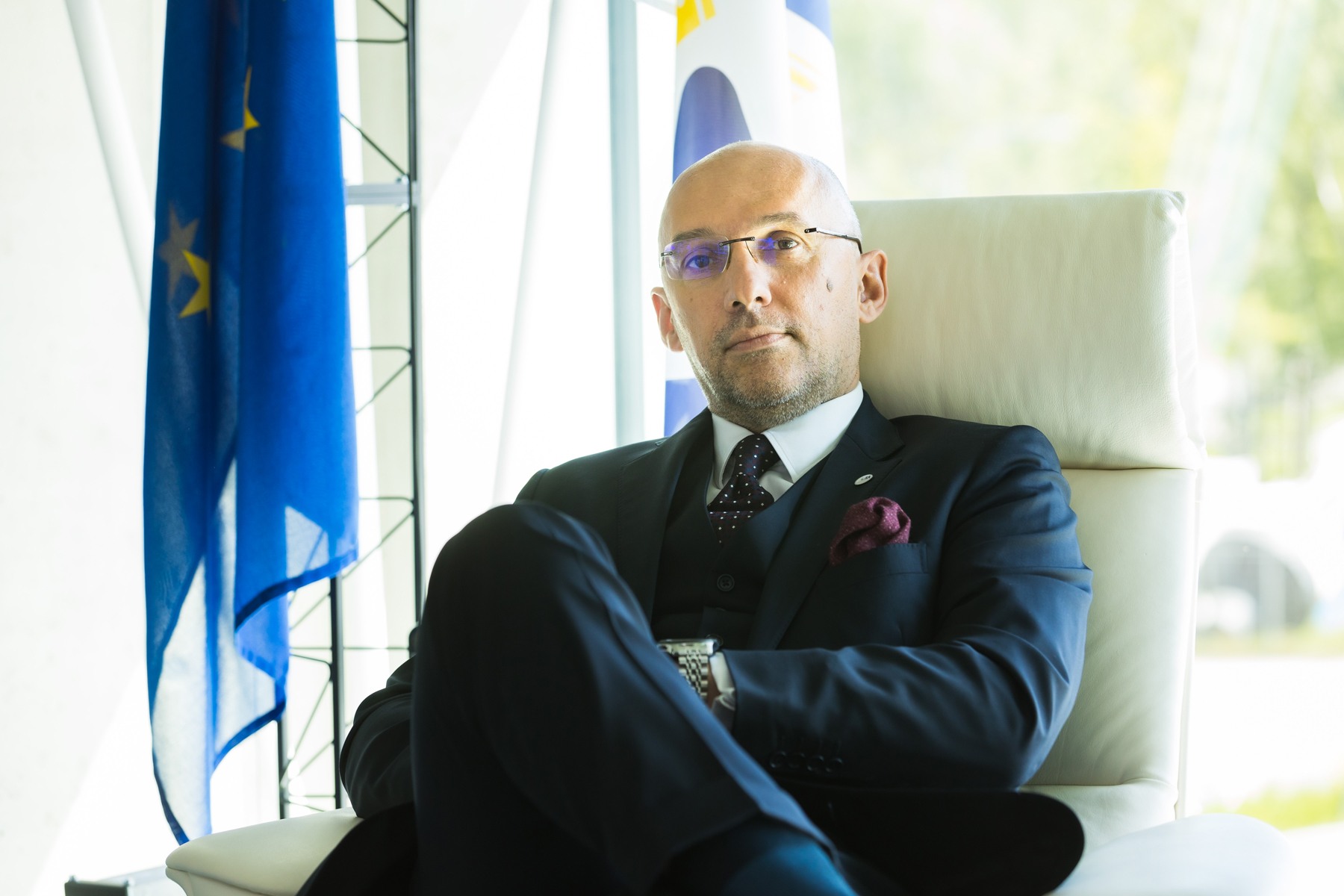
European governments must strengthen the systems behind labour migration if they are to help employers cope with chronic staff shortages, Krum Garkov, former member of the Bulgarian Prime Minister’s Office and EU Policy Advisor at VFS Global, said.
Garkov said the latest figures showed that the eurozone job vacancy rate rose to 2.2 per cent in the final stages of 2025, while there were around 2.5 million job vacancies across the EU.
Some of the bloc’s largest economies were among the most affected, he mentioned, pointing to Germany, with 1.7m vacancies, and France, with more than 250,000 unfilled positions.
Other European countries were also under pressure, he added, including the Netherlands, with around 368,000 vacancies, and Austria, with almost 120,000.
At the same time, Garkov said the EU was recording historically low unemployment rates.
He explained that unemployment stood at 5.8 per cent in January, with just under 13m people out of work.
This, he said, created what he described as a “staffing paradox”, showing that the problem was not simply a lack of available workers, but a growing mismatch between the skills employers need and the skills available in the labour market.
Garkov mentioned that the European Commission had recorded shortages in more than 40 industrial sectors, including healthcare, construction, hospitality, agriculture, transport, supply chains, ICT and technical professions.
He added that around two in three SMEs in the EU were facing staff shortages, while the bloc was losing around one million workers a year to retirement, a trend expected to continue until 2050.
By 2100, he said, the EU’s working-age population could fall by more than 50m compared with 2022 levels.
Against this backdrop, Garkov said the European Commission’s action plan on labour and skills shortages had set out measures to upgrade workers’ skills, improve job matching and expand legal migration channels.
A major development, he explained, was the closer integration of visa policy, migration management and labour market strategy.
He said it was encouraging for employers that visa policy was no longer seen merely as a travel permit, but increasingly as a key part of Europe’s labour mobility framework.
Tools such as the EU Blue Card, national shortage occupation lists and bilateral agreements were now being used more strategically, he mentioned.
However, Garkov said that skills validation and work readiness remained a missing layer.
He explained that reliable skills assessment could become the mechanism that turns legal migration channels into recruitment routes that employers can actually trust.
In this context, he said the EU Talent Pool, the first pan-European platform designed to support the recruitment of skilled third-country nationals, was expected to be launched soon.
The new online platform, he explained, would seek to streamline international recruitment by matching jobseekers from outside the EU with European employers whose vacancies fit their skills.
He said it could help facilitate recruitment from countries such as India, which produces thousands of skilled professionals every year in construction, hospitality and manufacturing, precisely the types of roles Europe urgently needs.
However, Garkov said that as efforts to facilitate legal labour mobility intensify, adequate administrative capacity would be crucial.
The effective implementation of the EU Talent Pool and wider labour migration initiatives, he explained, would require member states to strengthen critical functions at the start of the process, including identity verification, document certification, risk assessment and fraud prevention.
These are functions, he mentioned, that many national employment ministries may not have the capacity to manage, particularly as application volumes rise.
“The process needs to start right at the front line,” he said, explaining that this meant confirming the identity of the applicant, the skills they actually have, and the reliability of their documents and declarations before employers invest time and resources and before authorities use up limited processing time.
In this regard, Garkov said external service providers, including those already providing governments with visa processing services, could play a crucial role in the success of labour migration policies.
With their expertise in identity verification, he mentioned, such providers were well placed to support governments in a number of important ways.
Global visa application centres were already operating, he explained, and had robust digital platforms capable of handling high volumes of applicants while ensuring information security and full compliance with EU data protection rules.
This ability to absorb fluctuations in demand and manage peak periods, he said, would become essential as workforce mobility increases.
Beyond their administrative role, Garkov said external service providers could also help connect European employers with skilled workers from third countries.
They could support the EU Talent Pool and similar initiatives, he explained, by carrying out comprehensive pre-screening and verification of qualifications, ensuring that employers are matched with suitable and vetted candidates.
Garkov said this type of “skills management partnership” was already in place in Malta, where the Skills Pass programme is helping address labour shortages in the tourism sector.
Applicants from abroad, he explained, complete online modules to obtain a skills certificate and then book an appointment for a skills verification interview, which takes place at a visa application centre alongside the visa application itself.
By combining skills verification, document control and visa processing into a single framework, he said the system makes access easier for foreign workers in hospitality and food services and speeds up the process for employers.
This, he mentioned, contrasted with cases where employers had expressed frustration that other partnerships had not always resulted in workers being able to move on time.
In addition to streamlining the onboarding of new workers, Garkov said the scheme also offered an important element of quality control, significantly reducing the risk of hiring unskilled workers from abroad.
He explained that the skills assessment was integrated directly into the immigration process before the worker arrived, reducing the risk at an early stage.
This had been particularly important, he said, given that Malta had been “flooded with unskilled workers” when the reopening of the sector after the Covid-19 pandemic triggered a wave of panic hiring by employers.
At the same time, he added, the system did not place a significant financial burden on the Maltese government, as operating costs were fully covered by fees paid by candidates.
Garkov said external service providers could also help identify the next wave of skilled workers Europe needs by attracting students to the continent.
In Austria, he mentioned, the three major technical universities in Vienna, Graz and Leoben had entered into a partnership with an external service provider to facilitate access to advanced postgraduate programmes for qualified Indian engineering and technology graduates.
The external service provider, he explained, pre-selects and identifies students, assesses them, verifies their identity and supports them with the visa application, making the process simpler and faster for universities.
Graduates of master’s programmes are then entitled to a one-year visa extension in Austria, he added, allowing them to gain work experience and helping employers fill skills gaps.
Europe, Garkov said, is taking the right policy steps to address chronic labour shortages across the Union.
However, he explained that the future of any labour mobility strategy would not be determined by legislation alone, but by the quality, integrity and scalability of the systems that put it into practice.
By bridging the gap between political ambition and practical implementation, he said external service providers could play a key role in helping Europe attract and integrate the international talent it needs to remain competitive in the coming decades.





Click here to change your cookie preferences