
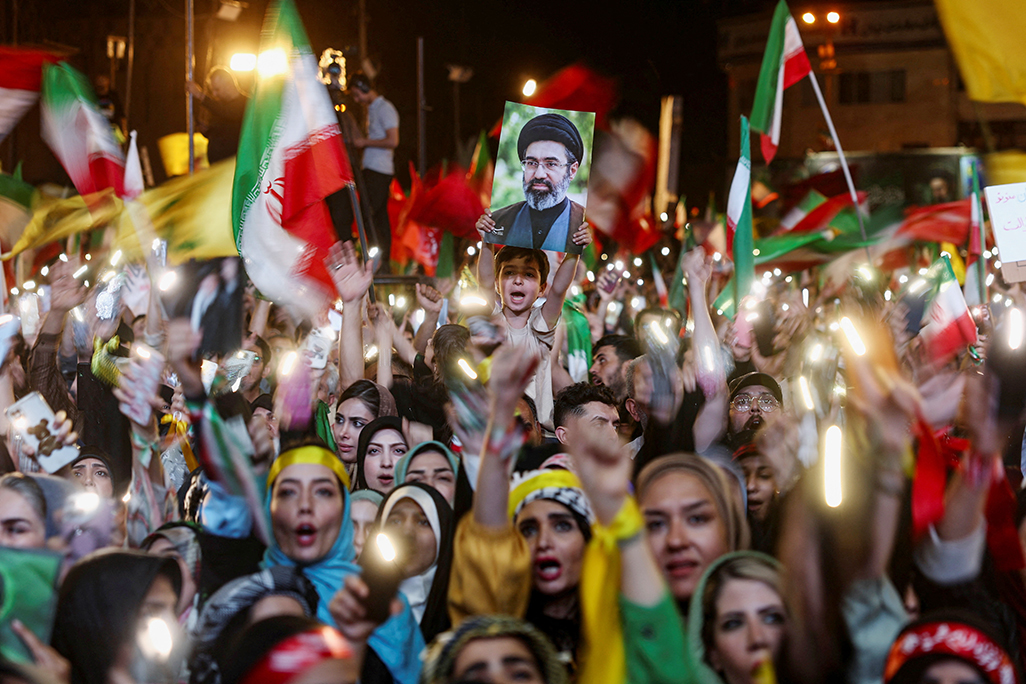
Terms of a proposed memorandum to end the war in the Gulf outlined by Western, Pakistani and Iranian sources on Friday appeared to strongly favour Iran, drawing criticism from U.S. President Donald Trump, who called the reports inaccurate.
Versions and accounts of the memorandum were provided to Reuters by Western sources, sources from mediator Pakistan and senior Iranian sources. They were also published in Iranian media.
The sources all stressed that the text was not yet final, with a Western source, an Iranian source and a Gulf source saying a key issue yet to be resolved was language on ceasing hostilities in Lebanon. Iran has demanded that Israel end a campaign against Iran’s allies, the Hezbollah militia.
While there were minor differences in the accounts, all versions appeared to accept the principal terms proposed by Tehran two months ago during initial face-to-face negotiations, which had previously been repeatedly rejected by Washington.
In a post on social media, Trump did not say what was inaccurate in reports on the proposed deal, but said: “The terms that Iran leaked out to the Fake News have NOTHING to do with the terms that were agreed to, in writing.”
“Very dishonorable people to deal with,” he said of the Iranians.
Under the terms as described by the sources to Reuters, the United States would immediately provide Iran with billions of dollars in unfrozen assets and waive sanctions on its oil exports, in return for Iran lifting its blockade of the Strait of Hormuz, largely closed since the war began.
Any discussion of key U.S. demands regarding Iran’s nuclear programme would be set aside for later during a 60-day period of talks on a final settlement. The only explicit reference to nuclear policy for now would be a restatement of Iran’s decades-old commitment not to seek nuclear weapons, first made when it ratified the U.N. Non-Proliferation Treaty in 1970.
Among the major U.S. concessions included in the drafts would be discussion of hundreds of billions of dollars in potential war reparations to Tehran, and the dropping of longstanding demands for curbs on Iran’s missile programme.
Washington has previously demanded that Iran give up its stockpiles of highly enriched uranium. But none of the versions of the text reviewed by Reuters includes any mention of it, and the sources said the demand had been explicitly excluded for now.
A Western source said that if language can be agreed, the memorandum could be signed as soon as Sunday by U.S. Vice President JD Vance and Iran’s parliament speaker, Mohammed Baqer Qalibaf, with Geneva for now seen as the likeliest venue.
Despite jointly launching the war with the United States, Israel has so far been excluded from the negotiations, and Prime Minister Benjamin Netanyahu said his country would not be party to the memorandum.
Netanyahu has repeatedly clashed with Trump in recent weeks over U.S. demands that Israel curb military action in Lebanon to let Washington reach a deal with Tehran.
TRUMP CALLS OFF STRIKES
The deal has emerged at the end of a week that saw the biggest escalation in the Gulf since a ceasefire halted U.S. and Israeli attacks on Iran. Israel and Iran traded fire for the first time since the ceasefire, and Washington then launched two days of strikes on Iran that triggered return fire on U.S. bases in the region.
Trump abruptly said on Thursday he was calling off bigger new strikes because the deal was now ready.
“We just made a great settlement of the war with Iran,” Trump told reporters in the White House on Thursday.
Trump’s announcement of a deal prompted global shares to rally and oil prices to slip. Brent crude prices were down more than 3% to their lowest in nearly two months.
Throughout the war, Trump has made repeated declarations that a deal was at hand – only for no such deal to emerge.
When he launched the war alongside Israel, Trump said his main aims were to destroy Iran’s nuclear programme and its ability to strike its neighbours, and make it easier for Iranians to topple their government.
While none of those objectives has been achieved, reopening the strait would potentially restore commerce through the Gulf to pre-war conditions, ending the worst ever disruption to global energy supplies.
“The strait will officially open as soon as we sign, which could be soon, very soon, maybe over the weekend in Europe,” Trump said, adding that Vance would attend the deal signing. He did not elaborate.
Asked if Iran’s Supreme Leader Ayatollah Mojtaba Khamenei had approved the deal, Trump said, “I understand the answer is yes.”
U.S. FORCES DOWN TWO IRANIAN DRONES
Tension remained high around the Strait of Hormuz, with U.S. forces shooting down two Iranian one-way attack drones after Tehran attempted to strike commercial ships transiting the vital waterway, a U.S. official said on Thursday.
Iran’s military stopped a tanker from transiting the strait, state media said, reporting the sound of explosions early on Friday.
The conflict has become a political headache for the White House, with polls showing Trump’s approval ratings sinking amid voter anger over high gasoline prices.
Some Republicans have openly worried that the war’s unpopularity could cost them control of Congress in November’s midterm elections.
Nevertheless, many Republican figures have taken strongly hawkish positions on Iran in the past and could have difficulty endorsing an agreement viewed as yielding concessions to Iran.
Tehran, which has always insisted its nuclear programme is peaceful, accepted tight curbs on it in return for the lifting of sanctions under a 2015 agreement with the administration of then-U.S. President Barack Obama.
Trump abandoned that deal during his first term in 2018, claiming it was too soft, and Iran responded by ramping up its enrichment of uranium, producing more than 400 kg (900 pounds) of material enriched to near the level needed to make a bomb, which remains unaccounted for.





Click here to change your cookie preferences