
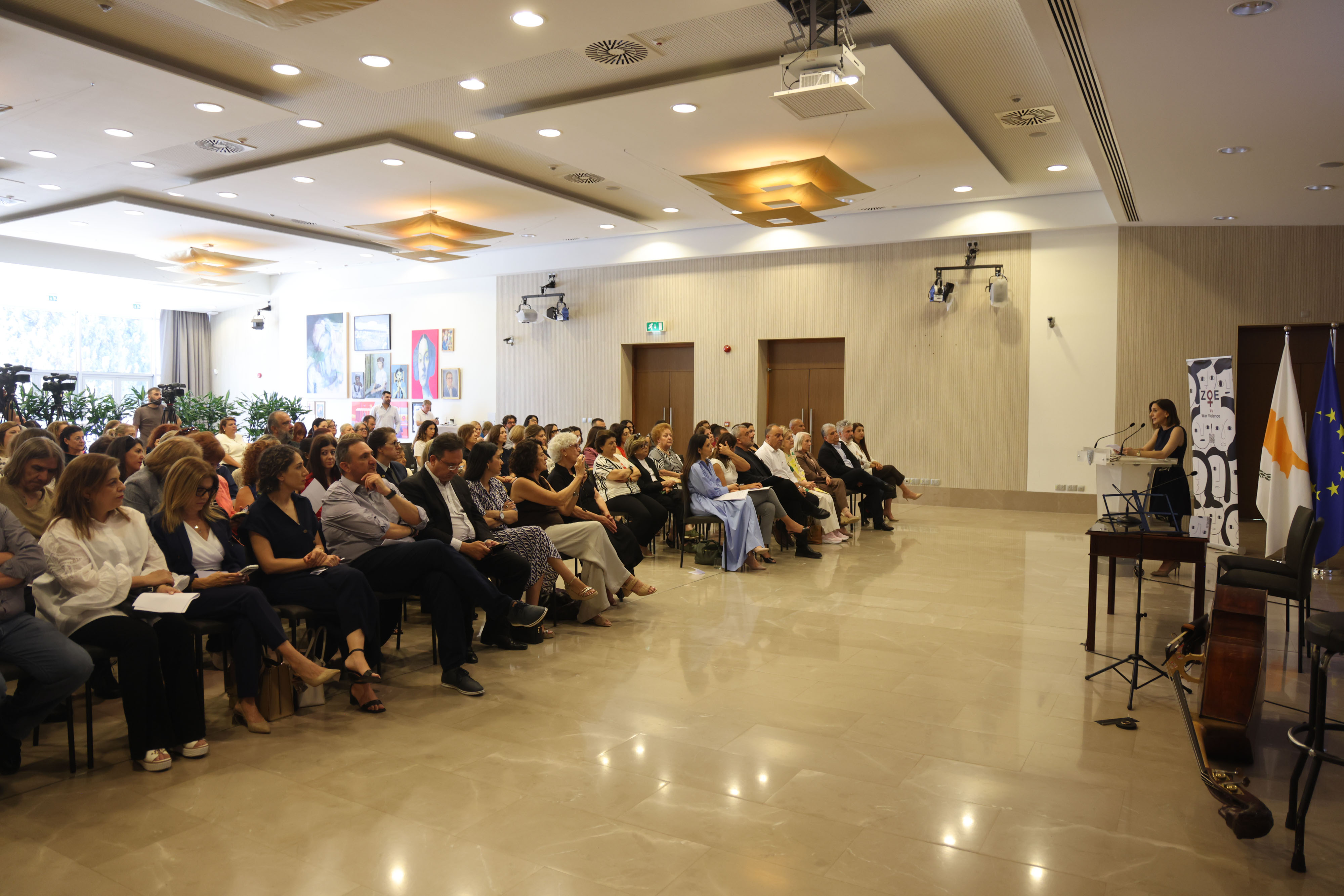
A monument is to be built in memorial of the victims of sexual violence during and after Turkey’s invasion of Cyprus in 1974, the non-profit organisation Zoe vs War Violence announced on Friday, with June 19 observed by the United Nations as the international day for the elimination of sexual violence in conflict.
The monument’s planned construction was announced during an event held at the presidential palace, with cabinet having approved the plans on Wednesday, and Zoe vs War Violence having said that Nicosia mayor Charalambos Prountzos has also offered his support for it to be placed in “a central location” in the capital.
Member of the European Parliament Loukas Fourlas, of Disy, attended the event and hailed the plans for the monument, saying that “there are times when politics meets the courage of people who decide to speak their truth, even if they had to wait half a century to be heard”.
“Today, we are here to honour the women who should never have had to gone through what they did, women who experienced the horrors of war in the most barbaric way, who were targeted because they were women, who carried with them trauma, fears, and wounds from the Turkish army in 1974, which were never closed,” he said.
He then stressed that he did not wish to just “talk about their pain”, but that equally, “I want to talk about their strength”, as “there can be no real justice when there are people who remain invisible”, and “there can be no historical memory when there are stories which have never been told”.
“I have been in wars. I have covered human tragedies as a journalist. I have met people who lost everything. I believed that I had heard the most difficult things,” he said, before stressing that on the day he heard Cypriot women describe their experiences in 1974, “I understood that I was wrong”.
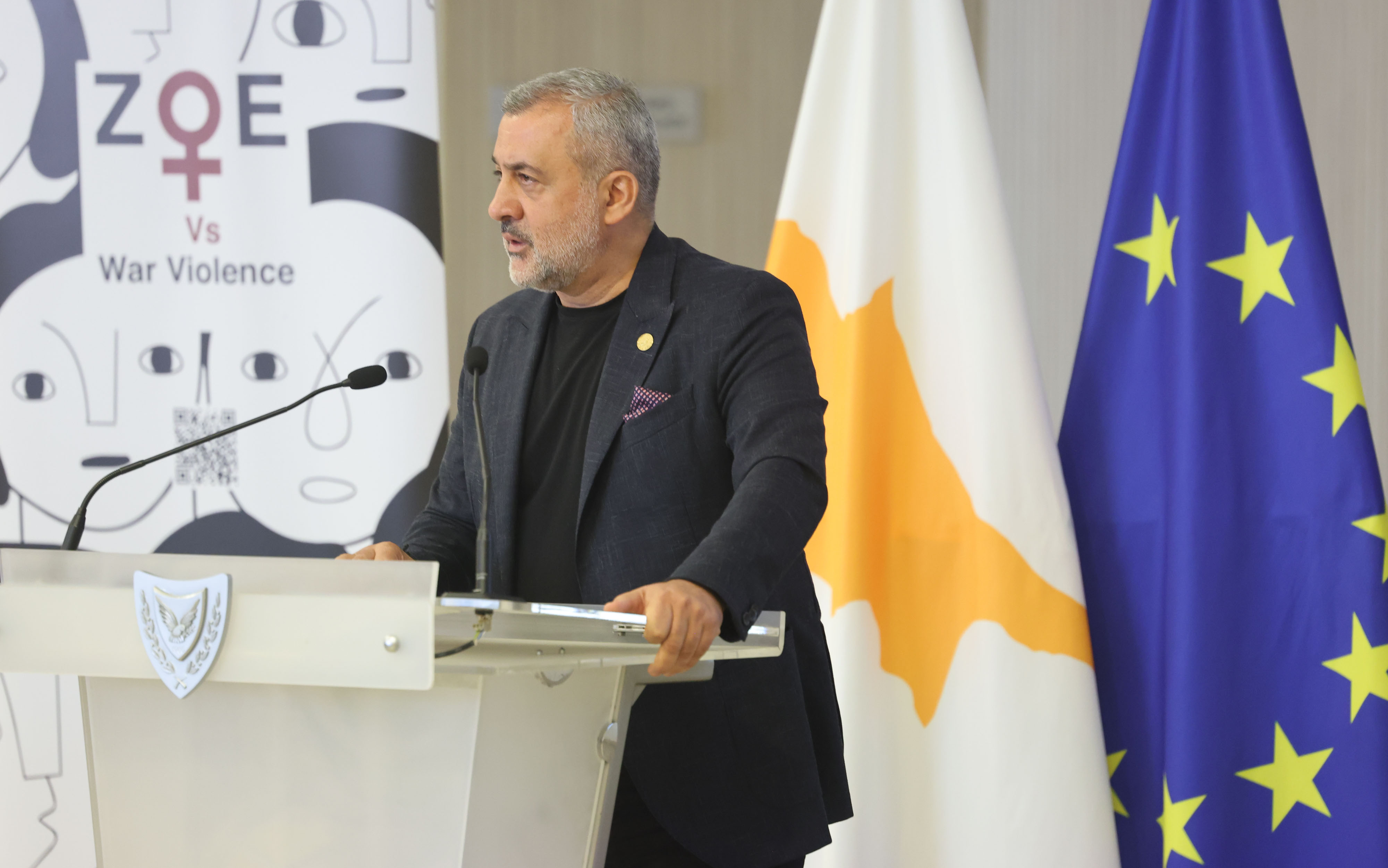
The women’s recounts, he said, were “not simple descriptions of events”, but “cries coming from the past” and “memories which had been buried deep for decades”.
“These were people reliving the darkest moments of their lives before us. I remember the pauses, I remember the looks, I remember the silence in the room, and I remember something that shocked me,” he said.
He said that “even the translators had a hard time continuing” and that “there were moments when they had to try to hold back their tears”.
“Because they were not just translating words, they were translating pain, they were translating half a century of silence, they were translating the truth,” he said.
The women, he said, “are not just numbers in a report” or “paragraphs in a resolution”.
“They are our mothers, our grandmothers, our sisters, our daughters. They are the very soul of this place,” he said.
On this matter, he said that a resolution condemning sexual violence in Cyprus in 1974 will soon be brought before a plenary session of the European Parliament, and thanked fellow Cypriot MEP Giorgos Georgiou, of Akel, as well as Greek MEP Eleonora Meleti, of ruling party Nea Dimokratia, who served as the rapporteur for a report written on the matter, for their help in this endeavour.
Gender equality commissioner Josie Christodoulou, meanwhile, said that “for many years”, the stories of victims of sexual abuse in 1974 were “left on the sidelines of public discourse”.
“The silence and silencing of sexual violence against women and girls in wartime did not protect the victims. Instead, it kept them invisible and excluded them from public memory. Today, we must highlight them and include them in our country’s collective memory,” she said.
She added that the issue of sexual violence in conflict is not a purely Cypriot issue, referencing the UN’s most recent report on the matter, which documented 9,788 verified cases of conflict-related sexual violence.
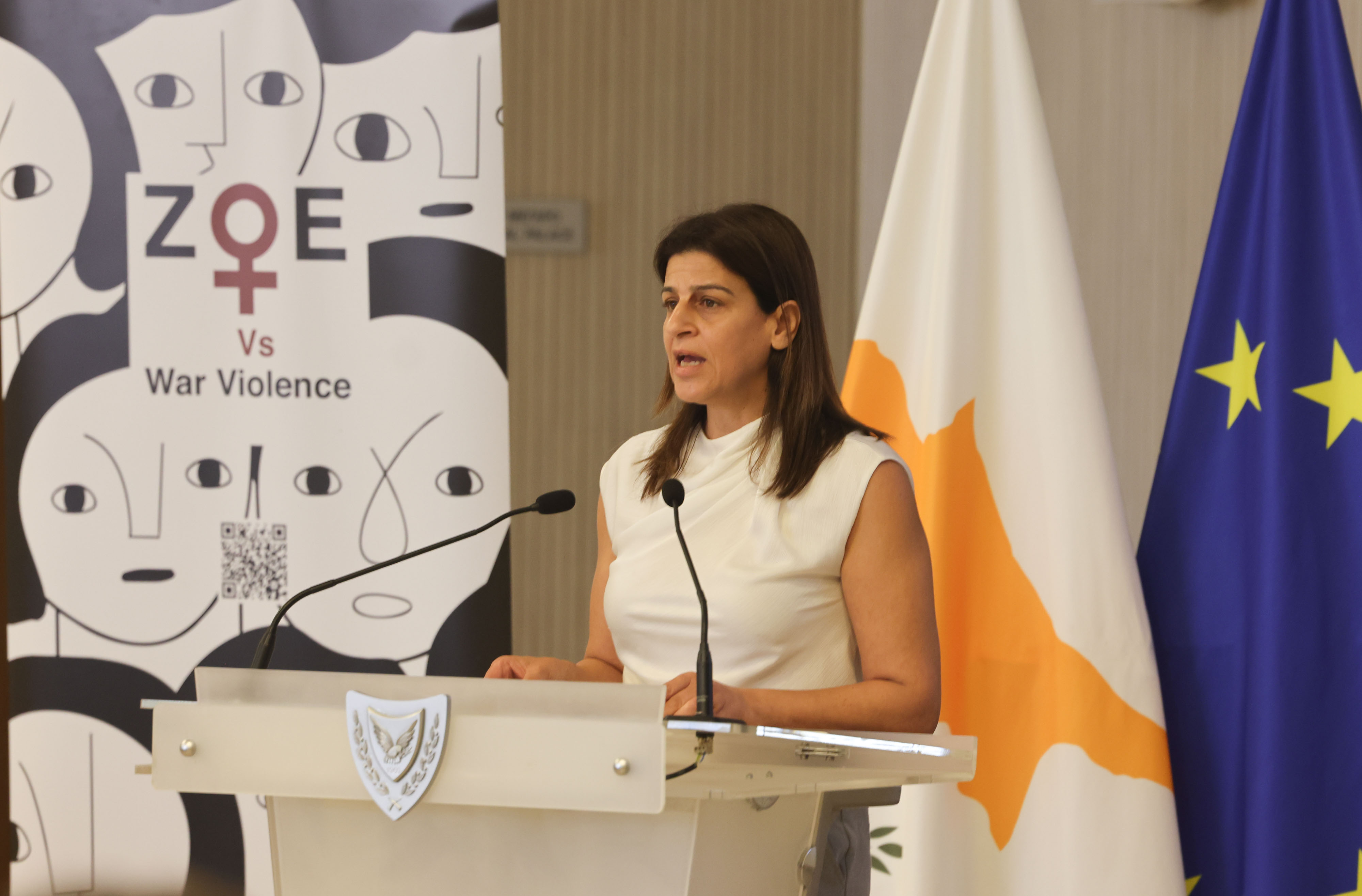
“These figures are not just numbers. Behind every record is a person, a life marked by violence, a family affected, a society called upon to face the consequences,” she said.
To this end, she said that “sexual violence in conflict and war is still used as a weapon of war and a means of terrorising, degrading, and subjugating women and populations”.
“Women and children are raped and become victims of human traffickers for the purpose of labour and sexual exploitation. It is a fact that wars remain a pernicious form of exercise and demonstration of power within the ultimate goal of absolute domination,” she said.
Returning to the matter of Cyprus, she said that “in incorporating the gender perspective into our historical narrative, we must recognise that the experiences and testimonies of women have remained for decades degraded and silenced by our entire sociopolitical system”.
“Women who were victims of rape and sexual violence were then victims of society, which treated them punitively, with exclusion and discrimination. Women’s testimonies were not easy to find, and it is still not an easy process, since the impact on them would be stigmatisation, social exclusion, and exclusion from marriage,” she said.
She added that “despite the repercussions, some had found the strength”.




Click here to change your cookie preferences