
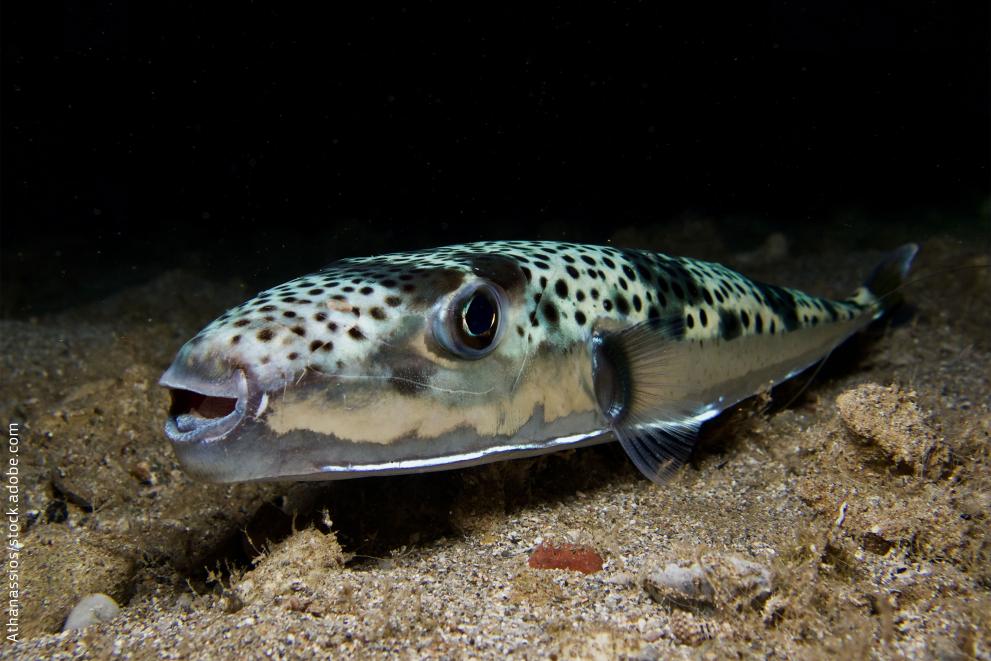
More than 103 tonnes of invasive silver-cheeked toadfish have been removed from Cypriot waters under a government-backed eradication scheme, with fisheries officials warning on Friday that the species remains one of the most significant threats facing marine ecosystems and coastal fishing communities.
The fisheries department announced that approximately 103,000 kilogrammes of the toadfish (Lagocephalus sceleratus) have been collected since the launch of a grant scheme in June 2024 aimed at reducing its population through targeted fishing.
Speaking to Sigma, fisheries officer Katerina Georgiou described the species as “one of the most important invasive alien species established in the eastern Mediterranean“, remarking that its spread has been aided by its adaptability and lack of significant natural predators in the region.
The species entered the Mediterranean through the Suez Canal and has now spread across much of Cyprus’ coastal waters.
Despite its widespread distribution, authorities do not have a scientific estimate of the overall population size within Cyprus’ exclusive economic zone (EEZ).
“There is currently no scientific census or official estimate of the total population,” Georgiou said, explaining that this makes it impossible to draw reliable conclusions about the overall stock or future population trends.
The grant scheme, funded jointly by the European fisheries fund and the government until the end of 2029, encourages professional coastal fishermen to target the species.
Eligible fishermen receive €4.73 per kilogramme of fish landed.
According to the department, around €487,000 has already been paid to participants.
Eleven collective groups representing approximately 150 professional fishermen have joined the programme.
Georgiou said the primary purpose of the scheme is to reduce damage caused to coastal fisheries, with the species having a reputation for destroying fishing gear and damaging netting.
The department also drew attention to the presence of other invasive species in Cypriot waters.
Among them is the lionfish (Pterois miles) which has established substantial populations around the island.
Georgiou said the lionfish, despite possessing venomous spines, is edible and considered a luxury food fish.
“It’s fishing and consumption are being actively promoted,” she said, describing the approach as a practical way to reduce populations while creating economic opportunities for fishermen and restaurants.





Click here to change your cookie preferences