
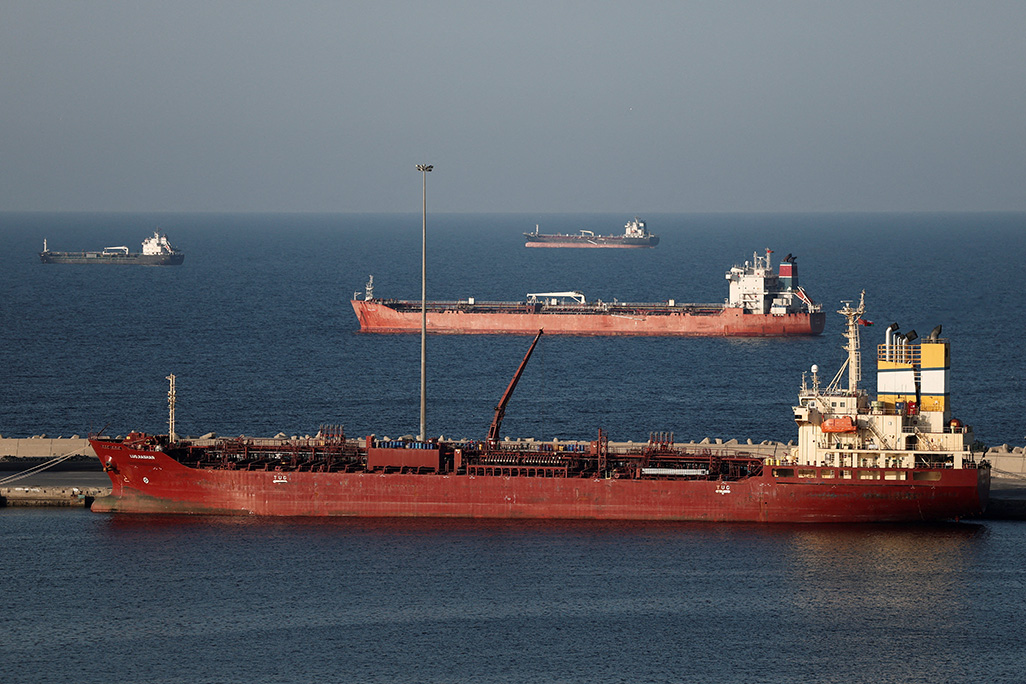
Strait of Hormuz traffic rises, but security risks continue to slow full return to normality
Ships have begun leaving the Persian Gulf after the US and Iran agreed to ease restrictions around the Strait of Hormuz, allowing traffic through one of the world’s most important energy routes to gradually resume.
Tankers, liquefied natural gas carriers and vehicle carriers are among the first vessels moving through the strait, after months of disruption left ships waiting for safe passage and pushed operators to reassess routes, insurance cover and security risks.
The first signs of movement were recorded this week, with Reuters reporting that three Saudi-flagged supertankers carrying about six million barrels of crude oil had sailed through Hormuz after the agreement was signed.
The increase in transits points to a cautious restart of commercial shipping in the region, rather than a full return to normal operations.
Industry officials have welcomed the agreement as an important step towards de-escalation, but said shipowners would need clearer security guarantees before traffic returns to pre-crisis levels.
A key concern remains the possible presence of mines in the Strait of Hormuz. The Guardian reported that normal shipping would not resume until around 80 mines are cleared, while hundreds of ships remain stranded in the Gulf.
The backlog is still significant. Market estimates suggest that more than 160 tankers remain in the region, while hundreds of dry cargo ships are waiting to leave the Gulf.
MarketWatch reported that any return to pre-war traffic levels would depend on safe passage guarantees and a fall in war-risk insurance premiums.
The pressure is also being felt in the dry cargo market, where bulk carriers carrying raw materials and industrial goods are preparing to move through the strait.
Around 200 bulk carriers are expected to require passage in the coming period, adding further pressure to a narrow route with limited operational flexibility.
Before the crisis, the Strait of Hormuz was a vital artery for global trade and energy flows. UNCTAD has previously warned that disruption in the strait can have wider consequences for energy markets, maritime transport and global supply chains.
Insurers have also warned that reopening the strait will not be enough on its own.
Navigation support, port calls, bunkering, rescue services and emergency response capacity will need to function properly if shipping activity is to resume safely and at scale.
Major container shipping companies are also proceeding more cautiously. Unlike tankers and some LNG carriers, container lines have not yet returned in large numbers, reflecting continued uncertainty over security conditions and operating costs.
Industry publication gCaptain reported that shipping groups welcomed the US-Iran agreement, but warned that reopening the Strait of Hormuz would take time as vessels wait to move and safety risks remain.
For now, the first departures mark a clear easing of the crisis.
However, the coming weeks will show whether the increase in transits becomes a sustained return to normal operations, or whether shipping in the Persian Gulf continues to move under the strain of security concerns, higher costs and fragile geopolitical conditions.





Click here to change your cookie preferences