
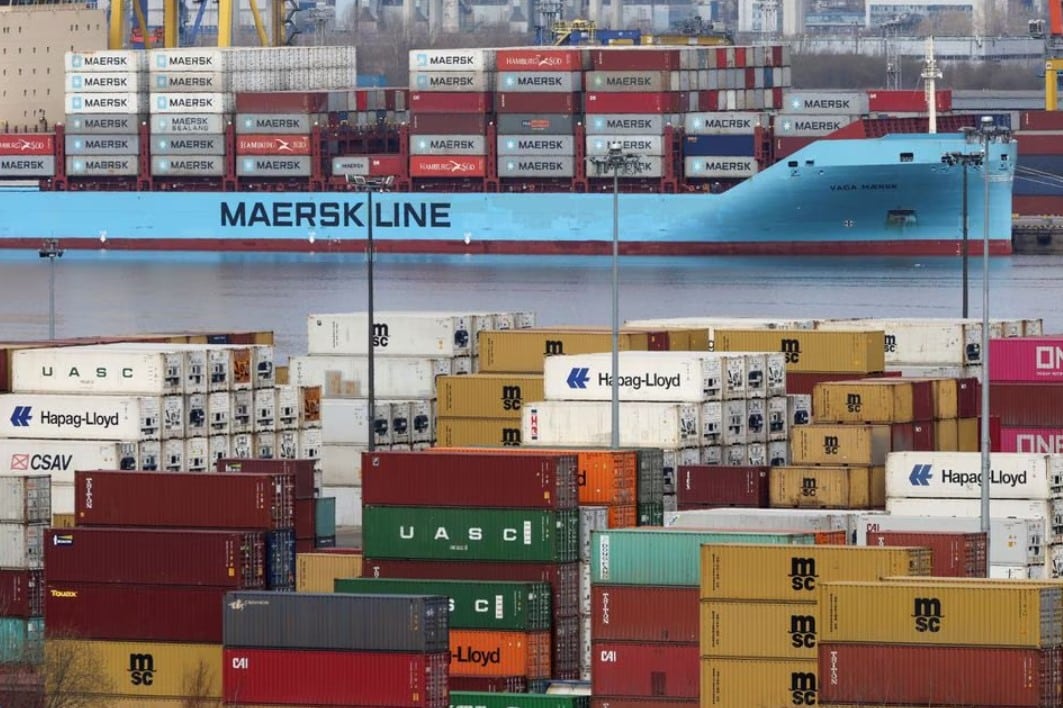
The euro area reported a trade in goods deficit of €1 bn in April 2026, marking a significant reversal from the surplus of €8.7 bn recorded in April 2025, according to the latest figures from Eurostat.
This stark shift highlights a period of increasing pressure on the European economy as import costs continue to outpace export growth.
Exports of goods from the euro area to the rest of the world reached €255.4 billion in April 2026, representing a 5.0 per cent increase compared with the same month in the previous year.
However, this growth was eclipsed by a 9.3 per cent rise in imports, which climbed to €256.4 bn from €234.6 bn in April 2025.
The latest monthly balance of a €1.0 bn deficit indicates a marked decline from the surplus of €4.9 bn seen in March 2026.
Year-on-year, the trade position has undergone a deterioration of €9.7 bn, a trend experts attribute primarily to a widening energy deficit and a reduced surplus in the machinery and vehicles sector.
For the period from January to April 2026, the euro area saw its trade surplus narrow significantly to €12.9 bn, down from the €63.7 bn surplus recorded during the same four-month window in 2025.
Total exports for the year to date fell to €970.1 bn, a decrease of 3.6 per cent, while imports rose by 1.5 per cent to reach €957.2 bn.
Internal market strength remained evident, with intra-euro area trade rising to €924.9 bn, an increase of 3.1 per cent compared with the previous year.
The European Union faced similar challenges, reporting a trade in goods deficit of €7.1 bn for April 2026, contrasted with a surplus of €7.3 bn in April 2025.
Extra-EU exports reached €225.7 billion, a 3.2 per cent increase on the year, but this was insufficient to offset a 10.1 per cent surge in imports, which rose to €232.8 bn.
Compared to March 2026, when the EU recorded a surplus of €2.3 bn, the April deficit reflects a year-on-year deterioration of €14.4 bn.
The cumulative deficit for the EU from January to April 2026 reached €2.2 bn, a sharp decline from the €57.5 bn surplus seen in the same period of 2025.
Extra-EU exports fell by 5.8 per cent to €857.7 bn, whilst imports experienced a modest growth of 0.8 per cent to €859.9 bn.
Despite the external trade struggles, intra-EU trade remained resilient, increasing by 4.2 per cent to reach €1 445.4 bn.
Seasonally adjusted data for April 2026 revealed that euro area exports grew by 3.2 per cent and imports by 2.9 per cent, resulting in a seasonally adjusted balance of €1.3 bn.
The EU saw a similar export growth of 3.2 per cent, though imports rose faster at 3.7 per cent, leading to a seasonally adjusted deficit of €4.7 bn.





Click here to change your cookie preferences