

A year after its launch we look at how successful the Minds in Cyprus initiative has been
The government has placed the repatriation of skilled professionals at the heart of its economic strategy, launching an ambitious campaign to reverse decades of skilled Cypriots’ exodus abroad.
The programme, branded Minds in Cyprus, has been presented as a flagship effort to address perennial labour shortages in key sectors. This includes careers in STEM with a strong focus on Cyprus’ burgeoning tech sector in particular.
The initiative was launched in May 2025 with a dual objective, that being to reconnect Cyprus with highly skilled professionals abroad, and in turn make their return easier through “a combination of incentives, practical facilitation and direct links with employers” said Deputy Minister to the President Irene Piki.
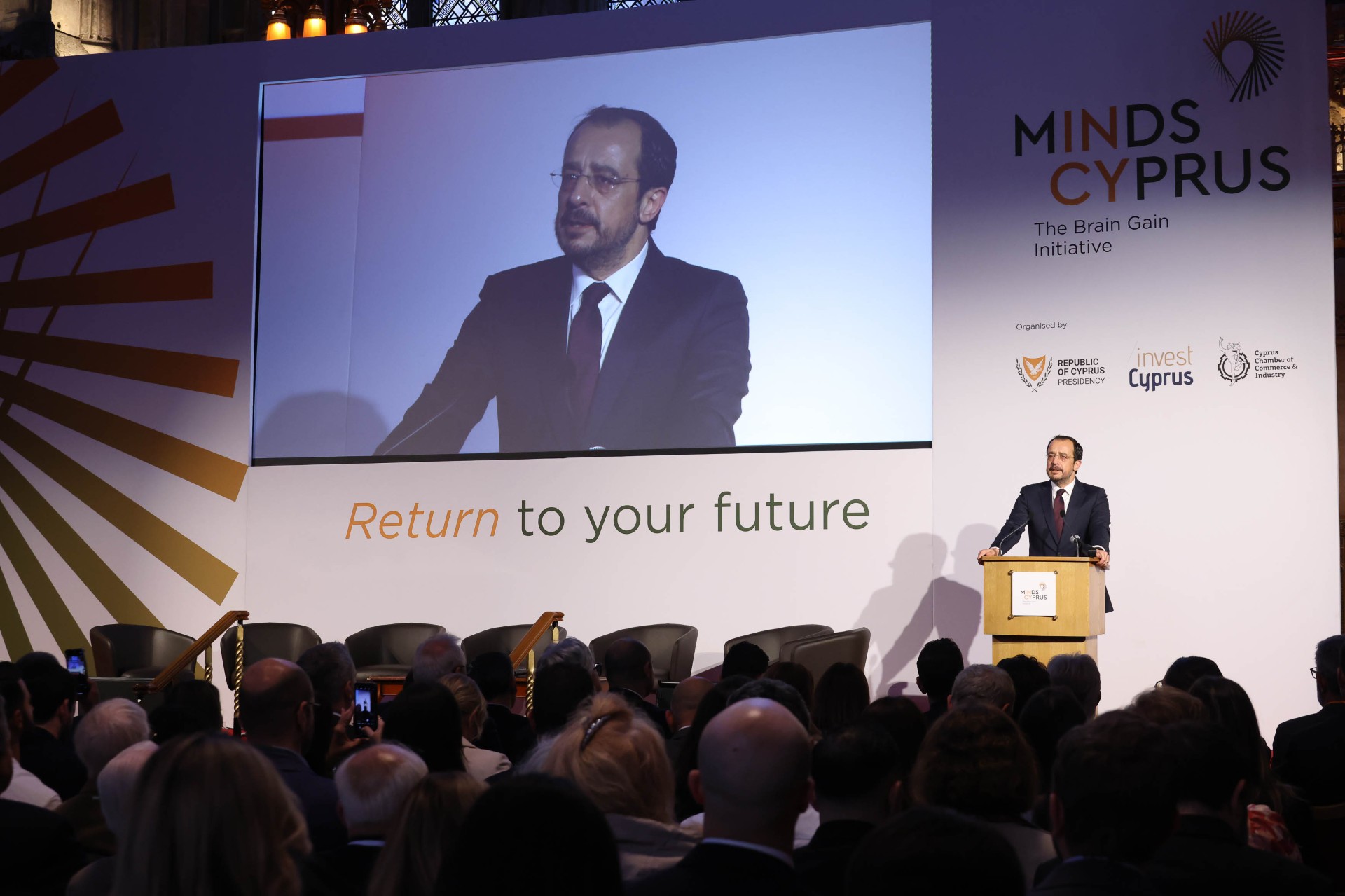
But nearly a year after its glittering launch in London, the available data suggests a growing gap between engagement and results.
According to figures submitted to parliament, 233 matches have been made between candidates and vacancies through the platform as of March 2026.
However, the labour department has reported that neither employers nor applicants have provided systematic feedback on those matches, leaving authorities unable to determine how many resulted in actual employment or relocation.

Officials acknowledge this limitation, for Piki’s office remarks that Minds in Cyprus operates primarily as “an enabling and connecting mechanism”, where employment outcomes are ultimately concluded between employers and candidates and are not always centrally captured.
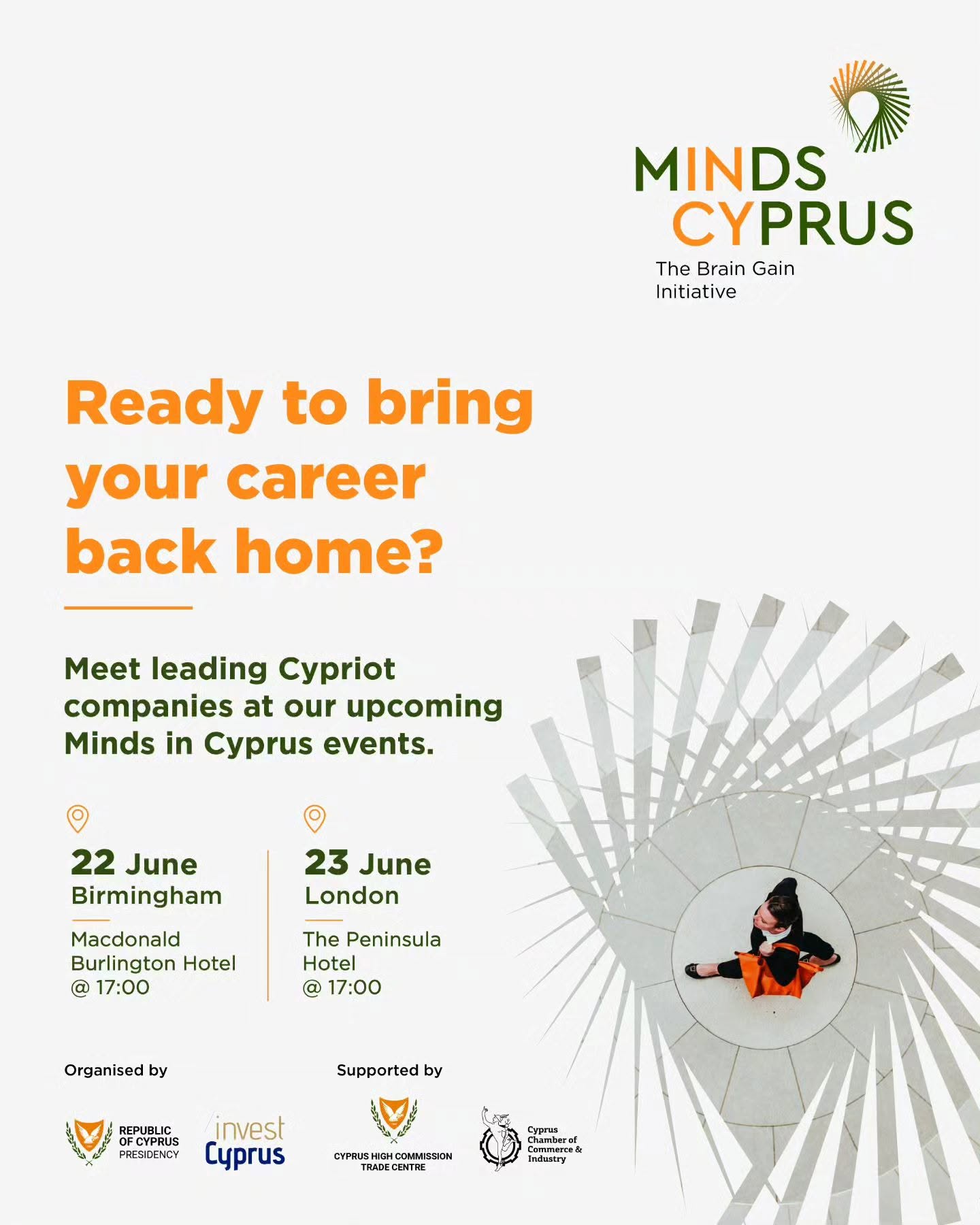
That absence of outcome tracking has become a central limitation in assessing whether the programme is functioning as intended, with officials largely relying on registration numbers and participation levels rather than verified returns. More presentations will take place in Birmingham on June 22 and in London on June 23.
Piki has said the programme’s mandate aims to rebuild the country’s ties with its far-reaching diaspora rather than produce immediate returns.
“It represents an open invitation to reconnect Cypriots abroad with the possibilities and prospects of Cyprus,” she said.
President Nikos Christodoulides has previously framed the initiative as an attempt to convert “brain drain into brain gain”, positioning it as part of a wider strategy to shift Cyprus toward a knowledge-based economy.
The programme operates through the Talent Repatriation Action Plan, which combines job matching services with tax incentives, relocation guidance and information on housing, education, healthcare and employment conditions.
Piki’s office said the action plan has now reached around 90 per cent implementation, with tax incentives, employer engagement and facilitation tools already in place, and the remaining phase focused on “awareness, conversion and measurable impact”.
Under the scheme, eligible professionals receive a 25 per cent income tax exemption capped at €25,000 annually, while the qualifying period spent abroad has been reduced from 15 to seven.

Government spokesman Konstantinos Letymbiotis described the policy shift as “another decisive step toward achieving a strategic national goal”.
Officials argue that the incentives are structured to attract new taxpayers rather than redistribute existing ones, and therefore carry no direct fiscal burden.
Piki’s office adds that the incentive framework is now entering the stage where “awareness, uptake and measurable return outcomes can begin to develop at scale”.
Interest in the programme has been admittedly significant.
More than 750 people attended the London launch event last year, with thousands more participating online.
By the most recent data, over 600 professionals had registered on the platform, alongside more than 300 job vacancies posted by participating employers.
The government has also pointed to broader economic transformation as a supporting factor.
The technology sector now accounts for around 14 per cent of GDP, following rapid growth over recent years, with demand increasing across IT, healthcare, education, green technology and research industries.
Piki said that during meetings with international companies in Silicon Valley, workforce availability was consistently raised as a key concern.
“The first question they were asking was, ‘what type of talent do you have in the country?’,” she said.
Her office has argued that the initiative must be understood within a broader value proposition, that being that Cyprus may not compete on salary alone, but offers “quality of life, career opportunity, and personal connection to the diaspora”.
Despite these developments, officials acknowledge that Cyprus continues to face structural constraints, particularly in salary competitiveness compared with larger European labour markets.
That gap between domestic conditions and international opportunities is frequently cited as a key reason why many professionals remain abroad.
Piki’s office notes that “the decision to return is rarely based on salary alone,” and typically reflects a combination of financial, professional and personal considerations.
Venture capitalist Demetrios Zoppos – co-founder of 33East, an early stage investor in tech startups with a connection to Cyprus – said the initiative should be understood as part of a broader ecosystem rather than a standalone solution.
“Tax alone is not going to be the thing that basically brings people,” he said. “We have to be competitive internationally.”
He said relocation decisions are rarely immediate and are often influenced by family, career stage and enduring stability.
“There is huge interest, I myself am receiving great interest from young professionals looking to move back to Cyprus but relocation is a question of time,” he said.
Zoppos also pointed to visible changes in Cyprus’ business environment, particularly in the technological sectors.
“There has been a dramatic rise in tech companies relocating to Cyprus already,” he commented, remarking on the growth in startups and increased engagement from diaspora professionals exploring return options.
But for many analysts, the central issue is not whether interest exists, but whether Cyprus can provide comparable career progression to larger labour markets.
Lucas Irwin, a DPhil student at the University of Oxford and Fellow at the Centre for AI Governance, said the key constraint is structural rather than financial.
“The central issue is that young professionals face difficulties advancing their careers in Cyprus,” he said.
He added that fiscal incentives alone cannot compensate for a limited labour market.
“Incentives such as tax breaks must be paired with a dynamic business environment conducive to career growth.”
Irwin argued that Cyprus could strengthen its position by attracting major technology companies to establish regional headquarters on the island, particularly in emerging sectors such as artificial intelligence.
“The government would benefit from attracting major AI and technology firms to headquarter their EMEA (Europe-Middle East-Africa) operations in Cyprus,” he said.
He said Cyprus’ geographic position could support such a strategy.
Irwin added that the presence of global firms would not only expand job opportunities but also reshape perceptions among younger professionals considering whether to return.
“This would signal to young professionals that Cyprus is a serious contender for their career development,” he said.
For those who have already left Cyprus, however, the gap between ambition and opportunity is described in more personal terms.
Antonis Kalimeri, now working in the Netherlands for a major pharmaceutical company, said his early attempts to enter the Cypriot job market proved decisive in his departure.
“After I completed my bachelor’s at the University of Nicosia in 2015, I spent around six months looking for employment,” he said.
He described a process characterised by a lack of responses and limited entry points into professional roles.
“I met consistent dead ends and very few responses.”
Kalimeri said the issue was not limited to securing employment but extended to progression once inside the system.
“My field is of course STEM, but my options in Cyprus were severely limited in terms of growth or promotion,” he said.
He said the absence of structured graduate pathways created a barrier at the very start of a career.
Piki’s office acknowledges this broader challenge indirectly, noting that the platform’s role is to improve visibility of opportunities rather than reshape demand itself, and that participation “can continue to broaden across sectors” as more employers engage.
Kalimeri added that this gap shaped early career trajectories in ways that incentives introduced later cannot easily reverse.
“The salaries are stagnant for young professionals in Cyprus, even in my field.”
By contrast, he said the Netherlands offered a more structured labour market with clearer progression and stronger institutional support for graduates entering the workforce.
“My job in the Netherlands is simply not comparable in terms of benefits,” he said.
He said migration decisions are often misunderstood when reduced to financial incentives or tax policy alone.
“It’s not merely so binary as to why people leave home for work,” he said.
For Kalimeri, the decisive factor was not taxation or short-term financial gain, but the absence of a visible professional pathway in Cyprus.
“In Cyprus there is no platform, no support for graduates,” he said again.
“For people like me, the decision was never about tax,” he said. “It was about whether there was a real pathway for career growth and to be judged on the merit of my abilities which is not always the case back home.”





Click here to change your cookie preferences