
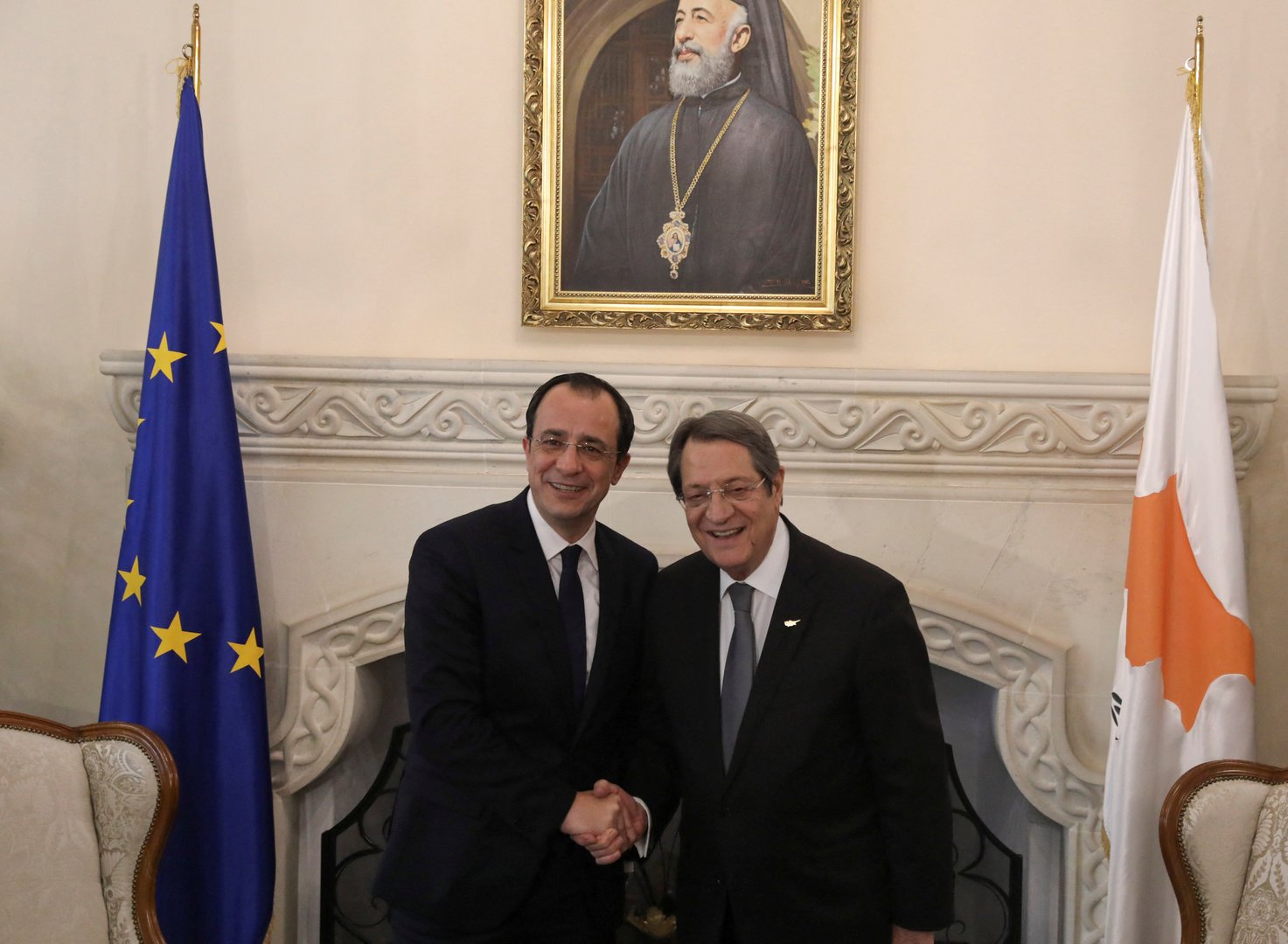
THE REPORT about the Mafia State was finally released on Tuesday by the Anti-Corruption Authority, which turned out to be a bit of a disappointment.
After two years of work, which included 214 hearings, the questioning of 150 people, the accumulation of 793 documents of evidence and a 3,000 page report, which cost the taxpayer more than a million bananas, the four ‘inspection officers’ informed us that there was a possibility that Preznikone committed the criminal offence of abuse of power in several instances.
Abuse of power was Nik I’s style of government from the day he entered the presidential palace. I always thought this abuse of power was of the non-criminal type, of the ethical type that all presidents of the republic, without exception, have exercised as part of their duties.
In Kyproulla, abuse of presidential power was introduced as a legitimate activity by Archbishop Makarios and this noble tradition has been loyally followed by all his successors to some degree or other. For example, the large scale rusfeti every single one of them engaged in was an abuse of their power but never regarded as a possible criminal offence by anyone.
ANOTHER possible criminal offence he may have committed – ‘influence peddling’ – was described in the report as an “unusual’ offence and several paragraphs were written to explain how it worked.
It came from Article 12 of the Convention of the Council of Europe for the Criminalisation of Corruption in 1999 and was ratified here a year later. The report cited the case of the former House president Demetris Syllouris (Al Jazeera) in the decision of which there was an explanation of the so-called ‘influence peddler’, who could be passive or active.
I will not bore you with any more details, but will remind you of how Nik I was given the use of the private Jumbo of a Saudi businessman who together with his extended family – including two wives – were issued Cyprus passports. Was this influence peddling, bribery or just a favour to a friend?
This was not mentioned in the book, so it was not investigated by the anti-corruption authority.
NIK I will respond to what was written in the report on Tuesday morning, when he holds a news conference in Nicosia.
My guess is that he will inform us that everything in the report is complete nonsense, that he is the most honest man in Kyproulla and that there had never been another president with ethical standards as impeccable as his.
Having always possessed superb thespian abilities, we are all keen to see what type of performance he will give. Will he do a Michael Corleone from Godfather II laying into his enemies, or the sad, defeated Michael of Godfather III and seek public sympathy?
THE DAY before clean-living Nik’s planned news conference, there will be a protest outside the Law Office of the Republic, organised by Akel and Volt, because they do not want the service to have anything to do with the criminal investigation of what was written in the report.
The consensus – hacks, parties, social media – is that the attorney-general George Savvides and deputy attorney-general Savvas Angelides should have nothing to do with the investigation as they had been appointed by Nik and before that served in his cabinet.
Both have said they would recuse themselves from the investigation, but this did not go down well, their critics claiming they could still influence their underlings who would oversee the investigation.
The government plans to appoint independent investigators, but it has been pointed out that an independent prosecutor would also be needed to direct the investigation. The need for independent judges to try the case was not mentioned, yet.
THE AUTHORITY against corruption, which was the bad idea of Nik I and set up during his possibly criminal rule, has proved something of a costly waste of time.
It took two years for it to complete an investigation which is nothing more than a guide for criminal investigators, who will have to study the 3,000 pages and decide which of the cases mentioned would be worth pursuing (another six to 12 months?).
Then the police would have to bring in witnesses and suspects for questioning (another six months?) so that the lawyers in charge can decide what charges could be brought with some possibility of success. And then we will have to wait a few years for our slow-moving courts to try the cases and reach a verdict, after which there will be an appeal.
There must be a speedier way of combating corruption than this. Many of us will die without ever finding out whether Nik I was guilty of corruption.
I MUST admit that I was surprised to read, a few days ago, that a Harley-Davidson that was part of Makarios’ official escort was fully restored and in working condition. It is an exhibit in the police museum.
The Harley and two other motorbikes that were part of the motorcade had been donated by a Cypriot living in the US, who had also donated a Cadillac Fleetwood to our president. The Cadillac is kept at the Archbishopric with his Mercedes-Benz 600. The latter was the limousine favoured by most African leaders.
But I bet few African leaders also had a personal helicopter at their disposal to take them places, even though they ruled much bigger countries and had much greater distances to travel. Makarios, in contrast, would use his chopper to get to his summer residence in Troodos to avoid travelling on the narrow, winding, mountain roads ordinary mortals had to use.
After the attempt on his life while in the chopper, he decided to use the Merc-Benz 600.
KYPROULLA is probably the only country in the world in which the state has the responsibility of deciding whether someone is a journalist. This Soviet-type authority has belonged to the Press and Information Office (PIO), which has been under the interior ministry since colonial times and remains to this day.
As in most countries, the journalists’ union (Esk) gives out journalist IDs, but in Kyproulla only the ID issued by the PIO is recognised. If you do not have a PIO card, you are a bit of pseudo-journalist – a fraud.
A couple of weeks ago, a Cyprus Mail hackette was officially told that she would not be issued a journalist’s ID, because the jobsworth at the PIO decided she was not eligible. The reason – the jobsworth said, she checked the Mail newspaper and website, did not see the woman’s name on any articles and concluded she was no hack, therefor ineligible for an ID.
Being a petty official, she was unaware that some journos in a newsroom edit copy, choose stories from the news-wires, lay out stories on pages, put on headlines, write captions etc without their name ever appearing. The journo’s employer may consider her a journo, but if the PIO does not, she clearly is not.
SPEAKING of hacks, Esk union publicly congratulated the government for setting a condition for paying newspapers a small annual subsidy. The condition proposed by the communist former labour minister was that newspapers that did not pay CoLA to their employees would be ineligible for cash assistance.
To cut a long story short, no newspaper was eligible. An Esk statement said this Soviet behaviour was correct and the state was right to want to ensure that journos benefit, even indirectly from the subsidy. Of course, there is another interpretation of the decision. The government found a smart way of punishing newspapers, all of which, apart from Phil, are highly critical of the government.
POLITICAL correctness, I am happy to report, has arrived in Kyproulla. Justice and Public Order Minister Costas Fitiris, speaking on radio about the new prisons that will be built, said that they will no longer be known as prisons. The new prisons would be called the ‘correctional institution.’
I suppose this means a ‘prisoner’ will no longer be called that but be referred to as a ‘correctional apprentice.’




Click here to change your cookie preferences