
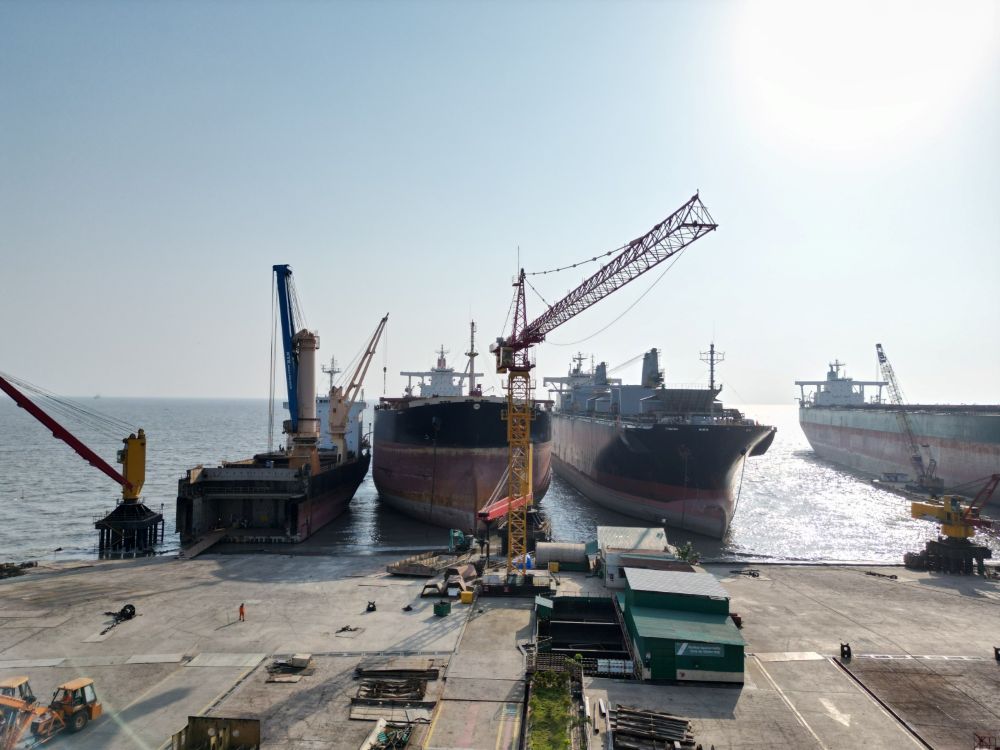
European and global shipowners have called for closer alignment between EU and international ship recycling rules, warning that diverging standards risk complicating the sector just as the new global framework begins to take hold.
A new independent study, commissioned by European Shipowners | ECSA and the International Chamber of Shipping (ICS), examines the differences between the EU Ship Recycling Regulation and the International Maritime Organization’s Hong Kong Convention, which entered into force on June 26, 2025.
The study argues that the Hong Kong Convention has already helped raise standards internationally, particularly by expanding the number of ship recycling facilities working under recognised global rules. However, it also says the IMO’s forthcoming experience-building process offers a chance to close remaining gaps and move towards one more consistent international framework.
This matters because most ship recycling takes place outside Europe, mainly in South Asia and Turkey, while European shipowners remain subject to stricter EU requirements.
The question, therefore, is not whether standards should be lowered, but whether global rules can be strengthened enough to reduce fragmentation and give shipowners, regulators and recycling facilities a clearer path.
ECSA secretary general Sotiris Raptis said the entry into force of the Hong Kong Convention was a “major milestone” for safe and environmentally sound ship recycling worldwide.
“It has brought on significant and measurable change internationally and has already delivered more compliant facilities,” he said.
Raptis added that the study identifies “concrete areas” where the experience of the EU regulation could be used to strengthen the Convention and raise global standards.
“The experience-building phase starting in 2027 is the right opportunity to discuss areas of improvement and ensure one ambitious international standard,” he said.
At the same time, he pointed to capacity pressures, saying the EU should make it a priority to facilitate the inclusion of non-OECD yards on the European list of approved ship recycling facilities, provided they meet the required safety and environmental standards.
For ICS, the central issue is similar. John Stawpert, the organisation’s principal director for marine, said global instruments such as the Hong Kong Convention were essential for safe and sustainable shipping practices.
“This detailed independent study demonstrates the significant overlaps between the EU Ship Recycling Regulation and the Hong Kong Convention,” he said.
However, he added that the report also shows where differences remain, giving the industry and regulators a clearer basis for work during the IMO process.
According to the study, the two frameworks share many of the same principles, partly because the EU regulation was itself based on the Hong Kong Convention. Still, the EU rules are more detailed in several areas, especially when it comes to how recycling facilities are authorised, inspected and monitored.
Under the EU system, EU-flagged ships must be recycled at facilities included on the European List. The European Commission updated that list in February 2026, with the latest version setting out approved yards and the conditions under which they can operate.
The Hong Kong Convention, by contrast, has wider global reach. The IMO has described it as a mandatory global framework covering the design, operation and preparation of ships for recycling, the operation of recycling facilities, and enforcement through survey, certification, inspection and reporting requirements.
The ECSA and ICS study says that broader reach is the Convention’s main strength. However, it also warns that its more flexible wording may leave room for uneven implementation between countries.
The report points to three areas where the international framework could be strengthened. The first concerns the authorisation of ship recycling facilities, with the study calling for clearer information on how states license yards, what criteria they treat as mandatory and how often inspections are carried out.
The second area is downstream waste management. While the Hong Kong Convention requires waste to be transferred to authorised facilities, the study says more clarity is needed on which international standards should apply once hazardous materials leave the recycling yard.
The third concerns the Inventory of Hazardous Materials. The EU framework covers a wider range of materials than the Hong Kong Convention, and the report says aligning the Convention more closely with the EU approach would give recycling facilities better information before dismantling begins.
The European Commission has already moved in the direction of simplification in one area. In January 2026, it adopted new certificate formats allowing shipowners to meet obligations under both the EU Ship Recycling Regulation and the Hong Kong Convention through a single administrative form, while maintaining EU requirements.
For shipowners, that is the direction of travel they want to see more broadly, less duplication, but not weaker standards.





Click here to change your cookie preferences