
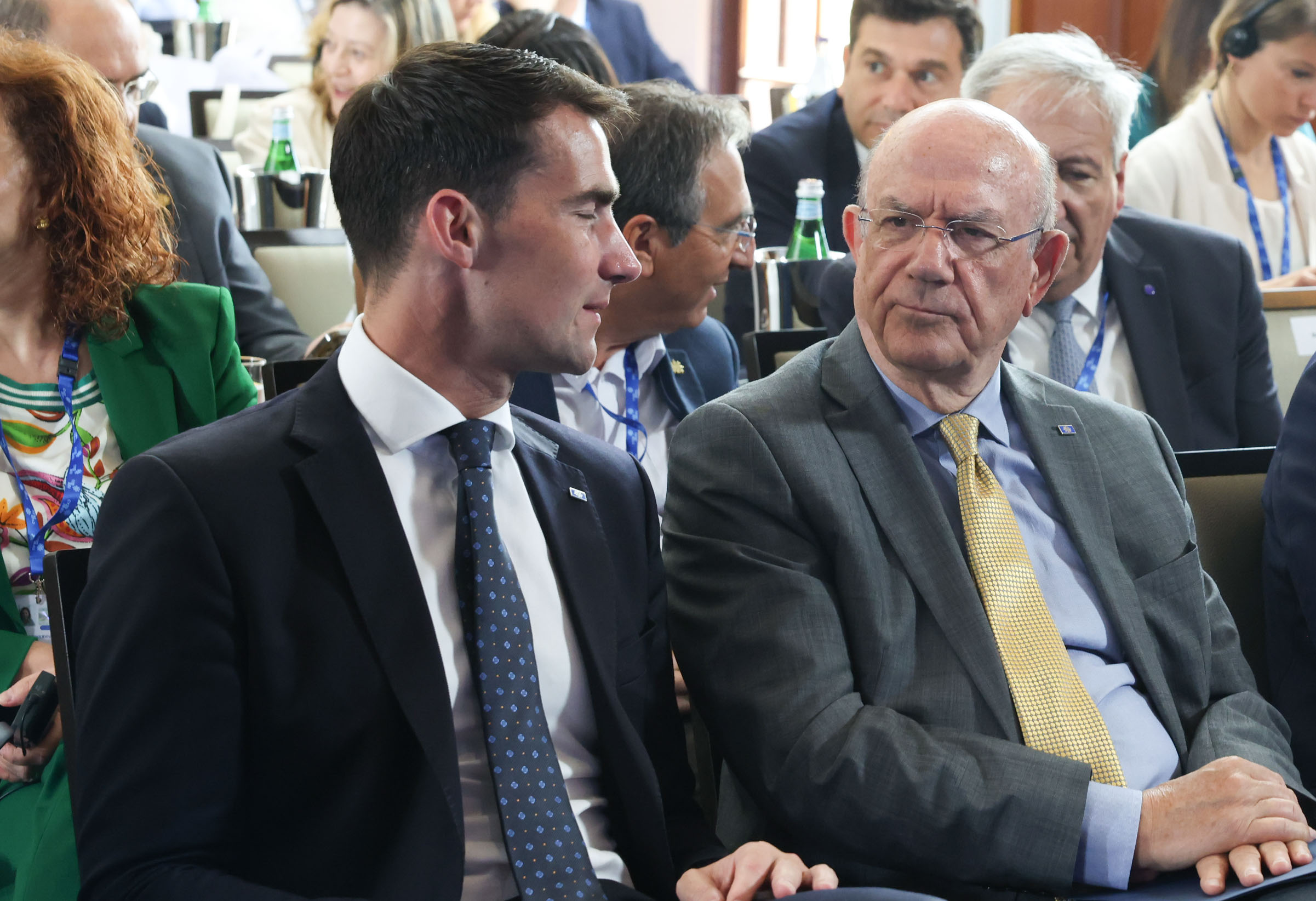
The European Commission’s new strategies for islands and coastal communities are comprehensive frameworks capable of addressing the structural disadvantages faced by island and coastal regions across the European Union, Finance Minister Makis Keravnos said on Friday.
Speaking at the high-level conference on islands and coastal communities in Paphos, Keravnos said the event held particular symbolic significance for Cyprus as it marked the conclusion of the country’s presidency of the Council of the European Union.
He said the two strategies represented coherent policy frameworks that recognised the challenges faced by islands and coastal communities, including small market size, dependence on transport links and the high costs associated with connectivity.
At the same time, he added, they provided a practical framework for promoting policies and measures aimed at addressing the disadvantages arising from geographical isolation and strengthening the economic and territorial cohesion of the European Union.
Addressing European Commission Executive Vice-President Raffaele Fitto directly, Keravnos thanked him for his cooperation and support throughout the Cyprus presidency, noting that the recognition of the island dimension had featured prominently during the informal meeting of EU cohesion ministers held in Nicosia on June 4 and 5.
During that meeting, he said, ministers had stressed that Europe’s competitiveness, cohesion and security could not be achieved if some regions continued to face permanent structural obstacles that limited their development prospects and prevented them from fully benefiting from the opportunities offered by the single market.
Keravnos also highlighted the importance of the European Union’s emerging ‘Right to Stay’ strategy, which seeks to ensure that citizens can remain and build their futures in the places where they were born rather than being forced to leave due to economic or social pressures.
“People must be able to remain, prosper and develop in their islands and coastal communities,” he said, adding that this required equal access to infrastructure, services and connectivity, as well as local economies capable of creating quality jobs and making full use of each region’s comparative advantages.
He described coastal communities as areas of exceptional natural beauty and significant economic and geopolitical importance for Europe, noting their role as pillars of the blue economy and maritime connectivity while also facing the direct impacts of climate change and environmental degradation.
Referring to Fitto’s visit to remote communities in Cyprus on Thursday, Keravnos said the visit had demonstrated the reality of ageing populations, young people seeking opportunities elsewhere and local communities struggling to remain viable.
“The ability of citizens to remain, prosper and develop in islands and coastal communities is directly linked to resilience, economic development and the preservation of their cultural and social identity,” he said.
Keravnos added that for Cyprus the debate surrounding the Right to Stay had an additional dimension.
“Cyprus has been a member state of the European Union since 2004. Nevertheless, some of its citizens are unable to live and work in the places where they were born because of the continuing Turkish invasion and military occupation,” he said.
This, he argued, demonstrated that the right to remain was not only a matter of economic development or social cohesion, but also one of freedom, security, dignity and the fundamental right of people to remain in their homeland.
Looking ahead to the European Union’s next budgetary period, Keravnos said policymakers must ensure that the needs of islands and coastal communities are addressed in a systematic and effective manner.
He welcomed the initiatives undertaken by Fitto and Commissioner Costas Kadis, saying the new strategies recognised that islands were not on the margins of Europe but formed an integral part of the bloc’s identity, resilience, competitiveness, security and territorial cohesion.
“The real challenge is not simply recognising the problems,” Keravnos said. “The real challenge is moving from vision to action, from identifying problems to implementing concrete solutions, and from general policies to targeted interventions that respond to the specific needs of each region.”


Click here to change your cookie preferences