
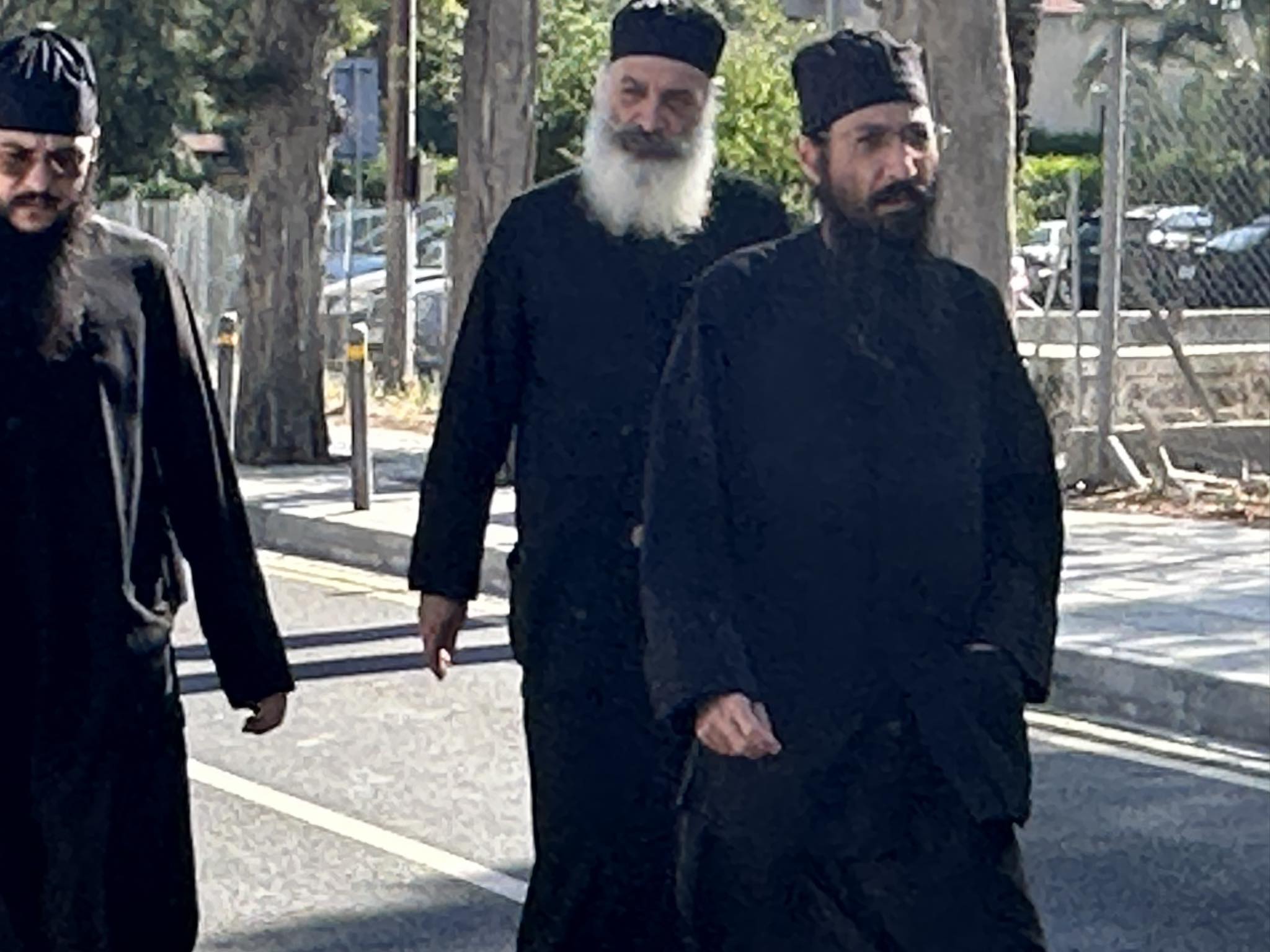
Doubt was cast on the legitimacy of police actions when documenting and cataloguing evidentiary items during the ongoing Avakoum monastery trial in the Nicosia criminal court on Monday.
On trial are monks Nektarios and Porfyrios. They face charges including conspiracy to defraud, forgery and the use of false documents, theft by proxy, handling stolen goods, money laundering, interfering with judicial proceedings and submitting fraudulent tax returns.
Both have pleaded not guilty.
The case came to light after authorities discovered €800,000 in cash and uncovered alleged fake miracles and CCTV footage of prohibited sexual acts.
Earlier during the trial, the defendants’ attorneys stated that on night of March 5, 2024, after the monastery had shut its gates, a number of individuals wearing hoods trespassed into the premises and removed various objects – which ended up at the Tamasos bishopric.
The lawyers said these items subsequently came into the possession of the police. They called for a trial within a trial, seeking a court ruling that would rule if the items were obtained unlawfully.
The court later rejected the motion for a trial within a trial.
In court on Monday, lawyers for the defendants grilled a police officer who had taken photographs of various items at the Avakoum monastery as well as at Tamasos bishopric.
The officer, the prosecution’s first witness, was being cross-examined on his activities on March 9 and March 13, 2024.
The witness said that on March 9, as part of the police investigations, he went to the Tamasos bishopric to photograph various items of evidence. Most of the photos were taken inside a basement, where members of the police’s financial crimes department were also present.
According to the witness, the items he photographed were pointed out to him by another officer. The items were then tagged and numbered. He did not recall who catalogued the items.
Responding to another question, as to whether items were removed from two safes before they were photographed, again the officer said he did not recall.
The pictures at the bishopric depict envelopes and wads of cash. The witness said the envelopes were opened in his presence, and then he would photograph the cash.
Regarding the second batch of photographs, taken at the Avakoum monastery, the officer said these were taken at various spaces.
Next the defence attorney asked the witness about the circumstances under which he and other officers gained entry to the monastery.
The officer could not recall whether someone opened the gates for them or whether they had permission. In any case, he added, he was not in charge of such matters.
In a follow-up question, the attorney asked the witness if at the time he personally saw a written authorisation from the two monks granting the police entry into the monastery, or if he was aware of an active search warrant. He did not recall.
Also on Monday, prosecutors objected to a request by one of the monks for legal assistance. The defendant claims he cannot afford his legal fees.
Lead prosecutor Vasilis Bissas cited a report by the welfare services showing that the monk works at a confectionary where he earns around €1,000 a month. In addition, he owns immovable property.
Responding, the defendant said he has had steady employment for the last three months only, and that his expenses come to €700. As to his immovable property, he owns a parcel of land which cannot be easily sold.
The court asked for more information on the defendant’s financial wherewithal before ruling on his request for legal assistance.
The trial continues on Wednesday.




Click here to change your cookie preferences