
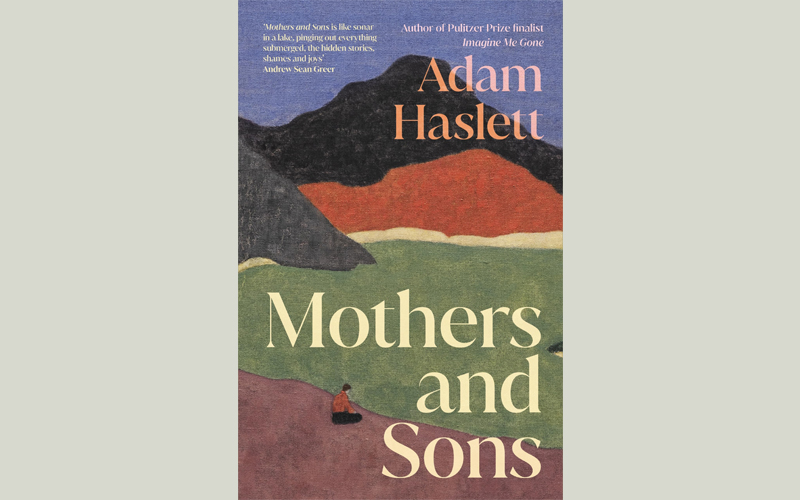
Book review: Mothers and Sons by Adam Haslett
By Philippa Tracy
There are a number of mothers and sons in this novel. But the focus of the story is on the relationship between Ann, a former priest running a women’s retreat in the Vermont hills, and her son, Peter, an immigration lawyer in New York. Ann’s daughter, Liz, visits her at the retreat but Peter does not. Ann tries not to think about why Peter has stayed away for so long.
As a reader, we don’t know the cause of the rift, at first. As the story develops, the past is slowly revealed: Peter’s brief relationship with a school friend, a tragic accident and an important choice that Ann made. Peter struggles to deal with his own feelings of guilt and Ann cannot be forgiven for her actions.
The “intentional community” Viriditas that Ann, Clare and an old friend, Roberta, founded together has been established for more than two decades. Women come for a mixture of retreat and therapy; they come to be listened to and healed. Clare questions the emotional honesty of what they do. Is it, selfishly, best for them, rather than the women they are supposed to be helping? Ann chooses to misunderstand, but who is she thinking of when says to one of the women guests, “you have to matter, too. If you don’t, there’s only sainthood or misery”?
She left her husband, Richard, for Clare because she offered a kind of freedom Ann had never imagined possible. However, Ann also feels guilt at having, “a hope unconnected to her children.”
The narrative alternates between Peter and Ann’s perspectives. Peter’s story, told in the first person, initially focuses almost entirely on his work with asylum seekers; it is as much their stories as his. Outside of work, Peter has very little going on. He has casual sex, for a while, with a man who wants something more than Peter is able to give.
When Peter takes on the case of a young gay man from Albania, who has escaped near certain death at the hands of his father, his story affects Peter in ways he struggles to cope with. It opens up unresolved feelings from his past. It slowly becomes clear that while the end of his parents’ marriage and his father’s death may be the cause of some of Peter’s trauma, something much darker, and more complicated, is holding him back.
The book explores questions about mother-son relationships, memory, the nature of truth and the stories we tell ourselves.
Ann, as a mother, has found a way to exist without her son in her life. Peter has always resented the way his mother can lose herself in books, appearing to prioritise her own needs. He fails to understand that, all those years ago, she chose to protect him, even at a cost to herself. He appears way more forgiving of his father, even when he remembers fearing him during the marriage break up and listening to his homophobic vitriol on his death bed.
It is his mother he punishes for the longest time. Clare’s words to Ann, “Always do what costs you the most. Isn’t that the Simone Weil quote?” seem particularly poignant by the end.



Click here to change your cookie preferences