
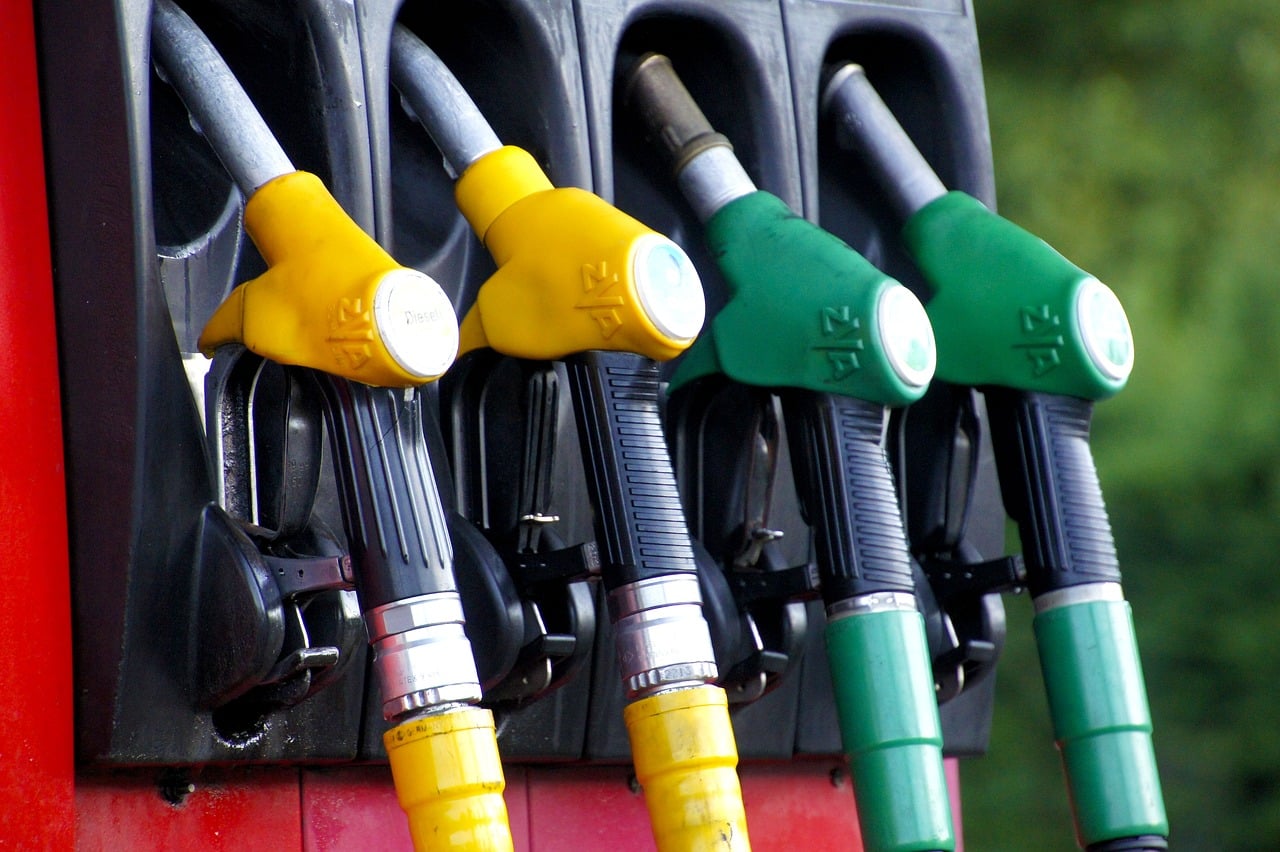
Transport Minister Alexis Vafeades gave new reassurances on Tuesday that Cyprus faces no shortage of fuel stocks amid the continuing conflict in the Persian Gulf.
Around 20 per cent of global oil transits through the Strait of Hormuz, the strategic waterway that’s been virtually cut off since the start of hostilities in late February.
Speaking to Stockwatch, the minister said the European Commission has since March been monitoring the fuel situation and “appears ready” to handle the problem – should one arise – given that Europe avails of strategic reserves.
Despite this, he added, “and without being alarmist, we should be very careful and constantly monitor developments.”
Contacted by the Cyprus Mail later, Vafeades clarified he was referring to jet fuel only when commenting on the adequacy of fuel stocks.
As for the strategic oil reserves, they’re under the responsibility of Kodap, the Organisation for Storage and Management of Oil Stocks – which comes under the supervision of the energy ministry.
The minister said that, to his knowledge, for now Cyprus has no issue with fuel stocks in general – be it the strategic reserves or commercial stocks.
He said he was not aware of Kodap releasing any of the strategic reserves to the market since the outbreak of the war in the Gulf.
Similar sanguine comments were made to the media by Dinos Lefkaritis, the CEO of Petrolina.
“For the time being, we’re covered,” he said. “However, we don’t know what comes up tomorrow morning.”
According to Lefkaritis, his company faces no problem in importing fuel: “Deliveries happen on a weekly basis, and we’ve had no problem up until this moment.”
Eurostat data shows nothing out of the ordinary for Cyprus. The latest reporting available, for the month of May, shows the island has 91 days equivalent of strategic oil stocks – with the normal being 90 days.
The strategic oil reserves in May came to 546,000 metric tonnes.
Commercial stocks held by economic operators came to 72,000 metric tonnes.
No EU country reported data for June; that’s likely because it takes time to collate and report the data to the European Commission.
However, several EU countries have not reported any data on their stocks for the month of May either – including Germany, Denmark, Greece, Spain, France and Italy.
An industry source told the Cyprus Mail that “this is a bit suspect”.
The mandatory 90 days for strategic oil reserves is calculated according to the consumption in that timeframe during the previous year.
The majority of the reserves are physically held in Cyprus, with a small quantity stored abroad.
Strategic reserves include physical stocks as well as stocks on paper, called ‘tickets’.
The government may release part of the reserves at times of emergency.
Cyprus imports fuel from two main sources: the refinery in Haifa, and the refinery at Aspropyrgos, Greece.



Click here to change your cookie preferences