
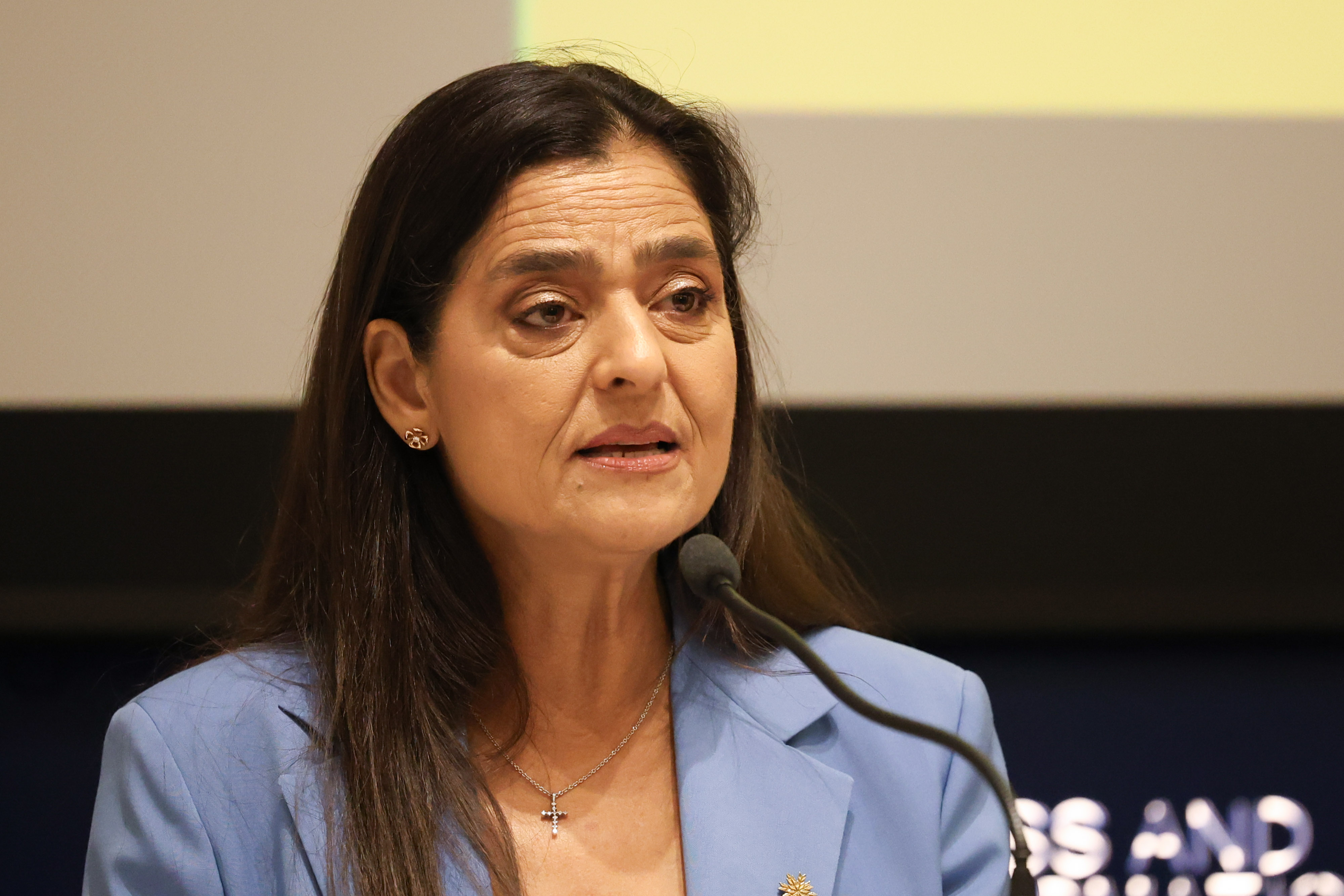
One in five Europeans and one in four children live in poverty, Social Welfare Deputy Minister Clea Hadjistefanou-Papaellina said on Friday, highlighting Cyprus’ efforts during its presidency of the Council of the European Union to strengthen European social policy.
Speaking at a press conference, she said Cyprus had set out to promote a more social, inclusive and people-centred Europe during its six-month presidency.
Cyprus, she said, took the presidency as an opportunity to contribute substantively to forming European policies that would meet the true needs of the people.
Among the presidency’s main achievements, she highlighted progress towards a European anti-poverty strategy, an initiative on housing, strengthening the European Child Guarantee and advancing the EU’s strategy on the rights of persons with disabilities through 2030.
“Poverty continues to affect one in five Europeans and one in four children,” she pointed out.
Addressing this issue, she added, was not just a matter of social justice, but an investment in the future of Europe, competitiveness and social cohesion.
Referring to the informal employment and social policy council, held in Nicosia in February, she said it discussed all these issues and adopted conclusions that encouraged investing in children with the purpose of improving their welfare and social integration.
The deputy ministry’s permanent secretary Yiannis Nicolaides said the results of Cyprus’ EU presidency proved that “there are no small and large member states in the EU, but equal member states”.
Nicolaides said small member states could contribute substantively to progress for the whole EU when they are properly prepared, work systematically and have the ability to effectively exercise the mediating role of the presidency.
Cyprus, he said, proved this and created the preconditions for a strengthened participation in future EU processes.
He furthermore pointed out that “the European role of Cyprus is not concluded with the end of the presidency, on the contrary a successful presidency allows for a more active role in the EU.”
During its presidency, Cyprus hosted the informal employment and social affairs council, two formal employment councils and 11 high-level and technical meetings attended by more than 1,500 delegates from member states, EU institutions and international organisations.





Click here to change your cookie preferences