
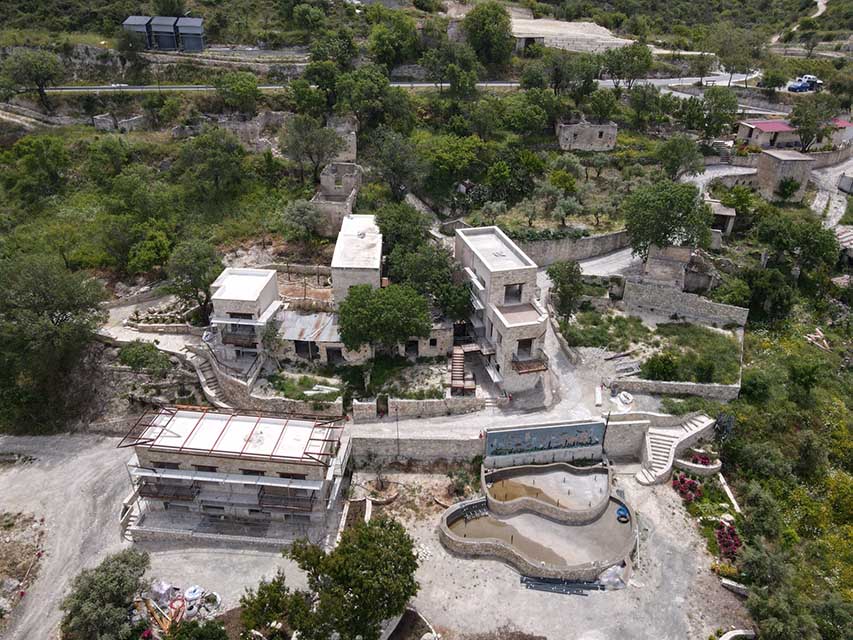
Environmental organisation Terra Cypria renewed concerns on Saturday over construction activity at the abandoned settlement of Trozena, alleging that works are continuing inside the Natura 2000 protected area without the required environmental or planning permits.
The latest claims come months after the project first drew scrutiny, with questions raised over the legality of redevelopment plans for the abandoned villages of Trozena and Gerovasa, located within the Hapotami Special Protection Area, a site protected under the EU’s Natura 2000 network.
Terra Cypria said a site visit on Tuesday found construction activity continuing both within and outside the boundaries of the proposed development.
The organisation alleges that the works are being carried out without environmental approval, planning permission or a building permit, and says the environment department has failed to respond to repeated requests for environmental information.
Terra Cypria said it had first raised concerns in 2025 after a Special Ecological Assessment was submitted for the redevelopment of the two abandoned settlements.
During the assessment process in 2026, it said authorities identified that earthworks and construction had already begun before the necessary approvals had been granted.
According to the organisation, letters sent to the environment department at the time received no response.
In a new letter sent on July 22, Terra Cypria requested an update on the actions taken by the relevant authorities, including the environment department, the game and fauna service and the Limassol district local government organisation (EOA), as well as clarification on the implementation of national and European environmental legislation.
The organisation called on the authorities to enforce the law immediately, ensure the protection of the Natura 2000 site and take all necessary measures to address the alleged violations.
However, Arsos community leader Giannis Giannakis speaking to the Cyprus Mail disputed the allegations.
He said construction works at Trozena had stopped at the end of May and had not resumed since.
He added that a meeting was held at the Limassol EOA last week to discuss the matter and that the community is now awaiting the environment department’s position before any further steps are taken.
The abandoned village became the centre of a debate touching on foreign investment, environmental protection, public access and national identity as the project is a substantial redevelopment of 64 rooms, 16 restored structures, with capacity for 132 visitors.
There are plans for a winery, a large restaurant, wellness facilities, reception areas, glamping infrastructure, and vineyards.





Click here to change your cookie preferences