
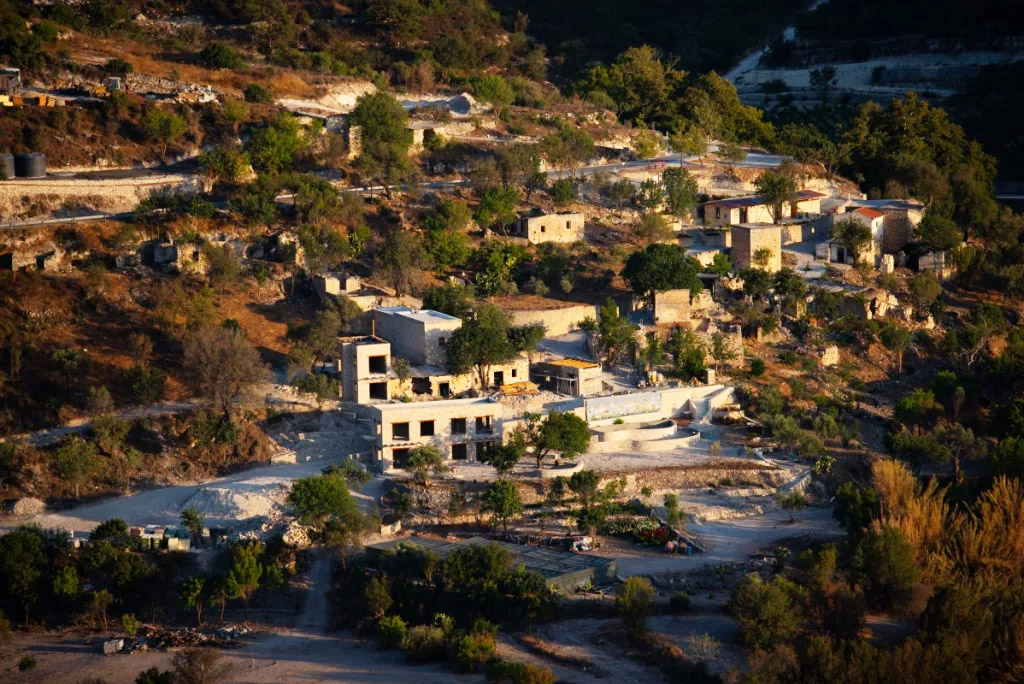
The redevelopment of Trozena village is under investigation by the environment department following reports of possible environmental and planning violations, with inspections already carried out on site.
According to reports by Politis, allegations under examination include unauthorised earthworks and land clearances, interventions within protected Natura 2000 areas, construction activity prior to the issuance of planning permits, the removal of vegetation and landscape alterations.
The project’s environmental assessment on the environment department website presents a broadly positive outlook, concluding that “the proposed development is not expected to affect the integrity or conservation objectives of the Natura 2000 Special Protection Zone” provided that “all mitigation measures outlined in the study are fully implemented”, along with any additional conditions set by the department.
Beyond the absence of significant negative impacts, “the project could potentially contribute positively to conservation efforts”, the report said, arguing that the revitalisation of the abandoned village through eco-tourism and agro-tourism could help reduce uncontrolled access, illegal hunting and unauthorised development.
It also highlights that awareness initiatives for visitors, combined with the “preservation of natural vegetation and low-impact vineyard practices”, could enhance local habitats and overall biodiversity.
The site falls within an environmentally sensitive zone, including the Trozena-Gerovasa gorge, raising further concerns over compliance with environmental regulations.
Officials have not ruled out enforcement measures or out-of-court fines as investigations continue.
The redevelopment of Trozena has taken on wider dimensions over the past week, drawing in government authorities, political figures and foreign diplomats amid growing debate over investment, environmental compliance and public access.
The Israeli embassy in Cyprus, addressed mounting criticism surrounding Israeli involvement in the project after MEP and Direct Democracy leader Fidias Panayiotou publicly raised concerns over increasing Israeli property acquisitions in Cyprus.
Israeli ambassador Oren Anolik warned against what he described as “inflammatory and divisive language” targeting Israeli investors, saying attempts to portray their presence in Cyprus as threatening were “deeply concerning.”
A similar tone was taken by Diko, which condemned what it described as antisemitic rhetoric in the public debate.
Party leader Nikolas Papadopoulos said “antisemitic hate speech in the name of populism is unacceptable, condemnable and harmful to our country,” stressing that such narratives risk undermining Cyprus’ international standing.
DIKO also pointed to the importance of regional cooperation, welcoming the initiatives of President Nikos Christodoulides in strengthening ties in the Eastern Mediterranean through the 3+1 framework, and underlining that these relationships “must be safeguarded.”
The intervention comes as Trozena, an abandoned village in the Limassol district, remains at the centre of a widening debate over foreign investment, transparency and environmental oversight.
While social media claims that the village has been “bought by Israelis” have been dismissed by local authorities, investigations have confirmed the existence of a large-scale redevelopment project linked to an Israeli investor.
Public records show that THV Home Resort (Trozena) Ltd, established in 2023, is associated with the project, while reports have identified businessman Uriel Kertesz as the main figure behind the development.
Plans for the site go far beyond simple restoration. According to planning documents and environmental studies, it includes 64 residential units, 48 newly built homes and the restoration of 16 existing ruins, with capacity to accommodate up to 132 people.
The wider development also includes a winery with an estimated annual production of 40,000 bottles, a 100-seat restaurant, reception and office facilities, wellness and spa areas, camping and glamping infrastructure, as well as new vineyards across surrounding agricultural land, positioning Trozena as an eco-tourism destination.
Earlier, the Arsos-Gerovasa/Trozena Community Council moved to counter growing speculation, issuing a formal statement describing claims circulating online as “unfounded.”
The council stressed that the village remains open to the public and that no restrictions on access have been imposed, again countering claims made on social media.
It also clarified that the Church of Agios Georgios belongs to the Metropolis of Paphos and is not under threat.
Trozena was abandoned in the 1990s following decades of rural depopulation.




Click here to change your cookie preferences