
Or was the problem that a bicommunal bizonal federation with political equality was a vote loser?
UN Secretary-General Antonio Guterres has been and gone. It was nice of him to visit Cyprus before his second five-year term ends in December 2026, but his visit reminded me of the effect of a visit by the BBC’s former war correspondent Martin Bell and his television crew.
Guterres is the world’s foremost peacekeeper and, unlike Bell, whose arrival often signalled that war was imminent, his visits usually suggest that peacekeeping is once again in need of his services.
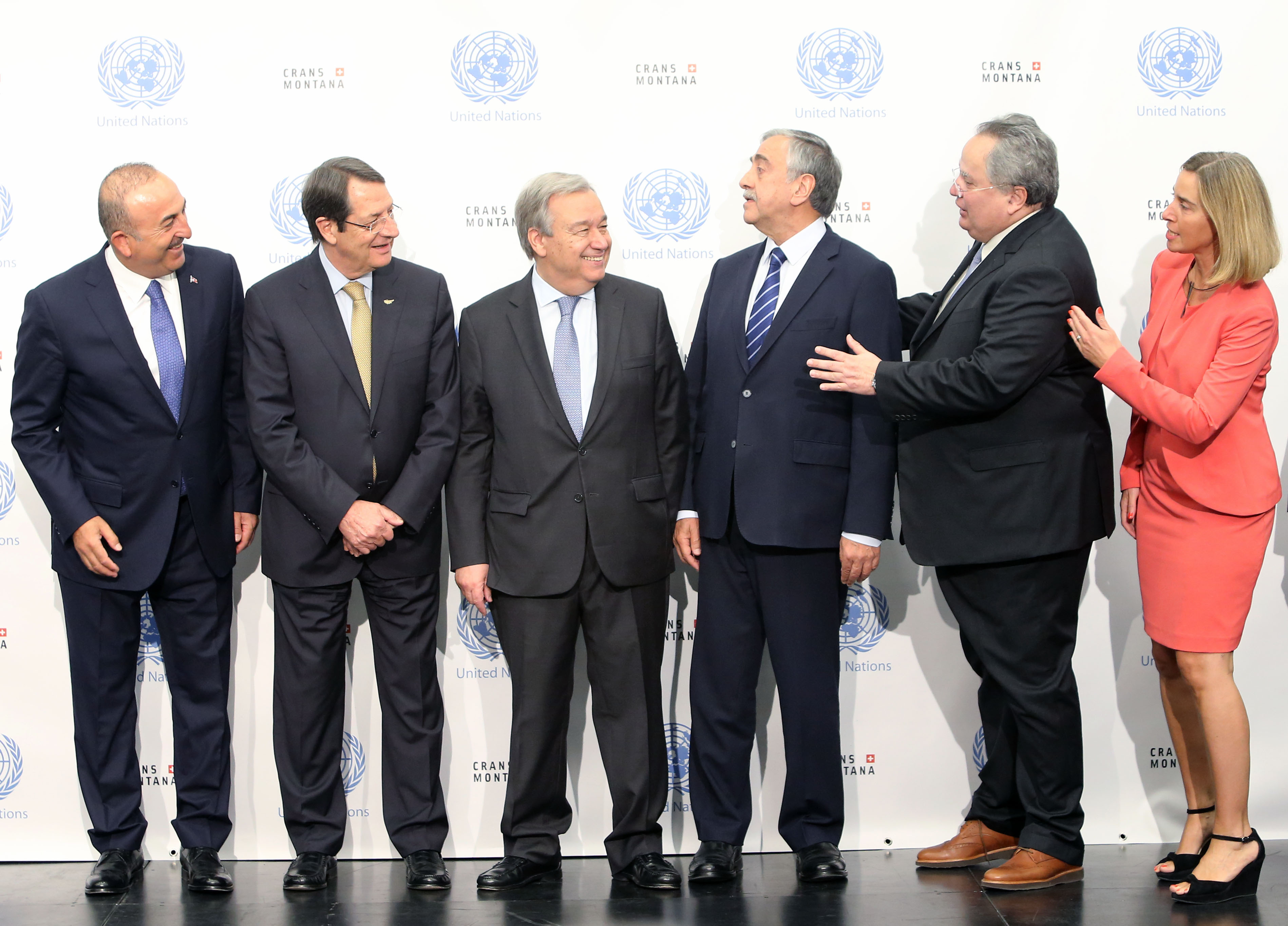
Or perhaps he still feels guilty about bungling the Cyprus peace conference at Crans Montana in 2017. He lost his cool during a bad-tempered working dinner on night of July 6-7 then closed the peace conference in a hasty announcement to the press at 2 in the morning.
As chair of an important peace conference that had taken years to prepare, he should have allowed the participants more time to collect their thoughts in the cold light of day before resuming discussions the following morning after a good night’s sleep.
Gueterres must have pondered the Crans Montana debacle on his visit to Cyprus last week. A resumption of the Cyprus talks, and their successful conclusion are once again on the horizon, and it would indeed be a fitting diplomatic swan song to his tenure at the United Nations.
He attended the Cyprus peace conference in July 2017 twice to help the process cultivated by the UN’s special advisor on Cyprus, the much-maligned Espen Barth Eide, now Norway’s foreign minister, who worked tirelessly for three years to achieve a settlement.
Eide was accused of bias in favour of the Turkish side, yet in his final report to the UN Security Council (UNSC) he said that the debacle at Crans Montana was a “collective failure” and that both sides “froze at the finishing line.”
For the future, he advised the UNSC that detailed political negotiation should be conducted in an atmosphere of open and frank discussions with “all cards on the table.” He blamed the failure of the talks on the irrational negotiating tactic whereby each side refused to reveal its final painful concessions until the other side revealed its own.
He recommended that the “immense progress” at Crans Montana on chapters like territory and political equality should not be lost in future negotiations. He was criticised at the time for exaggerating the UN’s achievements at Crans Montana, but the insistence now that the future 5+1 talks – planned but not fixed – pick up from where they left off at Crans Montana in 2017, is testament to the “immense progress” Eide claimed was achieved,
Antonio Guterres had presented a six-point plan that included a crucial proposal to replace the 1960 treaty of guarantee and a phased Turkish troop withdrawal. The “immense progress” he was referring to was on territory and political equality; the crucial mystery that remains, however, is whether progress on guarantees was also achieved.
The UN is of course neutral when it engages in mediation, but when it puts forward proposals in the conduct of negotiations it must be careful that its proposals are not in conflict with the UN Charter or international law.
In the 2004 Annan plan both the UN and the EU fudged the legality of article IV of the 1960 treaty of guarantee that authorises unilateral action in the event of a breach threatening Cyprus’ independence or security.
But after the plan was rejected by the Greek Cypriot community by an overwhelming majority, the problem of the legality of the use of force under article IV could not be avoided. Which was why Guterres put forward a proposal to replace it with a robust security system after persuading both sides that in principle “the security of one community cannot be a source of threat to the other community”.
Traditionally, the Turkish position has been that the 1960 treaty of guarantee was drafted precisely to deal with the contingency that arose in 1974: an attempt to unite Cyprus with Greece that posed a threat to the independence of Cyprus and posed an existential threat to the Turkish Cypriot community.
The issue between Cyprus and Turkey over whether article IV authorised the use of force by Turkey in 1974 has not been litigated before the International Court of Justice (ICJ), but the prohibition on the use of force was recognised as a peremptory norm (jus cogens) of international customary law in the case of Nicaragua v US in 1986.
In that case the ICJ ruled that, apart from when it is authorised by the UNSC and in self-defence or defence of another, the use of force is prohibited and no state can agree by treaty to derogate from the prohibition — hence Guterres’ proposal to replace the 1960 treaty of guarantee.
To prevent abuse by powerful states to use force in the guise of the right to defend other states, the ICJ also ruled that before an assisting state can use force to defend another state, that state has to be the victim of an armed attack and declared itself to be such a victim and formally requested to be defended by the assisting state.
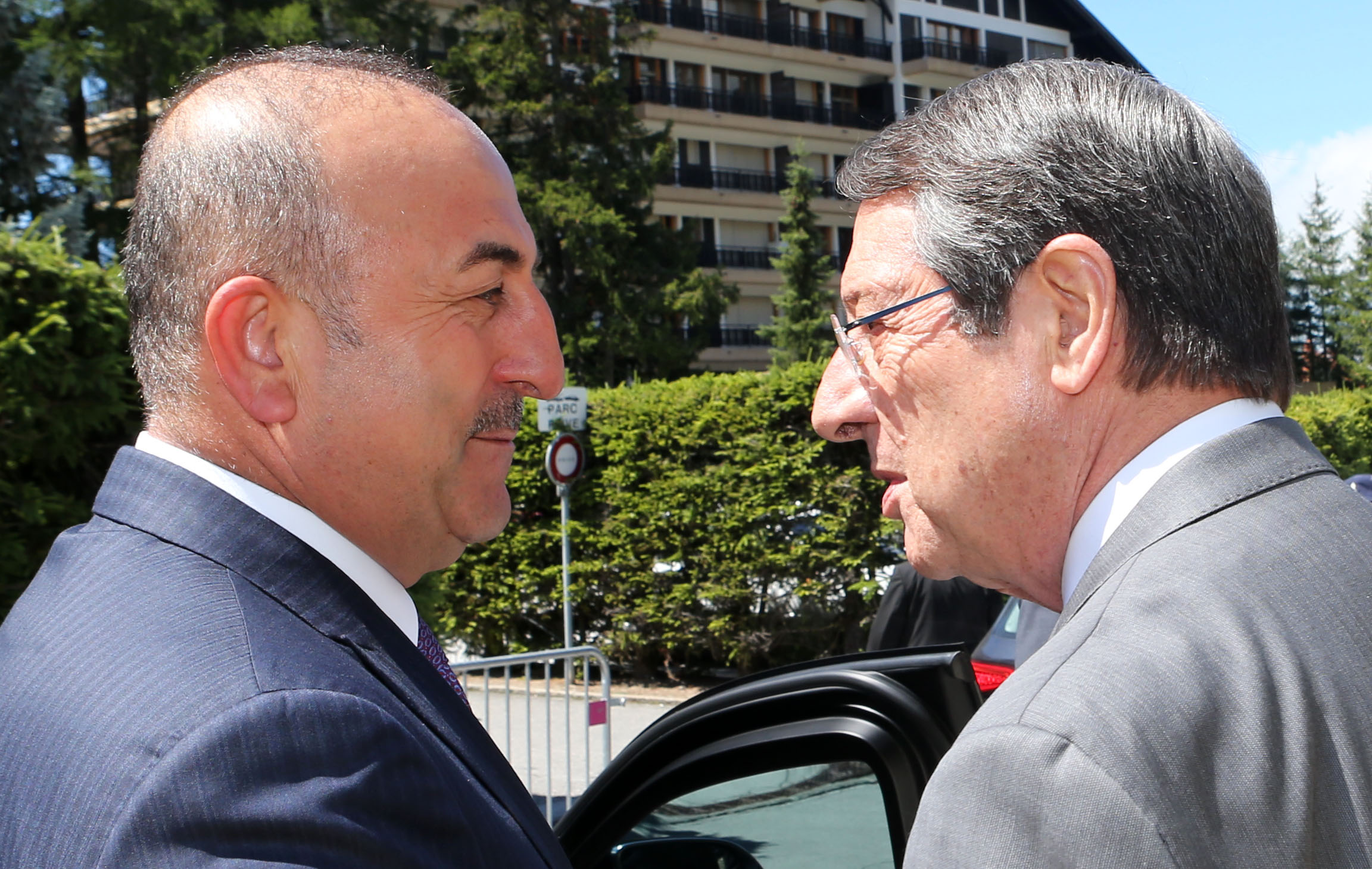
In light of all the above developments in international law, Guterres put forward a proposal to replace article IV of the 1960 treaty of guarantee and obtained a verbal undertaking from Turkish foreign minister, Mevlut Cavusoglu, to adopt a pragmatic approach on guarantees.
But Cavusoglu refused to put it in writing for the tactical reasons identified by EIde to the UNSC that resulted in a bad-tempered shouting match mostly between President Anastasiades and Cavusoglu although Anastasiades also had a go at Eide. But according to most attendees it was an angry argument over a procedural matter and not serious enough to collapse the talks.
If Cavusoglu was bluffing and Turkey had no intention of giving up guarantees or withdraw troops, a willingness to proceed on Cavusoglu’s verbal undertaking would have called Turkey’s bluff in the eyes of the UN, the EU and the UK and shown it up as negotiating in bad faith.
If, on the other hand, Turkey was not bluffing, then there would have been a comprehensive settlement of the Cyprus problem without Turkish guarantees and significant Turkish troop withdrawals.
Anastasiades was due for reelection in 2018, and the problem was and may still be that a bicommunal bizonal federation with political equality is a vote loser in the RoC and off the table. If so all the parties including the UN and the EU need to be informed accordingly.




Click here to change your cookie preferences