
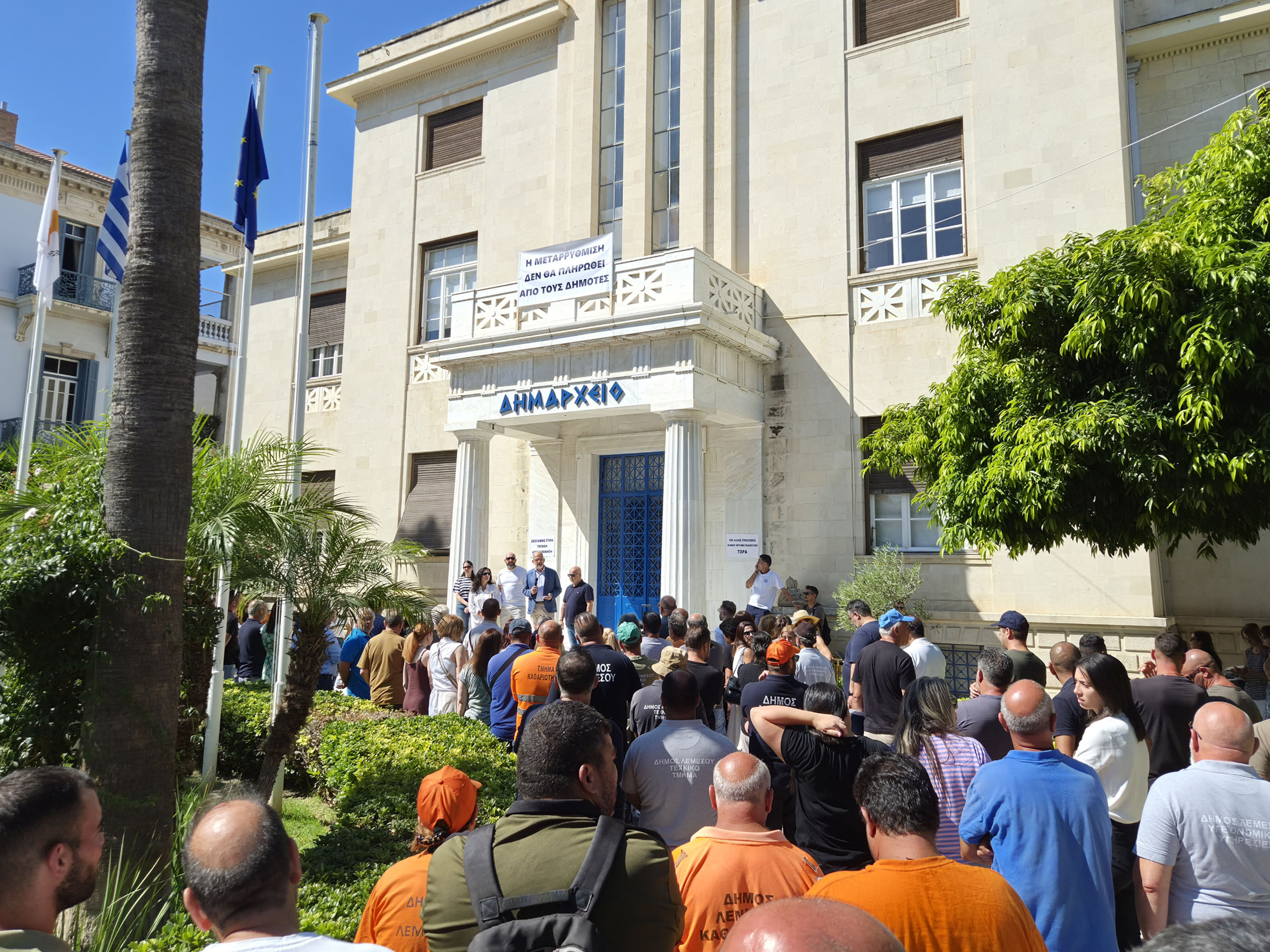
Municipalities staged a three-hour strike on Monday morning. This was not a workers’ strike called by their unions for better pay, but a strike called by the Union of Municipalities in protest against the insufficient funding from central government. They are demanding more money because they claim current annual funding is inadequate.
Mayors claim that the reform of local government that was introduced two years ago burdened the merged municipalities with additional authorities, increased operational costs as well as accumulated debts of community councils that were incorporated in the new structures. Faced with the shortage of funds, municipalities have two options – they can either drastically cut the services offered and planned projects or increase the rates they charge households.
Neither option would go down when well with people, and the government appears to have already announced more funding for local authorities in the 2027 state budget. At about 2 per cent of the annual budget, the funding is considered one of the lowest percentages in the EU, which mostly ranges between 4 and 15 per cent according to the Union of Municipalities, which had been forced into accepting the pre-reform state funding of €117m despite their additional authorities.
This arbitrary estimate of the 20 new municipalities’ annual funding was perfectly in keeping with the superficial, slapdash way the reform of local government was carried out by the government and political parties, which made changes to the reform bills that were primarily designed to keep party members happy. They increased the number of proposed municipalities and introduced the post of full-time ‘deputy mayors’ with no powers, among other things.
Had anyone carried out a detailed study of the finances of these new entities, given that they would lose some revenue-generating power while being burdened with deficits pre-dating the reform, and bigger operating costs for new services they would have to offer? Instead of making realistic calculations of the needs of the new entities, the government worked on the assumption that the pre-reform amount would be adequate. Quite clearly, it is not, which is why the municipalities are protesting now and demanding more money.
In response to the work stoppage, Interior Minister Constantinos Ioannou had reportedly arranged for the annual amount to be increased. This is considered a positive step by the mayors, although it seems the new amount that will be paid is again arbitrary. Only when the central government develops a relatively accurate method of calculating the revenue and spending of the municipalities, based on their new responsibilities and services, could the matter of the state subsidy be resolved. The subsidy would not change apart for an annual inflation-linked increase, and no extra funding would be given if a municipality had been over-spending.
This is the only way to impose budgetary discipline on local authority, but first a realistic budget must be calculated.



Click here to change your cookie preferences