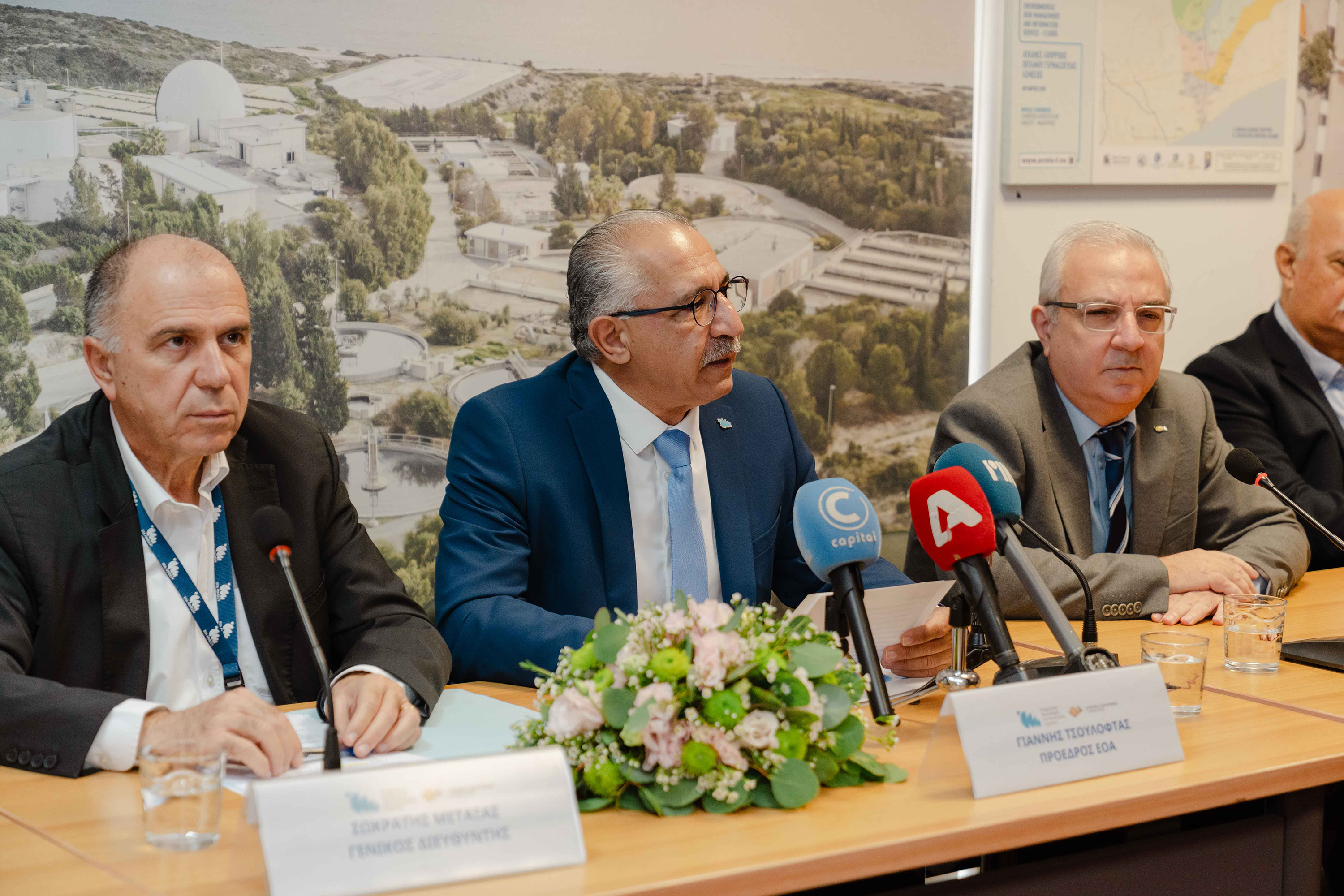
The Limassol district government (EOA) presented an “original, multilevel and highly practical” plan on Wednesday to meet the government’s aim of reducing water consumption by 10 per cent and responsibly managing water resources.
Speaking at a press conference, Limassol EOA president Yiannis Tsouloftas said the plan included a campaign to reduce water consumption, which told the people that saving water was “easier than you think”.
The campaign started in March with various posts and spots on social media on saving water. This was followed by three “original videos starring young Orpheas Solomou, who is giving advice in a humorous and pleasant manner on how to save water while hosing down pavements, washing cars and using the washing machine”.
Tsouloftas said the third phase of the campaign was “more emotional”, with TV spots, radio messages and outdoor posters, taking the viewer to the Kouris reservoir and sending a message of collective responsibility in the effort to save water.
He said three more actions were in the pipeline, including guidelines, proposals and information concerning water consumption, a children’s storybook and puppet show, and a children’s quiz and a presentation.
Tsouloftas said “everyone can do their part” in saving water.
He also referred to the efforts under way to upgrade water supply infrastructure, such as replacing 100km of pipes in the city centre, which begins on August 6.
Speaking at the press conference, agriculture ministry permanent secretary Andreas Gregoriou said the ministry and the water development department aimed at increasing the supply of water from non-conventional sources, such as desalination units for households and treated sewage water for irrigation.
He pointed out that climate change was affecting Cyprus, making it imperative to preserve the water supply and resources, by changing the culture around consumption.
“We are in a region where climate change is already here, so we must all prepare ourselves, take measures,” Gregoriou said, pointing out that every year the demand for water rose by approximately 6 per cent.


Click here to change your cookie preferences